


Listen to the article
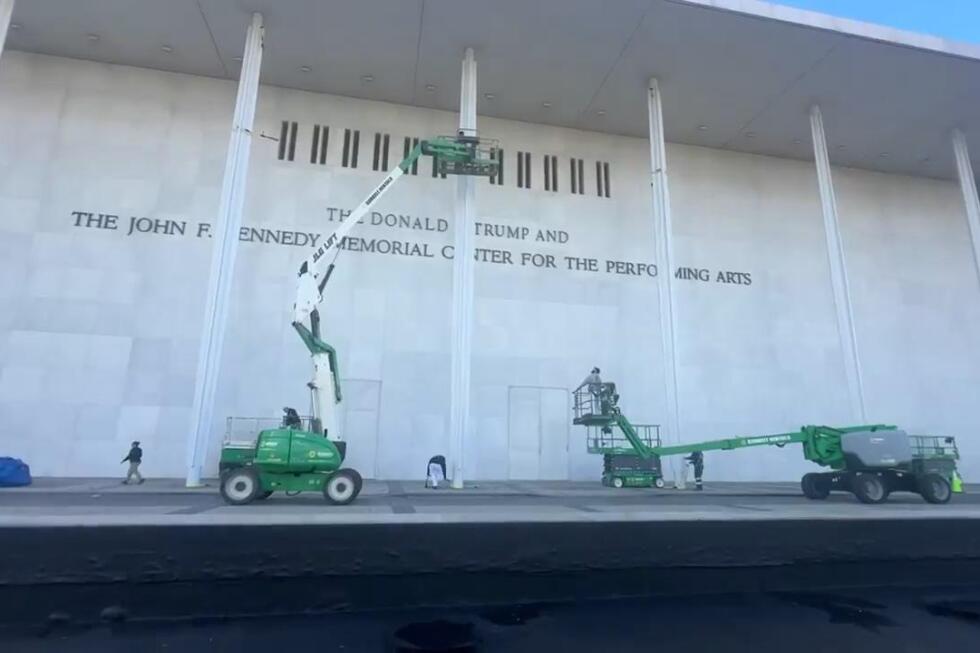
The Kennedy Center for the Performing Arts will close its doors for a comprehensive two-year renovation beginning in July, according to a statement from former President Donald Trump. The announcement comes amid growing backlash from performers who have expressed concerns about the deteriorating conditions of the iconic Washington, D.C. venue.
The closure represents one of the most significant disruptions in the Kennedy Center’s 50-year history. Officials familiar with the renovation plans, speaking on condition of anonymity, indicated that the project will address long-overdue structural issues, modernize performance spaces, and upgrade audience amenities throughout the 1.5 million square foot complex.
“After decades of patchwork repairs, we’re finally addressing the fundamental infrastructure problems that threaten the Center’s future,” said a Kennedy Center board member who requested anonymity as the official announcement has yet to be made. The renovation budget is expected to exceed $250 million, primarily funded through a combination of federal appropriations and private donations.
The decision follows months of increasingly vocal criticism from prominent artists and performers. Grammy-winning cellist Yo-Yo Ma described backstage conditions as “woefully inadequate” following his performance last month. Broadway producer Jeffrey Seller canceled a planned tour stop of “Hamilton” at the Center, citing “unacceptable technical limitations” in a widely circulated industry email.
For Washington’s cultural landscape, the closure represents a significant blow. The Kennedy Center hosts approximately 2,000 performances annually, drawing nearly two million visitors and generating an estimated $125 million in economic activity for the region, according to a 2022 economic impact study.
“This will create a cultural vacuum in our nation’s capital,” said Elizabeth Morrison, director of the D.C. Arts Coalition. “While necessary for the long-term sustainability of the Center, the timing couldn’t be worse as the performing arts sector continues recovering from pandemic-related losses.”
The renovation comes at a critical juncture for performing arts institutions nationwide. A recent Americans for the Arts survey found that 42% of major performing arts venues require significant infrastructure upgrades, with the average facility age exceeding 45 years. The Kennedy Center, which opened in 1971, exemplifies this aging infrastructure crisis.
Arts administration experts suggest the Kennedy Center’s closure may accelerate a broader reckoning across the sector. “We’re seeing the consequences of decades of deferred maintenance at cultural institutions nationwide,” said Robert Hensley, professor of arts management at Georgetown University. “The Kennedy Center situation is just the most visible example of a problem facing venues from Lincoln Center to the Dorothy Chandler Pavilion.”
Kennedy Center leadership has begun negotiations with alternative venues throughout the Washington metropolitan area, including Arena Stage, the Warner Theatre, and the Music Center at Strathmore, to relocate some programming during the closure. However, officials acknowledge that many performances will need to be canceled outright.
The renovation’s timing has sparked political controversy, with Trump’s involvement in the announcement raising eyebrows. While the Kennedy Center operates as an independent entity, it receives approximately $40 million in annual federal funding. The former president, who had previously proposed eliminating federal arts funding during his administration, characterized the renovation as “essential for national prestige” in his statement.
Current Kennedy Center President Deborah Rutter, who has led the institution since 2014, has not publicly commented on Trump’s announcement. Sources within the organization indicate an official statement from the Center’s leadership is expected within days.
For performers and arts workers, the closure raises immediate practical concerns. The Kennedy Center employs over 300 full-time staff and contracts with thousands of artists and technical personnel annually. “We’re deeply concerned about the employment impact,” said James Warwick, president of the local chapter of the International Alliance of Theatrical Stage Employees. “Our members need clear transition plans and support during this period.”
Despite the disruption, some cultural leaders see a silver lining in the comprehensive renovation. “When completed, the renewed Kennedy Center will serve as a model for 21st-century performing arts venues,” said Michael Kaiser, former Kennedy Center president. “The short-term pain, while significant, enables a necessary transformation for this national cultural treasure.”
Fact Checker
Verify the accuracy of this article using The Disinformation Commission analysis and real-time sources.

8 Comments
I’m a bit skeptical about the timing of this announcement, coming from the former president. Is there any political subtext or ulterior motives behind the Kennedy Center renovation plans?
That’s a fair point. The political context around this decision is worth examining more closely to understand the full implications.
The Kennedy Center is such an iconic venue, and it’s great to see it getting the attention and resources it needs to address long-standing issues. Hopefully, the renovations will enhance the overall experience for performers and audiences.
Investing in infrastructure and renovations is critical for iconic cultural institutions like the Kennedy Center. While the closure will be disruptive, it’s necessary to address long-standing issues and modernize the facility.
Agreed. Preserving and enhancing these historic venues benefits artists, audiences, and the broader community.
While the Kennedy Center closure will be an inconvenience for performers and audiences, it’s encouraging to see a significant investment in preserving this important cultural institution. Proper maintenance and upgrades are essential.
I’m curious to learn more about the specific plans for the $250 million renovation. What are the key priorities in terms of structural upgrades, performance space enhancements, and audience amenities?
Good question. The article mentions addressing infrastructure problems and modernizing the center, but more details would be helpful to understand the full scope of the project.