


Listen to the article
A federal judge in New York has authorized the public release of grand jury transcripts and other materials from Ghislaine Maxwell’s sex trafficking case, responding to the Justice Department’s request following the recent passage of the Epstein Files Transparency Act.
Judge Paul A. Engelmayer, who had previously denied similar unsealing requests before the new law, granted the motion on Tuesday but cautioned the public against expecting significant new revelations. In his ruling, Engelmayer noted that the materials “do not identify any person other than Epstein and Maxwell as having had sexual contact with a minor,” and do not reveal any previously unknown clients or methods related to their crimes.
The judge’s decision comes as part of a broader government initiative triggered by the transparency act, which created a narrow exception to traditional rules protecting grand jury secrecy. The legislation, signed by President Trump after months of public and political pressure, requires the Department of Justice to publicly release Epstein-related records by December 19.
Last week, a federal judge in Florida similarly ordered the release of transcripts from an abandoned Epstein federal grand jury investigation conducted in the 2000s, marking the first judicial action under the new law.
The Justice Department has indicated it plans to release 18 categories of investigative materials gathered during the extensive sex trafficking probe, including search warrants, financial records, victim interviews, and data from electronic devices. Officials are consulting with victims and their attorneys to implement appropriate redactions that would protect identities and prevent the dissemination of sensitive images.
Engelmayer has mandated that Manhattan U.S. Attorney Jay Clayton personally certify that all released records have undergone “rigorous review” to prevent unwarranted invasions of personal privacy.
Maxwell’s attorney opposed the unsealing, arguing it could prejudice her potential habeas petition seeking to overturn her conviction. Defense lawyer David Markus contended that the release “would create undue prejudice so severe that it would foreclose the possibility of a fair retrial.” The Supreme Court declined to hear Maxwell’s appeal in October.
Annie Farmer, a prominent Epstein and Maxwell accuser who advocated for the transparency act’s passage, supports the release of the court records. Through her attorney, Sigrid S. McCawley, Farmer expressed concern that “any denial of the motions may be used by others as a pretext or excuse for continuing to withhold crucial information concerning Epstein’s crimes.”
The fate of Epstein-related records has been a significant focus during the first year of Trump’s second term. The president campaigned on promises to release the files, and his administration did disclose some documents earlier this year, though almost all were already publicly available. The release process abruptly halted in July despite promises of more substantial disclosures, until the transparency act forced action.
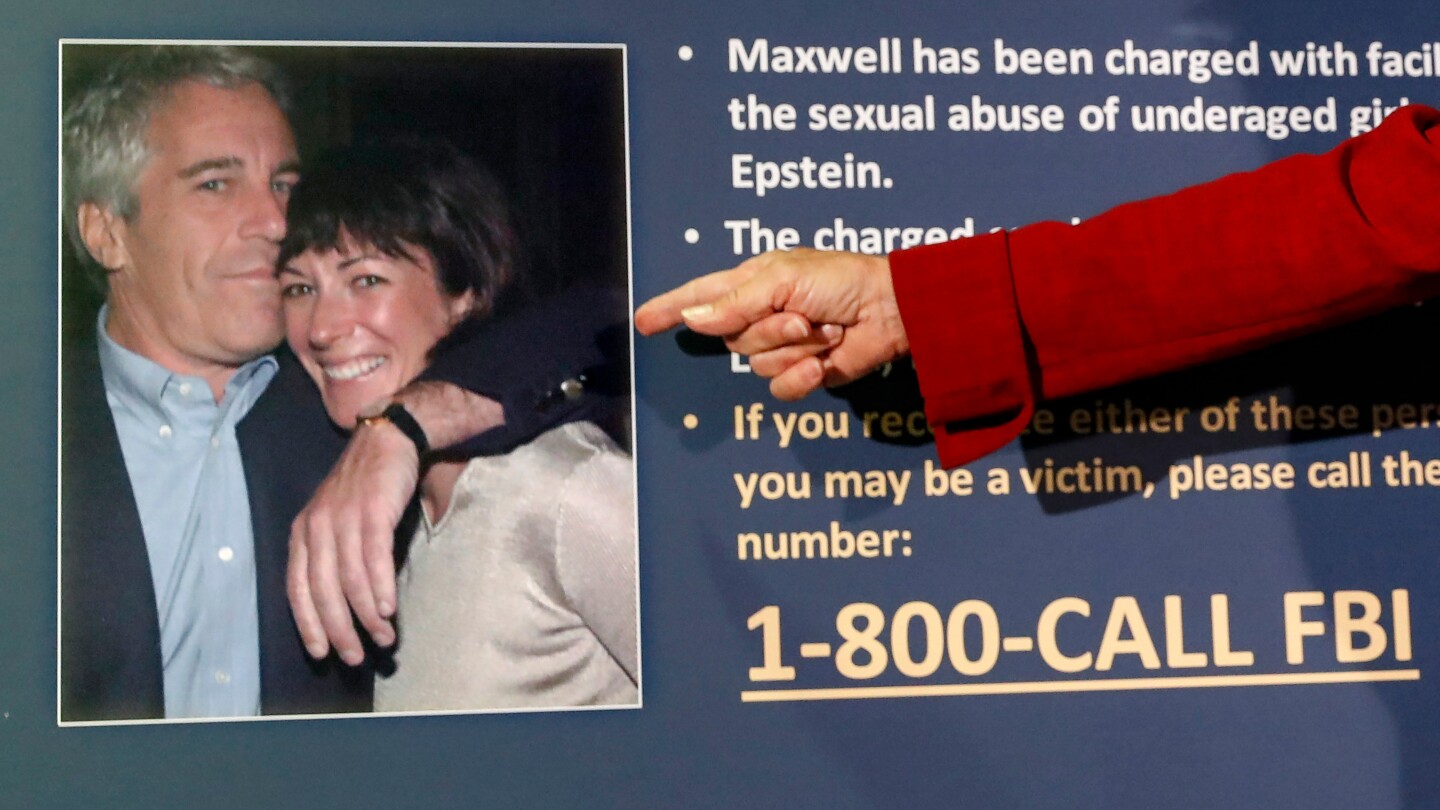
Epstein, a wealthy financier, was arrested on sex trafficking charges in July 2019 but died by suicide in jail a month later. Maxwell, a British socialite and Epstein’s longtime confidant, was convicted of sex trafficking in December 2021 and is currently serving a 20-year prison sentence. After giving an interview to the Justice Department’s second-in-command in July, she was transferred from a federal prison in Florida to a prison camp in Texas.
Tens of thousands of pages of records related to Epstein and Maxwell have already been made public through various lawsuits, disclosures, and Freedom of Information Act requests. Many materials the Justice Department plans to release originated from Palm Beach police and the local U.S. Attorney’s office, which investigated Epstein in the mid-2000s.
Last year, a Florida judge ordered the release of approximately 150 pages of transcripts from a state grand jury that investigated Epstein in 2006. That investigation ultimately concluded in 2008 with a controversial arrangement allowing Epstein to avoid federal charges by pleading guilty to a state prostitution charge, resulting in a 13-month sentence that he served largely through a jail work-release program.
Fact Checker
Verify the accuracy of this article using The Disinformation Commission analysis and real-time sources.

14 Comments
This case has been shrouded in secrecy for too long. While I’m glad the public will get more insight, I hope the records are carefully reviewed to protect anyone who may have been abused.
Absolutely, the well-being of the victims must be the paramount concern as these documents are unsealed.
It’s good that the judge is being cautious about what information is revealed. The victims deserve privacy and respect, even as the public demands more transparency.
Agreed. A balanced approach that prioritizes the victims is the best way forward here.
The Epstein case has been shrouded in so much controversy and secrecy. I’m glad the transparency act is forcing some of these records to be released, but I share concerns about protecting vulnerable individuals.
Absolutely. Balancing transparency and privacy will be a delicate task, but one that must be handled with the utmost care and sensitivity.
Interesting that the judge is allowing the release of these records. The public deserves transparency, but I hope the release doesn’t reveal any new victims or sensitive information that could further traumatize those involved.
I agree, the safety and privacy of the victims should be the top priority here.
The Epstein Files Transparency Act seems like an important step towards accountability. However, I worry that the lack of new revelations could be disappointing for those seeking justice.
You raise a fair point. The public may have high expectations, so managing those will be crucial as the records are released.
While I’m curious to learn more, I hope the unsealing of these records doesn’t retraumatize or expose any additional victims. The focus should remain on seeking justice responsibly.
Well said. The ethical handling of sensitive information is key, even as the public’s right to know is considered.
This is a complex situation with important principles at stake. I hope the judge can strike the right balance between public disclosure and safeguarding the wellbeing of victims and their families.
Well said. It’s a challenging situation, but the key is ensuring justice is served while also respecting the rights and privacy of those involved.