


Listen to the article
Federal Judge Again Blocks Trump Administration’s Third-Country Deportation Policy, Challenging Supreme Court
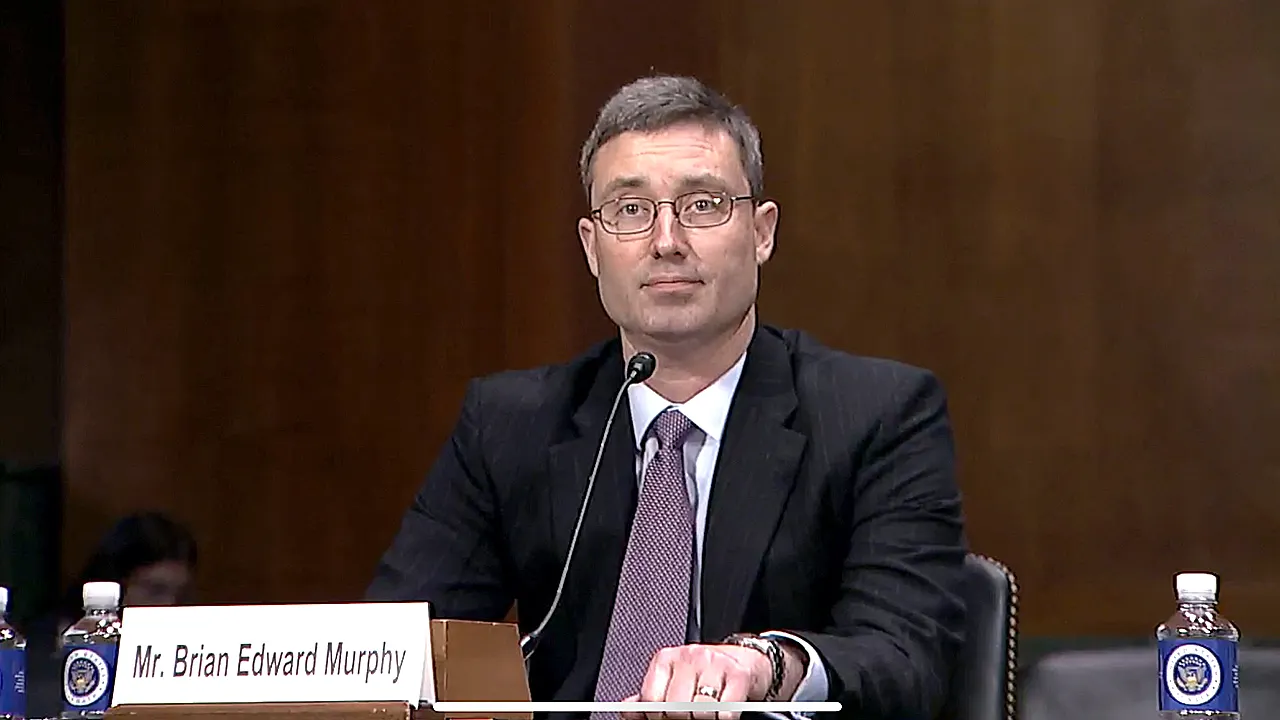
A federal judge appointed by former President Joe Biden has once again ruled against the Trump administration’s policy of deporting migrants to third countries, setting up another potential confrontation with the Supreme Court.
U.S. District Judge Brian Murphy of Boston issued an 81-page decision on Thursday finding that the Department of Homeland Security’s deportation process violates migrants’ due process rights by not giving them sufficient time to raise concerns about potential torture in the countries where they are sent. The ruling specifically targets deportations to countries not specified in the migrants’ original removal orders.
This latest ruling comes just months after the Supreme Court intervened in a previous decision by Judge Murphy on the same issue. In June, the high court stayed Murphy’s preliminary injunction in a 6-3 decision, effectively allowing the deportation policy to continue.
In an unusual development that highlighted tensions between the judiciary levels, the Supreme Court issued a second 7-2 order a week after its initial stay, explicitly admonishing Judge Murphy for attempting to circumvent its ruling. The judge had claimed that a separate May 21 ruling he made regarding six migrants bound for South Sudan remained “in full force and effect” despite the Supreme Court’s stay.
“Our June 23 order stayed the April 18 preliminary injunction in full. The May 21 remedial order cannot now be used to enforce an injunction that our stay rendered unenforceable,” the Supreme Court’s majority wrote in its follow-up order. The court took the extraordinary step of noting that if Murphy continued to interfere, the government could seek a writ of mandamus—a rare legal tool used to force lower court judges to comply with the law.
Even Justice Elena Kagan, an Obama appointee who had sided with Murphy’s initial decision to block the deportations, agreed that the judge had acted improperly. “I do not see how a district court can compel compliance with an order that this Court has stayed,” Kagan wrote in a concurring opinion.
The Department of Justice had strongly criticized Murphy’s earlier attempt to block the deportations despite the Supreme Court’s stay. Solicitor General John Sauer described it as a “lawless act of defiance” of the Supreme Court’s authority.
In his Thursday ruling, Murphy maintained that DHS’s deportation policy was “not fine nor is it legal.” He stayed his ruling for 15 days to allow the Trump administration to appeal to the U.S. Court of Appeals for the First Circuit, acknowledging the “importance” and “unusual history” of the case.
The legal battle highlights the ongoing tension between the judiciary and executive branch over immigration policy. Judge Murphy, who was confirmed by the Senate along party lines, has become a focal point in the immigration debate as the Trump administration works to implement stricter border enforcement.
The dispute occurs against the backdrop of dramatically shifting immigration policies between administrations. During Biden’s term, critics pointed to nearly 10 million migrant encounters at the southern border and policies that released millions of migrants into the country while awaiting immigration hearings. Border encounters have reportedly decreased significantly since Trump returned to office.
The case will likely return to the Supreme Court, creating another test of judicial authority and executive power in immigration enforcement. If the high court intervenes again, it could further clarify the boundaries between judicial oversight and executive immigration policy implementation, potentially with long-lasting implications for future administrations.
Fact Checker
Verify the accuracy of this article using The Disinformation Commission analysis and real-time sources.

9 Comments
The Supreme Court has already weighed in on this policy, but the lower court judge appears to be pushing back. I wonder if there are specific legal arguments the judge is making that the Supreme Court didn’t fully address before. It’ll be interesting to see if this decision stands.
It’s noteworthy that this judge has had prior rulings overturned on the same issue. That suggests the legal questions involved are quite complex and open to differing interpretations. I’m interested to see how the higher courts respond to this latest decision.
This seems like a challenging case balancing immigration policy, due process, and national security concerns. The back-and-forth between the courts highlights the difficulty in finding the right balance. I’m curious to see how it unfolds.
This seems like a contentious case where the courts are struggling to find the right balance. On one hand, ensuring due process is critical. But the government also has a responsibility to enforce immigration laws and protect public safety. It will be interesting to see how this latest ruling is received and whether it stands up on appeal.
This judge seems to have a history of rulings that challenge the executive branch’s immigration policies. While upholding due process is important, the courts also need to consider the broader policy implications and practical realities. It will be interesting to see how this latest decision is received.
This seems like an ongoing tug-of-war between the courts over immigration policy. I can understand the desire to ensure proper due process, but the government also has a responsibility to uphold the law and protect public safety. It’s a difficult balance to strike.
The back-and-forth between the courts on this issue highlights the complexity of the legal and policy questions involved. I’m curious to see if the Supreme Court will provide more definitive guidance on how to balance due process and immigration enforcement priorities.
The Supreme Court has already weighed in on this, so it will be telling to see if they uphold or overturn this latest lower court ruling. Immigration is a highly contentious issue, and the courts are clearly struggling to find the right approach.
Interesting that this judge has prior rulings overturned by the Supreme Court on this same issue. Seems like a complex case with competing legal interpretations. It will be worth following how this latest decision plays out.