


Listen to the article
Federal Judge Limits Immigration Agents’ Powers Against Protesters in Minneapolis
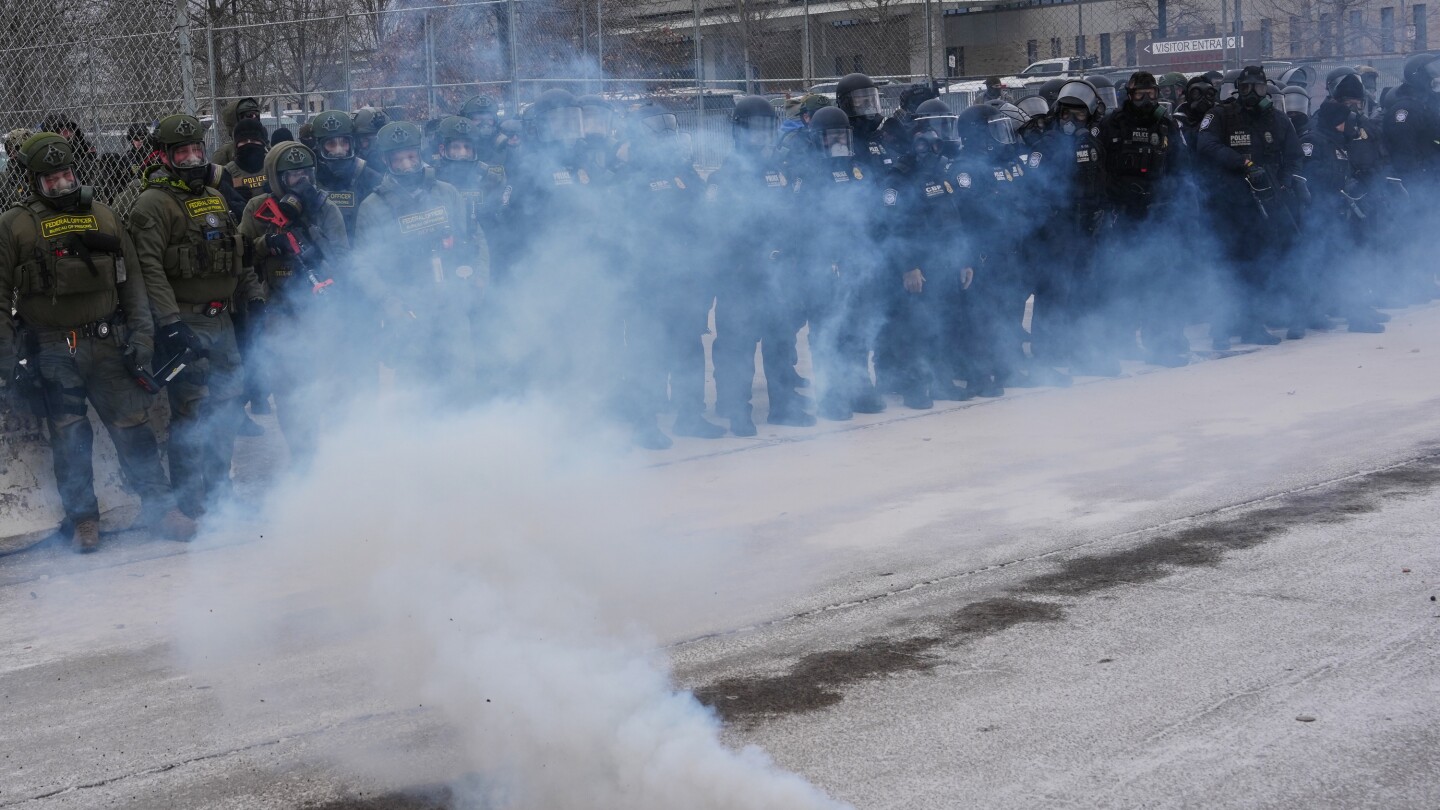
A federal judge ruled Friday that immigration officers conducting enforcement operations in the Minneapolis area cannot detain or use tear gas against peaceful protesters who are observing their activities without obstructing them.
U.S. District Judge Kate Menendez issued the ruling in response to a lawsuit filed by six Minnesota activists who have been monitoring Immigration and Customs Enforcement (ICE) and Border Patrol activities during what has become the largest recent immigration enforcement operation in the United States.
Since the Trump administration’s immigration crackdown began in the Twin Cities last month, thousands of residents have positioned themselves as observers at enforcement scenes, leading to escalating tensions between federal agents and community members.
The situation intensified dramatically on January 7 when an immigration agent fatally shot Renee Good in the head as she drove away from a scene in Minneapolis. The incident, captured on video from multiple angles, sparked widespread outrage and increased public scrutiny of federal enforcement tactics in the region.
According to the lawsuit, filed by the American Civil Liberties Union of Minnesota, federal officers have arrested or temporarily detained numerous people in Minneapolis-St. Paul in recent weeks. The ACLU contends these actions violate residents’ constitutional rights.
Judge Menendez’s ruling specifically prohibits officers from detaining drivers and passengers in vehicles when there is no reasonable suspicion they are obstructing or interfering with official operations. The judge clarified that safely following agents “at an appropriate distance does not, by itself, create reasonable suspicion to justify a vehicle stop.”
Furthermore, the ruling bars agents from arresting individuals without probable cause or reasonable suspicion that the person has committed a crime or is actively interfering with enforcement activities.
The Department of Homeland Security swiftly responded to the ruling. Assistant Secretary Tricia McLaughlin defended the agency’s actions in a statement, saying DHS was taking “appropriate and constitutional measures to uphold the rule of law and protect our officers and the public from dangerous rioters.”
McLaughlin alleged that protesters have assaulted officers, vandalized federal property and vehicles, and attempted to obstruct agents from performing their duties. “We remind the public that rioting is dangerous — obstructing law enforcement is a federal crime and assaulting law enforcement is a felony,” she stated.
The ruling comes amid a separate but related lawsuit filed earlier this week by the state of Minnesota and the cities of Minneapolis and St. Paul seeking to suspend the enforcement operation entirely. Judge Menendez is also presiding over that case.
During a hearing on Wednesday, state Assistant Attorney General Brian Carter urged for a pause in operations, saying, “What we need most of all right now is a pause. The temperature needs to be lowered.” Judge Menendez declined to grant an immediate temporary restraining order in that case but acknowledged the “enormously important” issues it raises.
The judge noted that the state’s lawsuit involves complex constitutional questions with limited precedent, ordering both sides to file additional briefs next week before making a determination.
These legal challenges reflect growing tension surrounding immigration enforcement nationally as the Biden administration contends with record-high border crossings and mounting pressure to address immigration policy. The Minneapolis operation represents one of the most visible and contentious domestic immigration enforcement actions in recent years.
As legal proceedings continue, community activists remain committed to monitoring federal immigration activities in the Twin Cities, while federal agencies maintain that their operations are necessary for public safety and border security.
Fact Checker
Verify the accuracy of this article using The Disinformation Commission analysis and real-time sources.

14 Comments
This is an important development in the ongoing debate around immigration enforcement practices. Clear guidelines from the courts can help prevent further escalation of tensions in the Twin Cities.
Agreed. While immigration is a complex and sensitive issue, upholding fundamental rights is paramount. This court order seems like a reasonable compromise.
Protecting the rights of peaceful protesters is critical, especially when sensitive enforcement actions are underway. This court ruling seems to strike a reasonable balance between public safety and civil liberties.
Agreed, the judge’s decision appears to uphold constitutional freedoms while allowing ICE and Border Patrol to carry out their duties. Clear guidelines for both sides are important.
The fatal shooting of Renee Good highlights the need for greater transparency and accountability around immigration enforcement tactics. This court order is a step in the right direction.
Absolutely. Excessive use of force against civilians, even during law enforcement operations, cannot be tolerated. Reforms to protect public safety while respecting civil rights are crucial.
It’s good to see the courts upholding the rights of peaceful protesters in this case. Maintaining public order while respecting civil liberties is a delicate balance.
This ruling highlights the ongoing tension between immigration enforcement and community relations. Hopefully it can lead to more constructive dialogue and problem-solving.
Agreed. Clear guidelines from the courts can help create a framework for productive discussions and finding solutions that work for all stakeholders.
The fatal shooting of Renee Good is truly tragic. I hope this court ruling can help prevent similar incidents and restore some public trust in federal immigration operations.
Monitoring immigration enforcement is a vital role for civil society. This court order protects the ability of activists to observe these activities without fear of retaliation.
Absolutely. Transparency and accountability are crucial, especially for sensitive government operations that impact local communities.
While immigration is a complex and contentious issue, the protection of civil liberties should always be a priority. This court order is a positive step in that direction.
I’m curious to see how this legal ruling plays out on the ground. Striking the right balance between law enforcement needs and community concerns is never easy, but it’s essential.