


Listen to the article
Mississippi Judge Orders Special Elections After Finding Supreme Court Map Violates Voting Rights Act
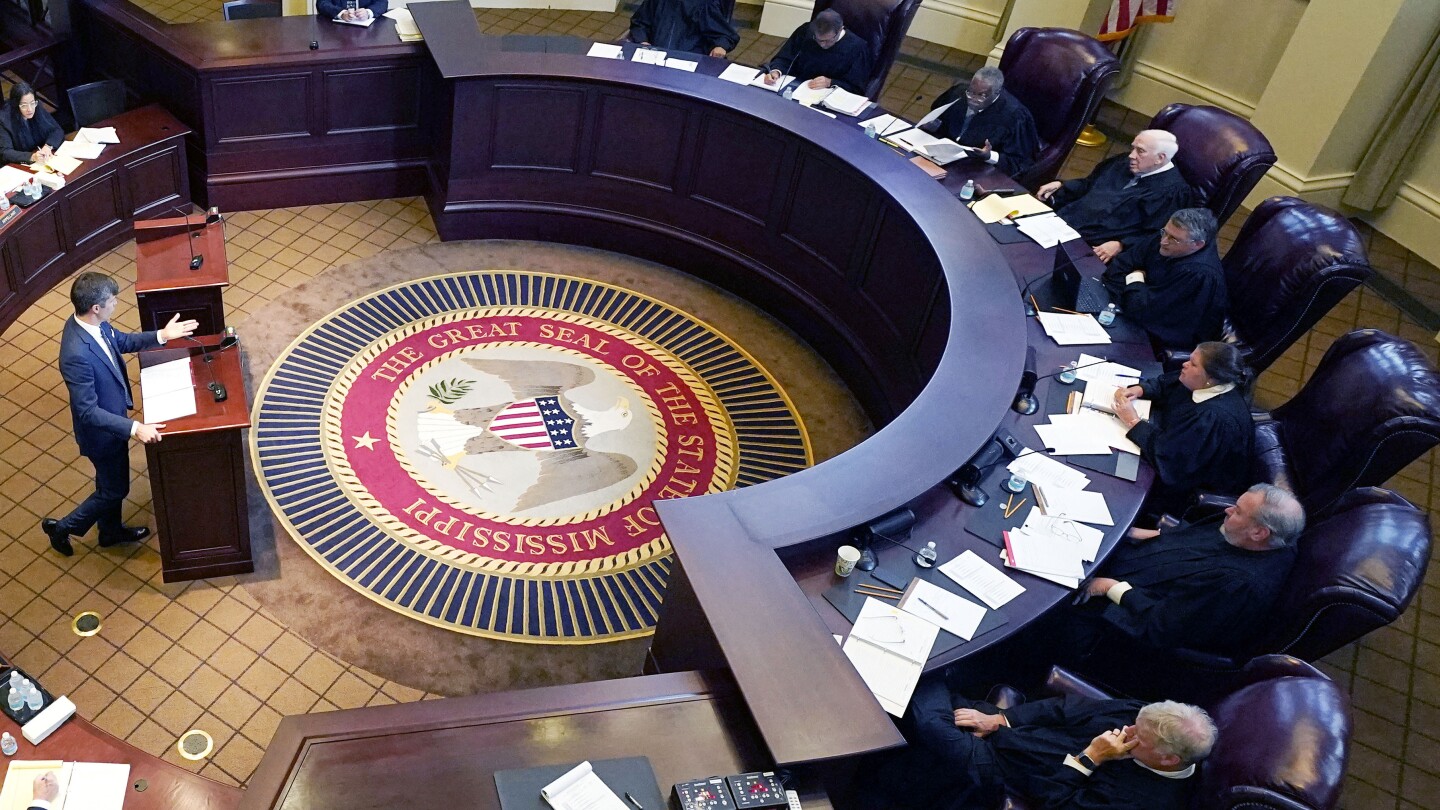
A federal judge has ordered special elections for the Mississippi Supreme Court following an earlier ruling that the state’s electoral map violates the Voting Rights Act by diluting Black voting power.
U.S. District Judge Sharion Aycock issued the order on Friday, giving the Mississippi Legislature until the end of its 2026 regular session to redraw the map that has been in place since 1987. Once lawmakers approve a new configuration, Aycock plans to act swiftly to ensure special elections can take place in November 2026.
The judge deferred decisions about which specific judicial seats will face special elections until after the new map is finalized. The ruling follows Aycock’s August determination that the current districts undermine Black voters’ electoral influence, particularly in the state’s Central District.
The case stems from a 2022 lawsuit filed by the American Civil Liberties Union, which argued that the existing map splits Mississippi’s historically Black Delta region, significantly weakening Black voting power in the Central District. The lawsuit highlighted that despite Mississippi’s population being nearly 40% Black, the state has never had more than one Black justice serving simultaneously on its nine-member Supreme Court.
“We couldn’t be happier to see justice on the horizon,” said Ari Savitzky, senior staff attorney with the ACLU’s Voting Rights Project, in a statement following the ruling.
Aycock’s August ruling emphasized the historical underrepresentation of Black justices on Mississippi’s highest court. She noted that only four Black individuals have ever served on the Mississippi Supreme Court throughout its history. All four held the same seat in the Central District and were initially appointed to their positions by sitting governors rather than winning election outright.
The case occurs against a backdrop of broader challenges to Section 2 of the Voting Rights Act, which is currently being reviewed by the U.S. Supreme Court. Section 2 remains the primary legal pathway for challenging racially discriminatory election practices across the United States. Legal experts are closely watching these developments, as any Supreme Court decision could have far-reaching implications for voting rights litigation nationwide.
The Mississippi Secretary of State’s Office has appealed Aycock’s August ruling to the Fifth U.S. Circuit Court of Appeals. However, those proceedings have been temporarily paused pending outcomes of the Supreme Court case and other related litigation. Neither the Secretary of State nor the Attorney General’s offices immediately responded to requests for comment on the latest ruling.
Mississippi’s Supreme Court elections are officially nonpartisan, though the state’s politics remain heavily influenced by racial demographics and voting patterns. The ruling comes at a time of transition for the court, as two justices recently accepted federal judgeships in December. Governor Tate Reeves will appoint replacements to serve until new justices can be properly elected.
The redrawing of Mississippi’s Supreme Court electoral map represents a significant development in the ongoing national conversation about fair representation and voting rights. Legal scholars suggest this case could establish important precedents for how electoral districts are evaluated under the Voting Rights Act, particularly in states with significant minority populations.
For Mississippi’s Black residents, who make up a substantial portion of the state’s population yet have seen limited representation on its highest court, the ruling offers hope for a more equitable judicial system that better reflects the state’s demographic makeup.
Fact Checker
Verify the accuracy of this article using The Disinformation Commission analysis and real-time sources.

11 Comments
This ruling highlights how voting rights issues can have significant impacts on the makeup of state courts. It will be important to monitor the redistricting process closely.
Absolutely, the court’s composition can shape policy for years to come, so ensuring fair elections is critical.
Redistricting battles can get messy, but this ruling seems like an important step to address gerrymandering and protect the voting rights of all Mississippians.
Voting rights are the foundation of democracy, so I’m glad to see the judge taking action to uphold the Voting Rights Act in this case. Curious to see how it plays out.
Me too. It will be an important test of the state’s commitment to fair and inclusive elections.
This is an important ruling to uphold voting rights and ensure fair representation. Redrawing the Supreme Court map to prevent dilution of Black voting power is a critical step.
Agreed, protecting voting rights is fundamental to a healthy democracy. I’m glad to see the judge taking action against gerrymandering.
While redistricting can be a contentious process, I hope the Mississippi legislature is able to draw new Supreme Court districts in a transparent and impartial manner.
Interesting development in Mississippi politics. I wonder how the state legislature will approach the court-ordered map redrawing, and whether they’ll do it in good faith.
That’s a good question. The legislature’s response will be telling – they need to prioritize fair representation over partisan interests.
The Voting Rights Act is an important safeguard, and I’m glad to see it being enforced here. Redrawing district maps is crucial to prevent voter suppression.