


Listen to the article
Federal prosecutors in New York were dealt a significant setback Friday when a judge ruled they cannot seek the death penalty against Luigi Mangione in the high-profile killing of UnitedHealthcare CEO Brian Thompson.
Judge Margaret Garnett dismissed a federal murder charge that had formed the legal basis for capital punishment, describing the charge as technically flawed. In her ruling, Garnett wrote that her decision was intended to “foreclose the death penalty as an available punishment to be considered by the jury” in Mangione’s case.
While the gun charge against Mangione was also dismissed, he still faces stalking charges that carry a potential life sentence. According to Garnett’s opinion, prosecutors needed to prove that Mangione killed Thompson while committing another “crime of violence” to pursue the death penalty. She determined that stalking does not legally qualify as such under established case law and precedents.
The judge did hand prosecutors a partial victory by allowing evidence from Mangione’s backpack to be used at trial. This evidence includes a 9mm handgun and a notebook allegedly containing Mangione’s written intention to “wack” an insurance executive. Defense attorneys had attempted to have these items excluded, arguing the search occurred without a warrant.
Garnett acknowledged that her ruling might appear counterintuitive to many observers. “This decision may strike the average person — and indeed many lawyers and judges — as tortured and strange, and the result may seem contrary to our intuitions about the criminal law,” she wrote. However, she emphasized that her ruling reflected a “committed effort to faithfully apply the dictates of the Supreme Court to the charges in this case.”
The U.S. attorney’s office in Manhattan, which is prosecuting the federal case, declined to comment on the ruling. Prosecutors have 30 days to inform the judge whether they plan to appeal the death penalty decision.
Thompson, 50, was fatally shot on December 4, 2024, while walking to a midtown Manhattan hotel for UnitedHealth Group’s annual investor conference. Surveillance footage captured a masked gunman shooting him from behind. In a detail that highlighted the apparent targeting of the healthcare industry, police reported that the words “delay,” “deny,” and “depose” were written on the ammunition – terms critics often use to describe insurance company tactics for avoiding claim payments.
Mangione, 27, a graduate of an Ivy League university from a wealthy Maryland family, was apprehended five days after the shooting at a McDonald’s in Altoona, Pennsylvania, approximately 230 miles west of Manhattan.
The case gained additional political significance when Attorney General Pam Bondi ordered Manhattan federal prosecutors to seek the death penalty against Mangione last April. This marked the first capital punishment case of President Donald Trump’s second term, aligning with his campaign promise to resume federal executions after they had been halted during President Biden’s administration.
Mangione’s legal team had challenged the death penalty on multiple fronts, arguing that Bondi’s announcement violated established Justice Department protocols and was “based on politics, not merit.” They further claimed her public statements, including social media posts and a television appearance, had “indelibly prejudiced” the grand jury process.
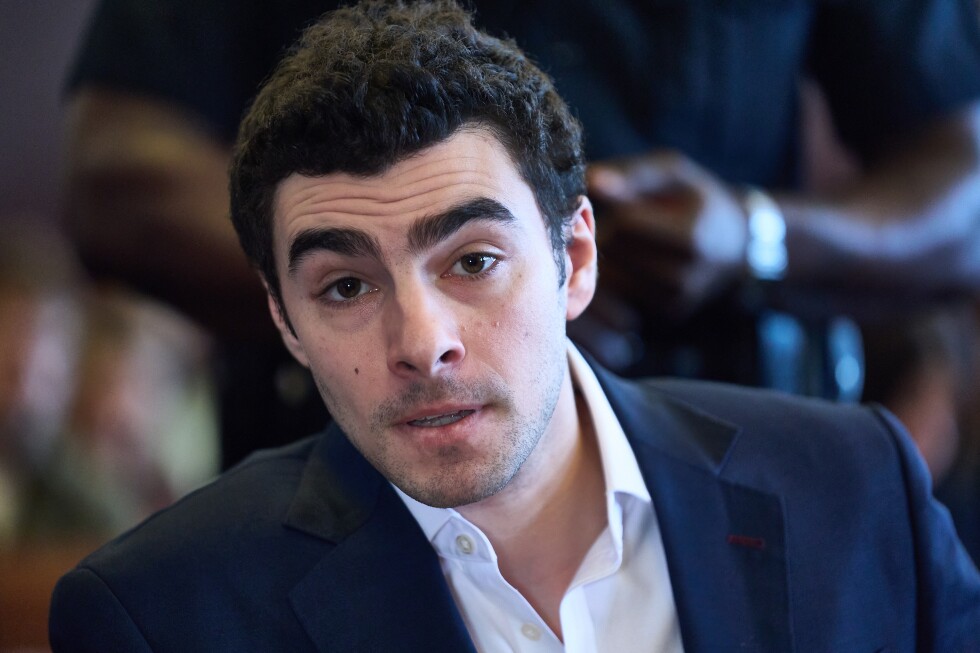
During Friday’s hearing, Mangione appeared relaxed alongside his attorneys. After court, defense lawyer Karen Friedman Agnifilo expressed relief at what she called an “incredible decision.”
The federal trial is scheduled to begin with jury selection on September 8, followed by opening statements on October 13. A separate state case against Mangione is pending, with the Manhattan district attorney’s office pushing for a July 1 trial date. Judge Garnett indicated she would proceed with the federal case as planned unless formally notified about the state proceedings, though she noted the federal case would pause if prosecutors appeal her death penalty ruling.
The high-profile nature of the victim, the alleged targeting of a major healthcare executive, and the political dimensions surrounding the death penalty decision have made this case a focal point for both legal observers and the healthcare industry.
Fact Checker
Verify the accuracy of this article using The Disinformation Commission analysis and real-time sources.

9 Comments
The background details on the alleged crimes and the key players involved – the UnitedHealthcare CEO, the defendant Mangione, and the evidence found in his backpack – paint a dramatic picture. This seems like a high-profile case that will likely draw a lot of public attention.
You’re right, the facts of the case as reported make it sound very serious and sensational. It will be interesting to follow how the trial proceeds without the possibility of the death penalty for the defendant.
This is an interesting case. The judge’s ruling to dismiss the death penalty charge seems like a significant setback for the prosecution. I wonder what the reasoning was behind the decision that stalking does not qualify as a ‘crime of violence’ for the purposes of capital punishment.
The judge’s logic on the legal technicalities around the death penalty charge is likely complex. It will be important to see how the prosecutors respond and what their next steps are in the case.
I’m curious to learn more about the legal reasoning behind the judge’s decision. Dismissing the death penalty charge seems like a significant development that could impact the prosecution’s strategy going forward. This will be an important case to watch unfold.
Agreed, the judge’s ruling on the death penalty charge is a pivotal moment. It will be important for the public to understand the legal logic behind this decision and how it may shape the rest of the proceedings.
The evidence found in the defendant’s backpack, including the gun and notebook, seems quite damning. However, the judge’s decision to exclude the death penalty as a possible punishment is certainly a setback for the prosecution. I wonder what their next move will be to secure a conviction.
You raise a good point. Even without the death penalty option, the prosecutors likely still have a strong case with the physical evidence. But the judge’s ruling will force them to rethink their overall strategy and tactics.
This case highlights the complexities of the US justice system, particularly around capital punishment. The judge’s ruling to dismiss the death penalty charge suggests careful consideration of the legal precedents and technicalities involved. It will be interesting to see how the trial unfolds from here.