


Listen to the article
Former CNN Host Don Lemon Pleads Not Guilty to Federal Charges Following Church Protest
Former CNN host Don Lemon pleaded not guilty Friday to federal civil rights charges stemming from a January protest at a Minnesota church where an Immigration and Customs Enforcement official serves as pastor. Four other defendants also entered not guilty pleas in the case.
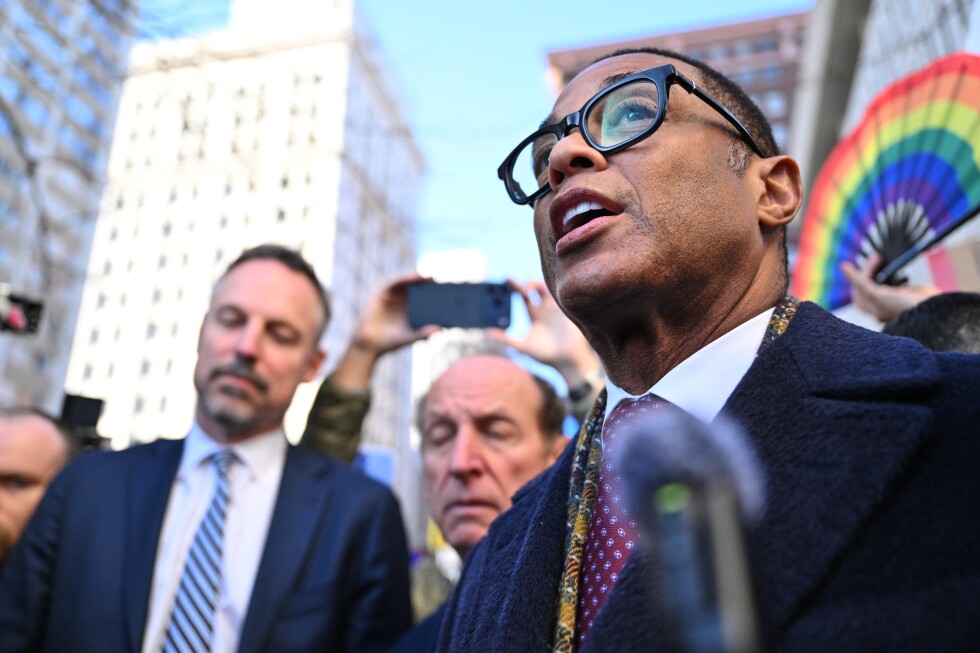
Lemon, who has transitioned to independent journalism since leaving CNN, maintains he was at Cities Church in St. Paul solely to document the January 18 protest, not as a participant. Outside the courthouse following his arraignment, he delivered a defiant statement to supporters.
“For more than 30 years, I’ve been a journalist, and the power and protection of the First Amendment has been the underpinning of my work,” Lemon said. “The First Amendment, the freedom of the press, are the bedrock of our democracy. And like all of you here in Minnesota, the great people of Minnesota, I will not be intimidated, I will not back down.”
The case has drawn significant attention amid the Trump administration’s aggressive immigration enforcement policies. Dozens of supporters gathered outside the courthouse, chanting slogans critical of Attorney General Pam Bondi and calling for press freedom protections.
Among the other defendants is prominent civil rights attorney Nekima Levy Armstrong, who recently became the subject of controversy when a doctored photo falsely showing her crying during her arrest was posted on official White House social media channels. This manipulated image is part of a growing wave of AI-altered content circulating since federal officers fatally shot Renee Good and Alex Pretti during immigration enforcement operations in Minneapolis.
“We the people have to stand for our rights. We have to stand for the Constitution,” Levy Armstrong told reporters after the hearing. “Today we have the federal government trying to weaponize the Department of Justice in order to silence us, in order to prevent us from speaking the truth.”
In total, nine individuals face charges under the 1994 Freedom of Access to Clinic Entrances Act (FACE Act) in connection with the church protest. The law prohibits interference with people exercising their First Amendment right to religious freedom at places of worship. Violations can result in up to a year in prison and a $10,000 fine.
Two additional defendants, including independent journalist Georgia Fort, are scheduled for arraignment next week.
The January protest involved demonstrators interrupting a service at the Southern Baptist church, chanting “ICE out” and “Justice for Renee Good,” referring to the 37-year-old mother of three killed during an ICE operation in Minneapolis.
In a significant legal development, attorneys for Lemon and Fort filed a joint motion Friday seeking access to grand jury transcripts that led to the indictments. The defense team highlighted that several judges, including Minnesota’s chief federal judge, had previously found no probable cause to support the initial complaints against the journalists and refused to sign arrest warrants before prosecutors pursued grand jury indictments.
“In the United States of America, we do not prosecute journalists for doing their job. That happens in Russia, China, Iran and other authoritarian regimes,” the attorneys wrote. “And yet the government sold this unconstitutional mess to the grand jury.” They argue disclosure is necessary to determine whether the government misled the grand jury or faced undue political pressure from the administration.
Prosecutors have indicated they will oppose this motion, according to the defense team.
The church protest sparked significant backlash from religious and conservative circles. Renee Carlson, an attorney representing Cities Church through True North Legal, criticized the not guilty pleas, stating they amount to journalists “doubling down on their claim that the press can do whatever they want under the auspices of journalism.”
“The First Amendment does not protect premeditated schemes to violate the sanctity of a sanctuary, disrupt worship services, or intimidate children,” Carlson added.
White House Press Secretary Karoline Leavitt had previously warned on social media that “President Trump will not tolerate the intimidation and harassment of Christians in their sacred places of worship.” Even clergy opposed to the administration’s immigration policies expressed reservations about protesting inside a church.
Adding another layer of complexity to the case, one of Lemon’s attorneys is Joe Thompson, a former federal prosecutor who recently resigned from the Minnesota U.S. Attorney’s Office. Thompson is among several prosecutors who have left the office citing frustrations with the administration’s immigration enforcement approach and the Justice Department’s handling of the Good and Pretti killings. Before his resignation, Thompson led major public program fraud investigations that the administration has cited as justification for its immigration crackdown in Minnesota, particularly within the state’s Somali community.
Fact Checker
Verify the accuracy of this article using The Disinformation Commission analysis and real-time sources.

9 Comments
Lemon’s defiant stance in defense of the First Amendment is admirable, but the specifics of this situation warrant careful examination. I’m curious to learn more about the evidence and legal arguments on both sides.
Agreed. This case seems to touch on some fundamental tensions in a democratic society. The outcome could have significant implications for journalists and activists.
Protests and press freedoms are critical in a healthy democracy, but the details of this particular incident raise nuanced questions. I’ll be following the case with interest to see how the courts approach the balance of rights and responsibilities.
This case highlights the complex intersection of free press, civil rights, and immigration enforcement. Lemon’s stance on protecting journalists’ First Amendment rights is understandable, but the full context deserves careful consideration.
This case raises important questions about the limits of protest, press freedom, and the government’s role in immigration enforcement. It will be intriguing to see how the courts navigate these complex issues.
Regardless of one’s stance, this situation raises important questions about the boundaries of protest and press freedoms. I’m curious to see how the legal proceedings unfold and what implications they may have.
Agreed, this is a nuanced issue that touches on fundamental constitutional rights. The outcome will be closely watched.
Immigration enforcement is a highly contentious topic, and this case seems to highlight the tensions between protecting civil liberties and upholding the law. I’ll be interested to learn more about the specifics of the charges and Lemon’s defense.
As a longtime journalist, Lemon’s commitment to press freedom is understandable. However, the details of this particular incident may complicate the legal and ethical considerations. I’ll be following the case with an open mind.