


Listen to the article
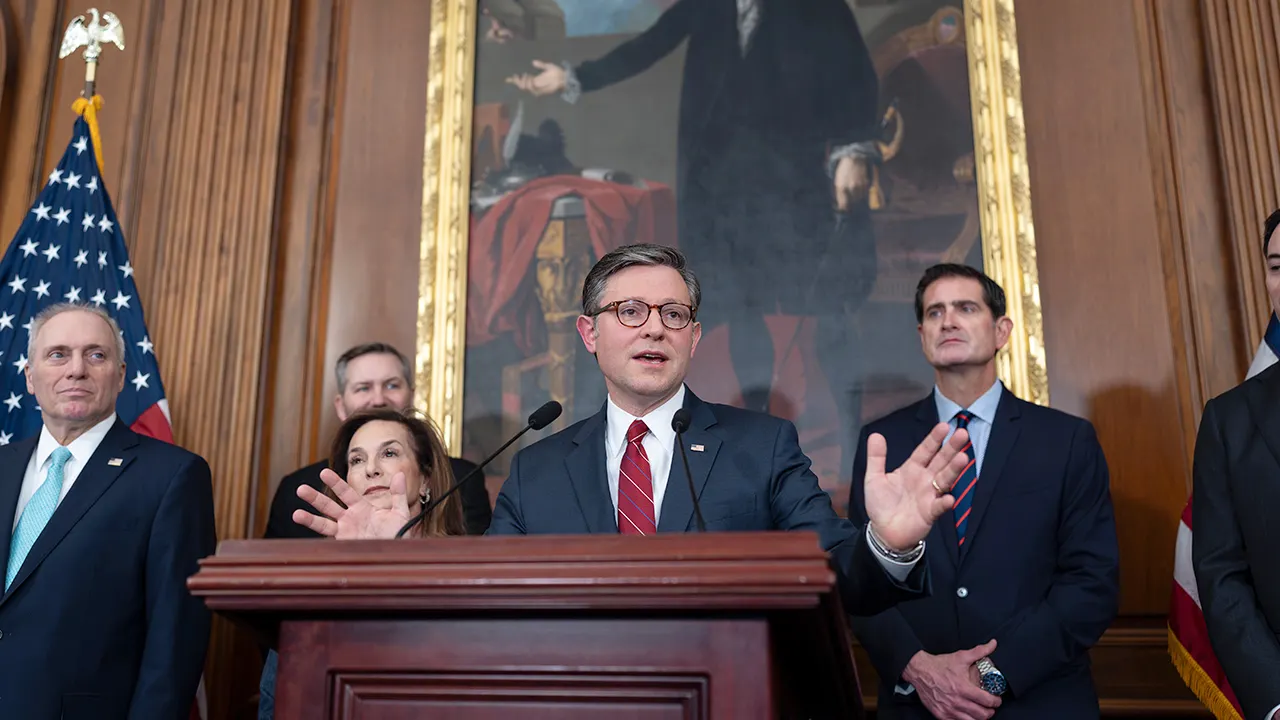
House Speaker Mike Johnson has called for a unified national framework to regulate artificial intelligence, while emphasizing the need for balance between oversight and innovation. Speaking at the annual bipartisan Hill & Valley Forum focused on American AI innovation, Johnson outlined a vision that would allow the U.S. to maintain its competitive edge in the global AI race.
“America will win the AI race. We will win it, if two things happen — if government resists the siren song of control, and if industry steps up as our patriotic partner,” Johnson said during Tuesday’s gathering of lawmakers and private sector leaders on Capitol Hill.
The Louisiana Republican detailed three specific priorities that Congress must address regarding AI regulation. First, he emphasized the importance of establishing “a single national framework that protects children, safeguards communities, supports creators, and avoids a patchwork of state regulations.”
Johnson stressed that regulatory consistency is crucial for both market stability and advancing national interests. “We recognize that constant shifts in policy don’t just confuse the market, they run contrary to our national interest,” he explained.
The Speaker indicated that lawmakers would work within existing regulatory structures to establish necessary guardrails without stifling innovation. “We will utilize existing structures to establish safeguards and rules of the road, so to speak, without smothering the whole marketplace with red tape,” Johnson said.
His second priority frames AI technology as a critical national security concern, emphasizing that advanced AI capabilities must remain in the hands of the United States and its allies rather than adversarial nations. This approach aligns with growing bipartisan concern about technological competition, particularly with China.
Johnson’s final point stressed the urgency of action, stating that Congress must “move at the speed that victory demands” to ensure American leadership in this rapidly evolving field.
The Speaker’s remarks come shortly after President Donald Trump released his own AI regulatory framework, which includes several specific measures. Trump’s proposal would implement stronger protections against self-harm and sexual exploitation on AI platforms accessible to children, streamline permitting processes for AI data centers, and prevent AI systems from being used to suppress free speech.
For these proposals to become reality, they would need to be drafted into legislation and passed by both chambers of Congress. The push for federal AI guidelines follows Trump’s executive action late last year that placed a moratorium on states enacting their own AI regulations, a move aimed at preventing a fragmented regulatory landscape.
The debate around AI regulation highlights the complex balance policymakers face between ensuring safety and ethical use of emerging technologies while maintaining American competitiveness in a crucial economic sector. Industry observers note that the U.S. is competing not only with private sector innovation from other countries but also state-backed AI development programs, particularly from China.
The technology industry has generally supported some level of federal oversight, with many major companies recognizing that clear regulatory frameworks could provide business certainty and help build public trust in AI systems. However, concerns remain about whether regulations could potentially hamper innovation or create compliance burdens that disadvantage smaller companies.
As AI applications continue to proliferate across sectors from healthcare to transportation to financial services, the pressure for comprehensive federal guidelines continues to mount, with both Republicans and Democrats recognizing the need for action, even as they may differ on specific regulatory approaches.
Fact Checker
Verify the accuracy of this article using The Disinformation Commission analysis and real-time sources.

11 Comments
It’s encouraging to see lawmakers prioritize establishing a national AI framework. Avoiding a patchwork of state rules will be crucial for maintaining the US’s competitive edge.
Establishing a unified national framework for AI regulation seems like a sensible approach to balance oversight and innovation. Clear, consistent policies will be crucial as this technology rapidly evolves.
Agree, patchwork regulation would only stifle progress. A balanced national strategy is needed to ensure the US stays competitive in the global AI race.
Glad to see bipartisan cooperation on such an important issue. Consistent AI regulation across the country is essential for market stability and advancing US interests globally.
The Speaker makes a fair point – constant shifts in AI policy would only serve to confuse the market and work against national interests. A unified federal approach seems prudent.
Agreed. Regulatory consistency is key, both for businesses and consumers. Hopefully Congress can find the right formula to foster AI innovation while responsibly managing risks.
I’m curious to learn more about the specific priorities the Speaker outlined for Congress regarding AI regulation. Protecting vulnerable groups while supporting innovation is a complex task.
Interesting to hear the Speaker’s perspective on the key conditions for the US to win the AI race. Protecting children, communities and creators while avoiding fragmented state rules sounds like a reasonable set of priorities.
Curious to see how Congress plans to implement this national framework in practice. Striking the right balance between oversight and innovation will be critical.
Striking the right balance between oversight and innovation in AI will be a delicate challenge. But a unified national approach seems like the best path forward for the US.
Absolutely. Clear, consistent policies will be essential to keep the US at the forefront of AI development and application. The stakes are high, so this issue deserves serious bipartisan focus.