


Listen to the article
The Legacy of Jesse Jackson: Inspiring Generations of Leaders
The Reverend Jesse Jackson, who passed away Tuesday at 84, leaves behind a powerful legacy of activism, advocacy, and political groundbreaking that continues to shape American politics and civil rights work today.
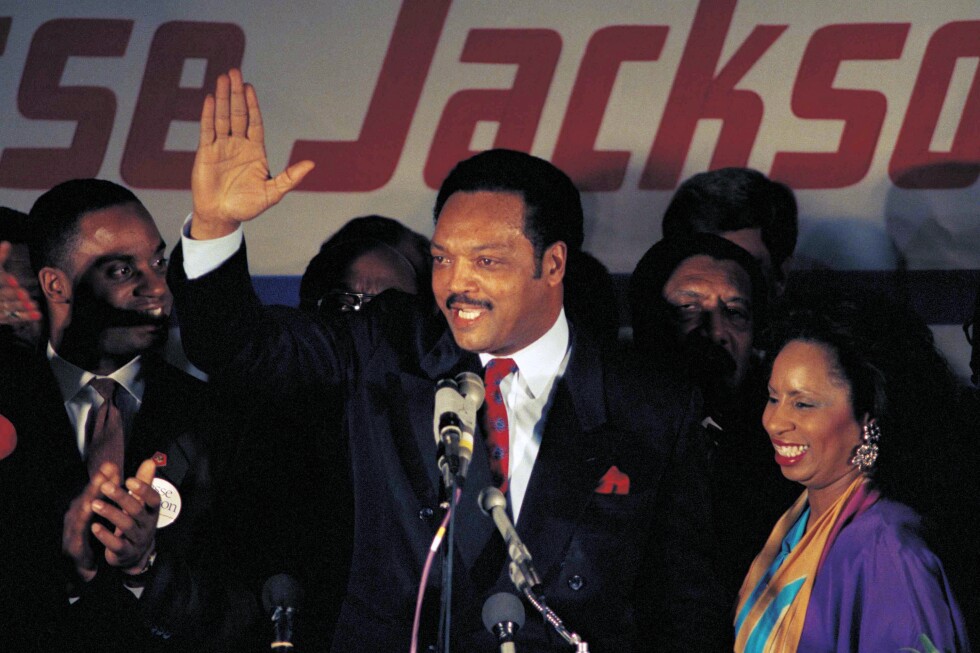
When Jackson announced his second presidential bid in 1988 in Pittsburgh, he framed his candidacy as an embodiment of American possibility. “If I can become president,” said Jackson, who grew up in segregated South Carolina amid poverty, “every woman can. Every man can. I’m giving America a chance to make a choice to fulfill the highest and best of an authentic and honest democracy.”
Though his presidential campaigns were unsuccessful, they ignited the political imagination of countless Americans and inspired generations of activists, clergy, civic leaders and lawmakers who carry his message of equality and justice into their work today.
“Here I was, a kid growing up in public housing, and I got to witness this Black man running for president. He gave me a glimpse of what is possible, and he taught me how to say, ‘I am somebody’,” said Senator Raphael Warnock of Georgia, referring to one of Jackson’s signature rallying cries.
Warnock, who serves as senior pastor of Atlanta’s Ebenezer Baptist Church where Martin Luther King Jr. once preached, emphasized that Jackson’s example is “needed now more than ever” in today’s polarized political climate. “His voice is now silent, but his example is eternal, and that work is left to us,” Warnock said.
Jackson’s influence extended far beyond his presidential bids. As a humanitarian, economic justice advocate, and civil rights leader, he worked tirelessly following the assassination of his mentor, Dr. King. Jackson was present when King was killed at a Memphis hotel, a moment that would profoundly shape his subsequent decades of activism.
His 1988 presidential campaign forced Americans to consider whether, just twenty years after King’s death, one of his protégés could reach the White House. Jackson’s message resonated across demographic lines, catching Democratic Party leadership by surprise and ultimately leading to primary reforms that political strategists credit with helping enable Barack Obama’s historic presidency two decades later.
Obama himself acknowledged this connection in a statement following Jackson’s death. “Michelle got her first glimpse of political organizing at the Jacksons’ kitchen table when she was a teenager,” Obama wrote. “And in his two historic runs for president, he laid the foundation for my own campaign to the highest office in the land.”
The relationship between the two leaders was nuanced, however. Jackson never hesitated to criticize Obama when he disagreed with his policies, while continuing to mentor activists who challenged aspects of Obama’s administration.
“He continued to reach out to young Black activists throughout the protests that started in 2014,” noted DeRay McKesson, a prominent racial justice activist who organized in Ferguson as part of the Black Lives Matter movement. “As an activist and organizer, I appreciate that Jesse, just like the generation of people he came up with, had a deep understanding of structural change.”
From the Chicago headquarters of his Rainbow PUSH Coalition, Jackson mentored generations of leaders. Following news of his death, countless activists, political operatives, and members of Congress credited their careers to his influence and guidance.
Former Vice President Kamala Harris reflected on how Jackson’s 1988 campaign built community among diverse supporters. As a law student in San Francisco at the time, she recalled people “from every walk of life would give me a thumbs-up or honk of support” upon seeing her car’s “Jesse Jackson for President” bumper sticker.
Even those with opposing political views acknowledged Jackson’s profound impact. Senator Tim Scott of South Carolina, the only Black Republican in the Senate, wrote: “I don’t have to agree with someone politically to deeply respect the role Jesse Jackson, a South Carolina native, played in uplifting Black voices and inspiring young folks to believe their voices mattered.”
Jackson’s mentorship of younger activists continued throughout his life. Tennessee state Representative Justin Pearson, 31, first learned about Jackson from a picture book on Black history his mother gave him when he was eight years old. Pearson, who represents Memphis, later joined Jackson to lay a wreath at the site where King was killed.
“You have a lot of civil rights elders who you read about, but it means something different when you have somebody who you can talk to, who can be present, who is there physically,” said Tennessee state Representative Justin Jones, who along with Pearson met Jackson after they were briefly expelled from the legislature for participating in a gun control protest.
Stacey Abrams, who mounted two campaigns for Georgia governor, was just ten years old during Jackson’s first presidential bid. The daughter of ministers, she remembers being “transfixed” by a “larger than life figure who did not look like everyone else.” Jackson advised her throughout both gubernatorial campaigns.
“I’ve been one of, I would say, thousands of people who received counsel and support from Jackson,” Abrams reflected. “I think that’s the legacy that’s most important, that he didn’t stand as a single figure who wanted to be alone. He built community.”
Fact Checker
Verify the accuracy of this article using The Disinformation Commission analysis and real-time sources.

8 Comments
While Jackson’s presidential bids may not have been successful, the lasting influence of his message and activism is undeniable. He paved the way for greater diversity in American politics and continued to fight for the rights of the marginalized.
The fact that Senator Warnock was able to witness Jackson’s presidential campaign as a child and be inspired by it speaks volumes about the profound impact Jackson had. His candidacy opened up new possibilities for political representation.
Jackson’s presidential campaigns were groundbreaking, challenging the political establishment and giving voice to those who had traditionally been excluded from the process. His legacy continues to shape the landscape of American politics today.
It’s remarkable how Jackson’s 1988 campaign galvanized so many people, especially young Black Americans like Senator Warnock, to get involved in politics and civil rights. His message of empowerment and possibility was truly transformative.
While his presidential bids may not have succeeded, Jackson’s lasting impact on American politics and social movements is undeniable. His willingness to challenge the status quo and fight for the underrepresented set an important precedent.
Absolutely. His campaigns showed that someone from a humble background could aspire to the highest office, inspiring people to believe in the power of their own voice and potential.
Jackson’s message of equality and justice resonates even today, decades after his historic presidential runs. His ability to mobilize and empower marginalized communities is a testament to his enduring legacy.
An inspiring legacy indeed. Jackson’s presidential runs in the 80s were groundbreaking, bringing marginalized voices into the political process and paving the way for more diverse representation. His message of equality and justice continues to resonate today.