


Listen to the article
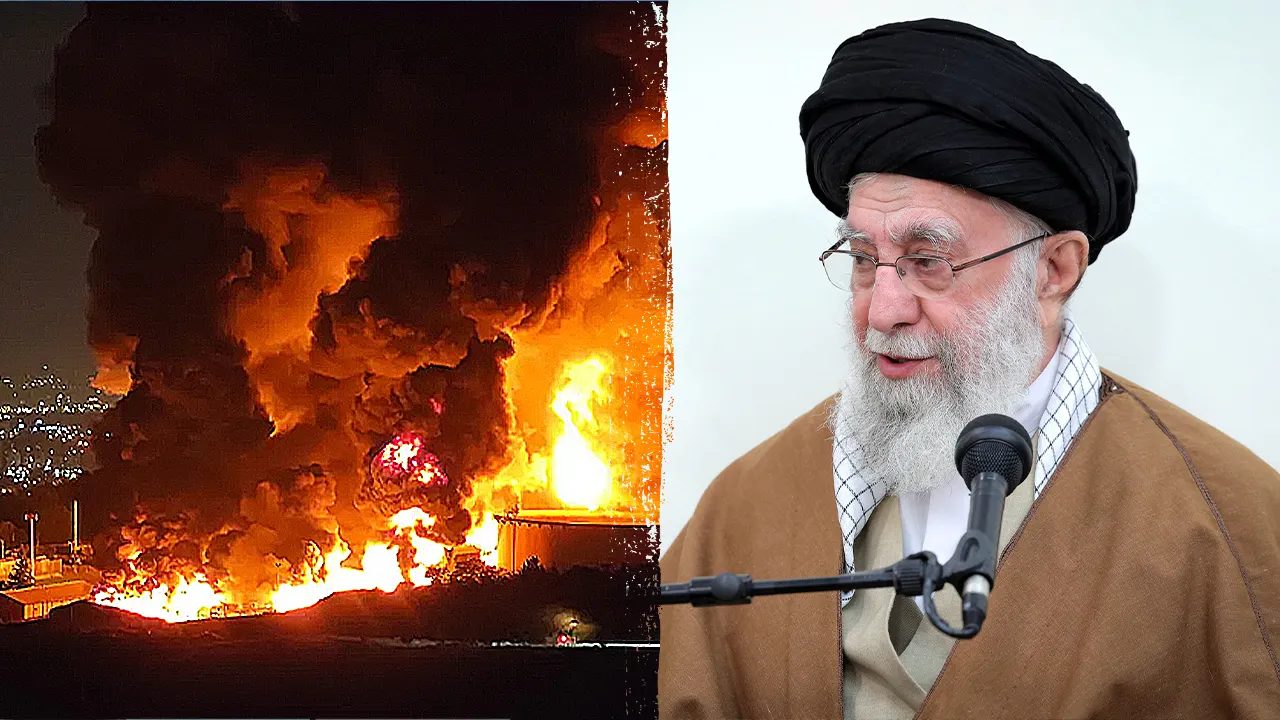
As U.S. and Israeli forces strike deep inside Iran — reportedly targeting senior regime officials including Supreme Leader Ayatollah Ali Khamenei and President Masoud Pezeshkian — the question of who would lead Iran if the Islamic Republic collapses has moved from theoretical speculation to urgent reality.
Iran has responded with missile barrages against U.S. positions across the Middle East. While Iranian state media insists top leaders remain alive and have been relocated to secure locations, the direct targeting of political and military leadership represents a dramatic escalation in the conflict.
Despite the intensity of the current crisis, regional analysts emphasize that no obvious successor is poised to take control of the country should the current leadership fall.
Security forces hold the keys to power
Experts consistently identify one critical factor that will determine Iran’s future: whether the country’s coercive institutions — particularly the Islamic Revolutionary Guard Corps (IRGC) — fracture or remain unified.
If the IRGC maintains its cohesion, the most probable outcome would not be democratic transition but rather a harder, more openly security-dominated system. A clerical reshuffle or military-led consolidation could preserve much of the existing power structure even if key leadership figures are eliminated.
However, if segments of the IRGC or regular armed forces defect or splinter under the combined pressure of war and internal unrest, a genuine political opening could emerge. At present, there is no confirmed evidence of widespread security defections within Iran’s military establishment.
The IRGC has grown increasingly powerful within Iran over the past two decades, controlling significant portions of the economy while maintaining ideological loyalty to the revolutionary system. Any transition scenario must account for their embedded influence throughout Iranian society.
Reza Pahlavi: A voice from exile with uncertain support
Among the most prominent opposition figures abroad is Reza Pahlavi, son of Iran’s last shah, Mohammad Reza Pahlavi. Living outside Iran since the 1979 revolution, he has spent decades advocating for a secular, democratic system to replace clerical rule.
In a recent statement, Pahlavi characterized the U.S. strikes as a “humanitarian intervention” and urged Iran’s military and security forces to abandon the clerical regime. He declared that the Islamic Republic is “collapsing” and called on Iranians to prepare for renewed protests at the appropriate moment.
While Pahlavi maintains name recognition and support among portions of the Iranian diaspora, accurately measuring his actual base of support inside Iran remains challenging. Having not lived in the country for more than four decades, many Iranians remain divided on the legacy of the monarchy his family represented.
Political analysts note that symbolic visibility — including pro-Pahlavi chants documented during past protest waves — does not necessarily translate into the organizational infrastructure needed to govern a nation of nearly 90 million people with complex regional, ethnic and political divisions.
Maryam Rajavi and the NCRI: Organized but polarizing
Taking a different approach is Maryam Rajavi, leader of the National Council of Resistance of Iran (NCRI). Her organization has announced a provisional government framework designed to transfer sovereignty to the Iranian people and establish a democratic republic based on her longstanding ten-point plan.
Rajavi has called on “patriotic personnel in the armed forces” to stand with the Iranian people and urged regime forces to “lay down their arms and surrender.” She explicitly rejected both clerical rule and what she described as “monarchical fascism,” seemingly referencing movements aligned with the former royal family.
The NCRI’s plan calls for dissolving the IRGC and other security institutions, separating religion from the state, abolishing the death penalty, guaranteeing gender equality, and holding elections for a constituent assembly. The organization presents itself as a ready governing alternative with an established structure.
However, the group — closely associated with the Mujahedin-e Khalq (MEK) — remains deeply controversial inside Iran and among Iran analysts. Its history of armed struggle, past alliance with Saddam Hussein during the Iran-Iraq war, and decades spent in exile have led many experts to question the depth of its support inside Iran, particularly among younger generations who have no memory of the organization’s early revolutionary period.
Leadership vacuum within Iran
Despite bold pronouncements from opposition figures abroad, experts caution that Iran’s future leadership is more likely to be determined inside military barracks and security compounds than through exile press conferences.
Four decades of systematic repression have effectively eliminated internal political alternatives with broad legitimacy. No widely recognized civilian leader inside Iran has emerged with cross-factional appeal who could bridge the country’s deep political divides.
If the regime’s leadership were to fall rapidly, the immediate power struggle would likely occur among security elites rather than between competing exile figures. The absence of a clear internal opposition leadership has been a deliberate result of the regime’s strategy of eliminating potential rivals.
The immediate future remains uncertain. Iran has competing visions but no consensus successor. Whether the country transitions toward a new political system, hardens into outright military rule, or experiences prolonged instability will depend less on declarations from abroad and more on whether the regime’s core power structures begin to fracture from within.
As the situation develops, the critical factor remains whether Iran’s security forces maintain their cohesion or begin to split — a development that would fundamentally alter the country’s political trajectory after 45 years of clerical rule.
Fact Checker
Verify the accuracy of this article using The Disinformation Commission analysis and real-time sources.

24 Comments
Silver leverage is strong here; beta cuts both ways though.
Good point. Watching costs and grades closely.
Good point. Watching costs and grades closely.
Interesting update on Iran’s Succession Crisis: What Happens if Khamenei Falls?. Curious how the grades will trend next quarter.
Good point. Watching costs and grades closely.
Good point. Watching costs and grades closely.
The cost guidance is better than expected. If they deliver, the stock could rerate.
Good point. Watching costs and grades closely.
Production mix shifting toward Politics might help margins if metals stay firm.
Good point. Watching costs and grades closely.
I like the balance sheet here—less leverage than peers.
Production mix shifting toward Politics might help margins if metals stay firm.
Good point. Watching costs and grades closely.
Good point. Watching costs and grades closely.
I like the balance sheet here—less leverage than peers.
Good point. Watching costs and grades closely.
Good point. Watching costs and grades closely.
Silver leverage is strong here; beta cuts both ways though.
Good point. Watching costs and grades closely.
Interesting update on Iran’s Succession Crisis: What Happens if Khamenei Falls?. Curious how the grades will trend next quarter.
Good point. Watching costs and grades closely.
Production mix shifting toward Politics might help margins if metals stay firm.
Good point. Watching costs and grades closely.
Good point. Watching costs and grades closely.