


Listen to the article
Iran’s Decades-Long Campaign Against America: From Embassy Siege to Present-Day Threats
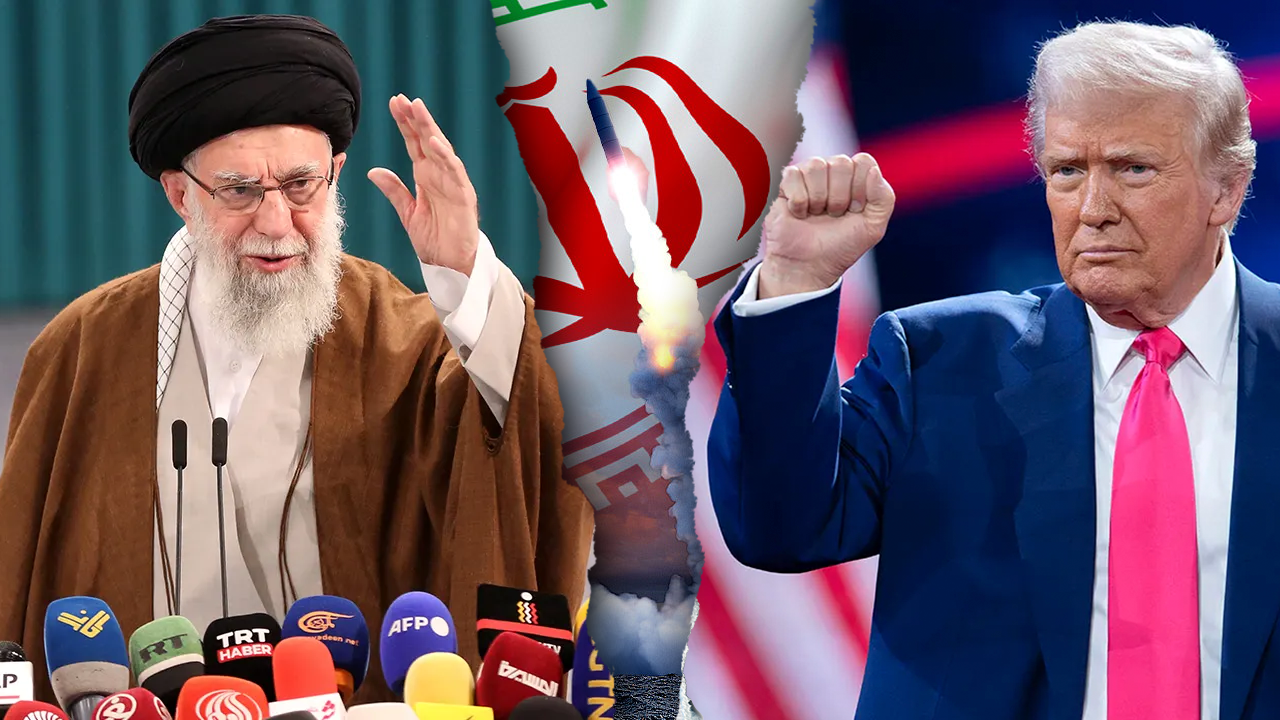
After radical students overthrew Iran’s shah in 1979 and took hostages in the U.S. embassy, the Middle Eastern nation transformed into a strident adversary of what its Islamic fundamentalist leadership calls the “Great Satan.” Since then, Tehran has sponsored terrorism around the globe, targeting the United States in multiple, high-profile attacks.
According to Mark Levin, former Reagan Justice Department Chief of Staff, Iran has targeted Americans either directly or indirectly in at least 44 separate instances. “The Iranian-Nazi regime has murdered more than 1,000 Americans and relentlessly pursued nuclear weapons to use against us — they are genocidal warmongers,” said Levin.
The foundation for Iran’s transformation from U.S. ally to enemy was laid in the 1960s, when Shah Mohammed Reza Pahlavi began clashing with influential Islamic cleric Ruhollah Khomeini. The monarch infuriated religious hardliners by liberalizing the national constitution to allow non-Muslim faiths to be sworn into office on their own holy books.
From his exile in France, Khomeini intensified his rhetoric against the shah, delivering misogynistic and xenophobic sermons that called for Pahlavi’s removal. As Khomeini-engineered protests erupted in fall 1978, the shah declared martial law, and military police fired on protesters.
Pahlavi and Empress Farah soon fled to Egypt on what was described as a “vacation” but never returned. By February 1979, Khomeini triumphantly returned to Tehran with substantial sectarian support.
The Hostage Crisis and Failed American Strategy
President Jimmy Carter’s National Security Adviser Zbigniew Brzezinski had advanced a “Green Belt” strategy supporting fundamentalist regimes across the Middle East that could serve as a buffer against Soviet influence. This plan collapsed when Khomeini proved equally hostile to both America and the USSR.
The situation deteriorated in October 1979 when Carter permitted the cancer-stricken shah to seek medical treatment in New York. In response, on November 4, the group “Muslim Student Followers of the Imam’s Line” stormed the U.S. embassy in Tehran, beginning 444 days of captivity for 52 American hostages.
The United States severed diplomatic ties the following April. A rescue mission failed tragically, leaving several American servicemembers dead. After the shah died that summer in Egypt, Khomeini consolidated full control of the government.
In what many interpreted as a final insult to Carter, Iran suddenly released the hostages minutes after Ronald Reagan was sworn in as president on January 20, 1981.
Lebanon and the Rise of Hezbollah
On July 5, 1982, the Lebanon Hostage Crisis began with the systematic abductions of foreigners, including Americans, by Hezbollah and Iranian proxies. Several victims endured years of imprisonment, subjected to psychological and medical torture.
CIA Beirut Station Chief William Buckley was among the most prominent victims, tortured for months by a Lebanese Hezbollah psychiatrist who reportedly administered experimental drugs during interrogation. Buckley died in custody on June 3, 1985, allegedly from the effects of this torture.
The CIA later memorialized Buckley on its wall in Langley, Virginia. Nearly 25 years after his death, the agency carried out what the Washington Institute described as a rare contemporary assassination, targeting Imad Mughniyeh, a figurehead of the Hezbollah-linked Islamic Jihad terrorist group responsible for Buckley’s death.
Deadly Bombings Target Americans
On April 18, 1983, an Iran-backed group—seen as the predecessor to today’s Lebanese Hezbollah—bombed the U.S. embassy in Beirut, killing 63 people, including 17 Americans.
That October, a suicide truck bomb linked to Iran struck a U.S. Marine barracks in Lebanon, killing 241 servicemembers—the deadliest single day for the Marine Corps since the Battle of Iwo Jima in World War II. According to translations of Iranian statements, Tehran’s representative to Lebanon had provided resources “needed in order to carry out martyrdom operations” against Americans and Israelis.
In 1985, Iran-backed Hezbollah hijacked TWA Flight 847 as it departed Athens. The hijackers singled out U.S. Navy Seabee Robert Stethem, torturing him before shooting him dead and dumping his body on the tarmac in Beirut.
Military Confrontation and Continued Threats
By 1988, tensions escalated when the USS Samuel B. Roberts struck an Iranian mine in the Persian Gulf. President Reagan responded with Operation Praying Mantis, which destroyed two Iranian oil platforms used as Revolutionary Guard surveillance structures. The operation also claimed two Iranian ships and was considered the largest naval surface engagement since World War II.
Through the Clinton, Bush, and Obama administrations, Iran continued its antagonism. After the 9/11 attacks, the 9/11 Commission found Iran had facilitated the movement of Al Qaeda terrorists by not stamping their passports, which would have raised red flags during U.S. visa applications.
During the Iraq War, Iran and its proxies were blamed for a significant portion of American casualties. In 2019, the Department of Defense estimated that more than 600 U.S. troop casualties—approximately one in six Iraq War losses—were directly tied to Iran or its proxies, primarily through explosive devices.
Recent Developments and Assassination Plots
Under the Biden administration, Iran-backed groups launched approximately 180 attacks on Western forces in the region following Hamas’ October 7, 2023 attack on Israel, including a drone strike on a base in Jordan that killed three Americans.
Perhaps most alarming, the Justice Department disclosed in 2024 that Iran had plotted to assassinate former President Donald Trump. This revelation came after charges against an Afghan-born Iranian proxy and two American men for allegedly attempting to kill Masih Alinejad, an Iranian-born American journalist and critic of the Tehran regime.
According to FBI Director Christopher Wray, “Thanks to the hard work of the FBI, their deadly schemes were disrupted. We’re committed to using the full resources of the FBI to protect our citizens from Iran or any other adversary who targets Americans.”
The decades-long pattern of Iranian aggression continues to pose a significant threat to American interests and citizens, both domestically and abroad, highlighting the enduring hostility between the two nations since the 1979 revolution.
Fact Checker
Verify the accuracy of this article using The Disinformation Commission analysis and real-time sources.

11 Comments
The story of Iran’s transformation from US ally to adversary is a complex one with deep historical roots. It’s important to understand these geopolitical dynamics, even if we don’t condone the violence and radicalization.
You raise a good point. Resolving this conflict will require nuanced diplomacy and a willingness to address the underlying grievances on both sides.
Iran’s long-running campaign against the US is certainly concerning. This history of hostility and violence is troubling. I wonder what steps could be taken to ease tensions and find a diplomatic resolution.
This article highlights Iran’s long-standing antagonism towards the US, including terrorist attacks and attempts to develop nuclear weapons. Addressing this hostility is a major challenge for policymakers.
The article provides a sobering look at Iran’s decades-long campaign against the US. Resolving this conflict will require nuanced diplomacy and a willingness to address the underlying grievances on both sides.
The story of Iran’s transformation from US ally to adversary is a complex one with deep roots. While the violence and radicalization is deeply troubling, it’s important to understand the geopolitical dynamics at play.
The history of Iran’s campaign against the US is certainly concerning. Tackling this issue will require a careful, measured approach that avoids further escalation of tensions.
I agree. Finding a diplomatic solution that addresses the core issues on both sides will be critical.
This article highlights the long-standing hostility between Iran and the US, including terrorist attacks and attempts to develop nuclear weapons. Resolving this conflict will require a careful, measured approach that avoids further escalation.
This is a concerning history of Iran’s antagonism towards the US. Addressing this issue will be a major challenge for policymakers, who will need to find a way to ease tensions and find a diplomatic solution.
This is a troubling account of Iran’s long-running hostility towards the US. While the violence and radicalization is deeply concerning, it’s important to understand the complex geopolitical factors at play.