


Listen to the article
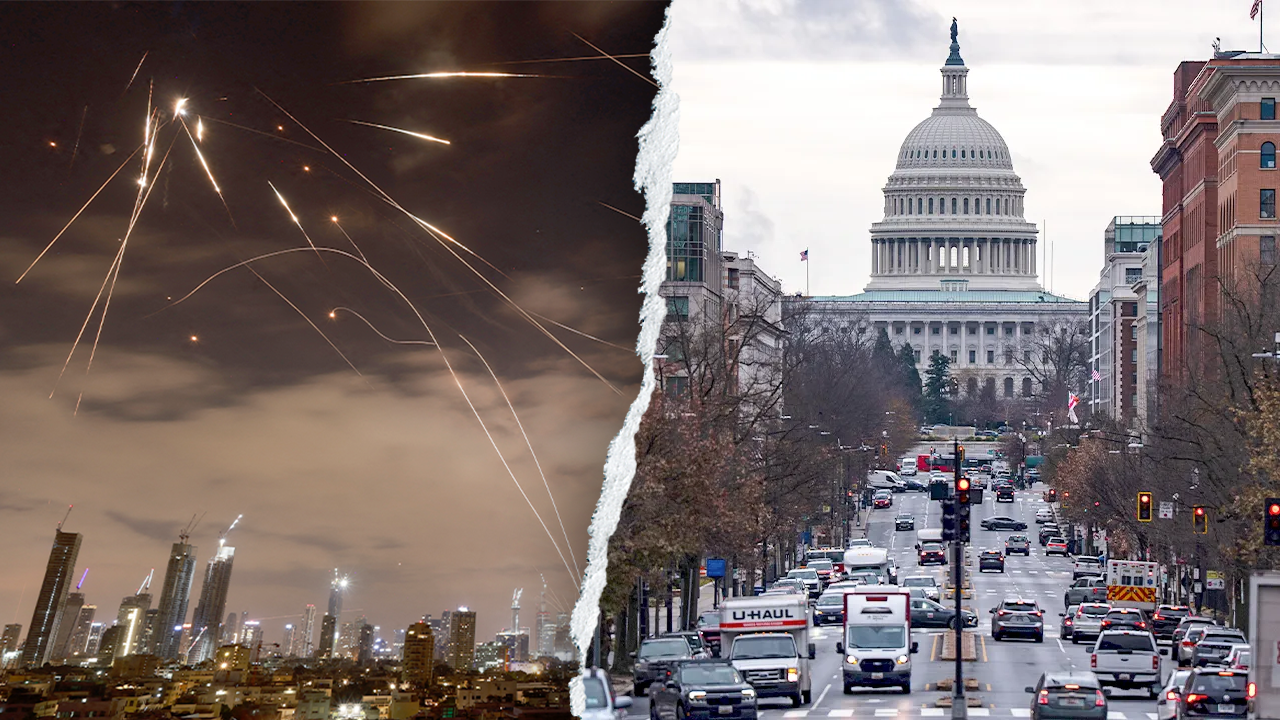
Interior Secretary Doug Burgum warned that Iran could have targeted Washington, D.C., and other major U.S. cities with intermediate-range ballistic missiles through proxies in Venezuela if the Trump administration had not intervened in both countries.
Speaking at the CERAWeek oil and energy conference in Houston on Wednesday, Burgum challenged skeptics who dismiss Iran and Venezuela as distant threats to U.S. national security and global supply chains. He pointed to Iran’s recent attempt to strike the U.S. military base Diego Garcia in the central Indian Ocean—more than 2,000 miles from Iran—as evidence of the regime’s extended reach.
“Venezuela was a hotbed of Iranian-funded terror groups, including Hamas. If there was an Iranian ballistic missile placed in Venezuela, it could not just reach Houston; it can reach Washington, D.C.,” Burgum told conference attendees.
The Interior Secretary accused Iran of deceiving the international community about its missile capabilities. “They said during negotiations last year, they told the international agencies… ‘Oh, don’t worry, we could only go 1,200 miles.’ And then they launched two missiles at Diego Garcia at 2,400 miles. That means they can hit London,” he explained.
Iran’s recent escalation occurred when it launched two intermediate-range ballistic missiles toward Diego Garcia, a strategic U.S.-UK military installation approximately 2,500 miles from Iranian territory. The attack suggests Tehran’s missile program has developed capabilities beyond what was previously acknowledged in diplomatic settings.
The geographic proximity puts numerous American population centers within striking distance of any potential missile sites in Venezuela. Houston lies roughly 2,200 miles from Venezuela, while Washington, D.C., is just over 2,000 miles away. Other major cities within range include Miami (1,300 miles), New York City (2,100 miles), and potentially Chicago (slightly more than 2,600 miles).
Burgum’s comments highlight the strategic rationale behind President Trump’s January 3rd covert military operation in Venezuela that resulted in the arrest of former Venezuelan leader Nicolás Maduro. The administration has framed the intervention as both a security measure and an opportunity to reshape regional energy dynamics.
According to Burgum, the military action has effectively neutralized Venezuela as a missile threat to the United States while simultaneously opening doors for potential energy partnership. During a recent diplomatic mission to Venezuela accompanied by oil executives, Burgum met with interim President Delcy Rodríguez, who reportedly expressed eagerness for U.S. investment in developing the country’s substantial oil and gas reserves.
“The resources there are quite amazing,” Burgum said, noting tangible progress in bilateral relations. “From that trip we did… we were able to bring home $100 million of gold, physically, the gold, to bring back for U.S. refiners for commercial and consumer purposes. So, the level of cooperation is going.”
The Interior Secretary suggested that market analysts had underestimated the geopolitical risks posed by the Iran-Venezuela axis. “The actions that the United States is taking to make the world safer is lowering the risk premium that I think was missing from the [oil and energy] market. Because, maybe, the market wasn’t recognizing the risk,” he said.
Venezuela possesses the world’s largest proven oil reserves, estimated at nearly 304 billion barrels, yet production has collapsed in recent years under Maduro’s leadership and international sanctions. The Trump administration appears to view renewed access to these resources as both an economic opportunity and a means to strengthen global energy security amid ongoing Middle East tensions.
The developments come as the administration continues to manage multiple international conflicts, including escalating hostilities with Iran following extensive U.S.-Israeli military operations against the Islamic Republic.
Fact Checker
Verify the accuracy of this article using The Disinformation Commission analysis and real-time sources.

12 Comments
This is a concerning development if true. The risk of escalation between Iran, Venezuela, and the US is worrying. I hope we can avoid further conflict and focus on diplomacy to reduce tensions.
You’re right, missile capabilities in Venezuela would be a major strategic threat. Verifying the facts and pursuing diplomatic solutions seems prudent here.
This sounds like a concerning national security issue that merits close monitoring. I’m curious to see what additional information emerges as the situation develops.
Agreed, the specifics around Iran’s missile capabilities and potential Venezuelan cooperation need to be verified. Prudent policy decisions require a clear, fact-based understanding of the threat.
If the Interior Secretary’s warnings are accurate, that would be a major escalation and security threat. Monitoring the situation closely and keeping diplomatic channels open seems critical at this stage.
Absolutely, this is a complex geopolitical issue that requires a measured response. Relying on authoritative sources will be key to understanding the true nature of the threat.
I’m skeptical of these claims without more evidence. Iran and Venezuela have a relationship, but the specifics around missile capabilities need to be independently confirmed. Spreading unverified information can be risky.
I agree, caution is warranted until the details are clearer. Making definitive statements about sensitive security matters requires solid proof.
The claims about Iran’s missile reach are quite dramatic. I hope the administration is basing its assessments on robust intelligence and not political agendas. Transparency and diplomacy will be crucial here.
Absolutely, it’s important to avoid inflaming tensions without solid evidence. Maintaining open communication channels while verifying the facts seems the wisest approach.
The prospect of Iran using Venezuela as a proxy to threaten the US mainland is alarming. I hope the administration is taking this seriously and pursuing all diplomatic options to address the situation.
Yes, this is a worrying development that demands a carefully considered response. De-escalation should be the priority to avoid further conflict.