


Listen to the article
Iranian Missile Launches Drop Significantly as U.S. Establishes Air Superiority
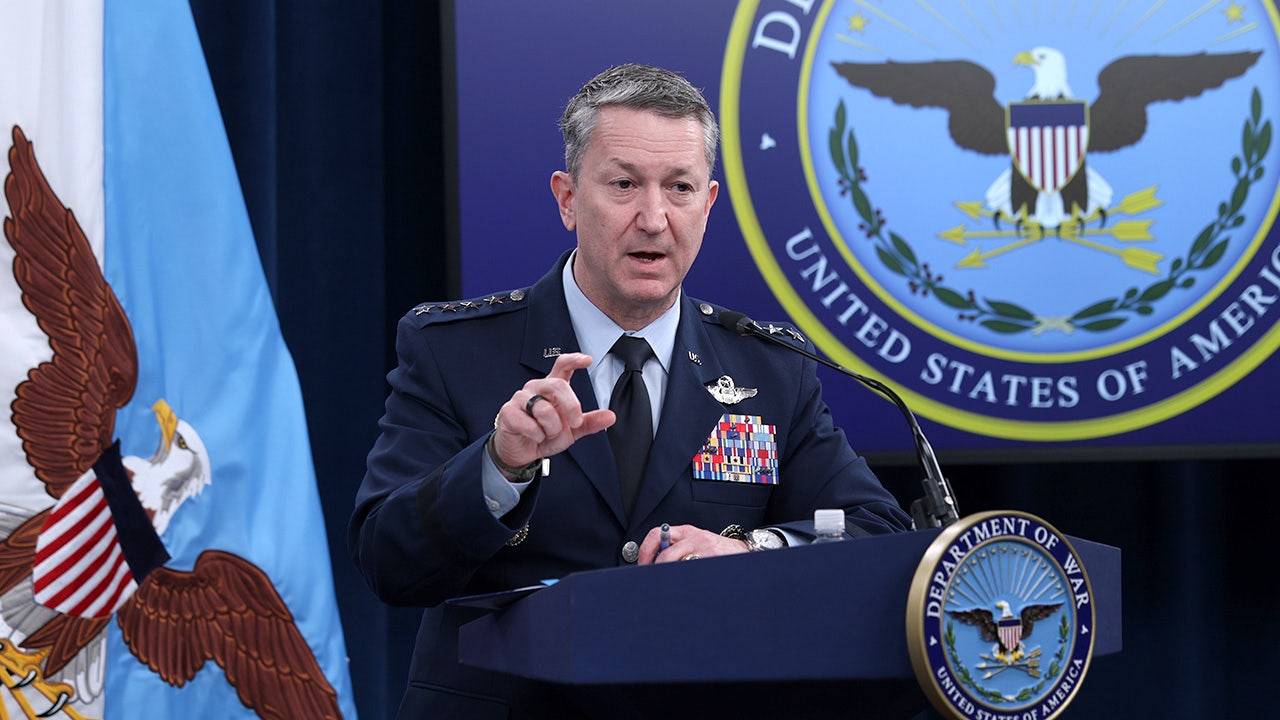
The number of Iranian ballistic missiles fired since the beginning of Operation Epic Fury has decreased dramatically, according to Chairman of the Joint Chiefs of Staff Gen. Dan Caine. Speaking at a Pentagon press briefing on Wednesday, Caine reported an 86% reduction in theater ballistic missile launches from Iran since the operation began on Saturday, with a 23% decline in the last 24 hours alone.
“Their one-way attack drone shots are down 73% from the opening days,” Caine told reporters. “This progress has allowed CENTCOM to establish localized air superiority across the southern flank of the Iranian coast and penetrate their defenses with overwhelming precision and firepower.”
The military campaign against Iran’s military capabilities appears to be yielding measurable results as U.S. forces continue their strategic operations in the region. This development comes amid heightened tensions across the Middle East, where Gulf states report intercepting hundreds of Iranian drones and missiles in recent days.
According to regional authorities, many of these projectiles have targeted civilian infrastructure and U.S. embassy buildings. The United Arab Emirates announced Wednesday that its air defense systems had successfully intercepted eight cruise missiles, 175 ballistic missiles, and 876 drones. Despite these defensive measures, the attacks resulted in collateral damage and claimed the lives of three foreign nationals from Pakistan, Nepal, and Bangladesh.
The scale and intensity of Iran’s missile and drone campaign prompted a unified response from regional powers. On Monday, the UAE, Qatar, Saudi Arabia, Bahrain, Jordan, Kuwait, and the United States issued a joint statement condemning what they described as Iran’s “indiscriminate and reckless” attacks across the region.
“The targeting of civilians and of countries not engaged in hostilities is reckless and destabilizing behavior,” the statement read. “We stand united in defense of our citizens, sovereignty, and territory, and reaffirm our right to self-defense in the face of these attacks. We remain committed to regional security and commend the effective air and missile defense cooperation that has prevented far greater loss of life and destruction.”
The conflict represents a significant escalation in Middle Eastern tensions and has drawn international attention to the region’s complex security dynamics. Military analysts note that the U.S. strategy appears focused on degrading Iran’s missile and drone capabilities while establishing tactical advantages in key zones of operation.
The effectiveness of regional air defense systems has been particularly notable during this conflict. Gulf nations have invested heavily in advanced missile defense technologies over the past decade, a strategy that appears to be paying dividends during the current crisis. These systems have successfully intercepted the majority of incoming threats, though some missiles and drones have penetrated these defenses.
Operation Epic Fury marks one of the most direct confrontations between U.S. forces and Iran in recent years. The conflict occurs against a backdrop of longstanding tensions between Iran and Western-aligned nations in the Middle East, with Tehran’s missile program long being a point of contention in regional security discussions.
Defense experts suggest that the reported reduction in Iranian launches could indicate either diminished capability due to U.S. strikes or a strategic recalibration by Tehran. The coming days will likely prove critical in determining whether this trend continues or whether Iran will attempt to escalate through alternative means.
As the situation develops, regional powers continue to maintain heightened alert levels while diplomatic channels remain active in seeking potential pathways to de-escalation. Meanwhile, civilian populations across multiple Gulf nations remain under threat, with air raid warnings becoming increasingly common in major urban centers.
Fact Checker
Verify the accuracy of this article using The Disinformation Commission analysis and real-time sources.

7 Comments
The 86% reduction in Iranian ballistic missile launches is a significant achievement. Cutting their ability to conduct one-way drone attacks by 73% also appears to be an important step. Maintaining this momentum will be crucial to further securing the region and protecting civilian infrastructure.
Agreed. The strategic precision and firepower employed by US forces seem to be yielding tangible results. Sustaining this pressure will be key to denying Iran’s destabilizing activities in the area.
The 86% drop in Iranian ballistic missile launches is certainly an impressive achievement. However, I would caution against complacency – Iran’s regional influence and destabilizing activities extend beyond just their missile capabilities. Maintaining pressure and vigilance will be crucial to securing lasting stability.
That’s a fair point. Even with the current setbacks, Iran still has other means to project power and undermine regional security. Continued coordination with allies and a comprehensive strategy will be needed to address the full scope of the threat.
While the decline in Iranian missile activity is welcome news, I’m curious to know more about the broader regional implications. How might this impact the security dynamics in the Gulf states and their relations with Iran going forward?
It’s good to see the US military campaign against Iran’s capabilities producing measurable results. Establishing air superiority and degrading their missile and drone threat is an important step. I wonder what other targets or strategic objectives the operation might have beyond this initial phase.
It’s encouraging to see the decline in Iranian missile launches since Operation Epic Fury began. Establishing air superiority and degrading their military capabilities seems to be an effective strategy so far. I’m curious to see if this trend continues and what other impacts the operation might have in the region.