


Listen to the article
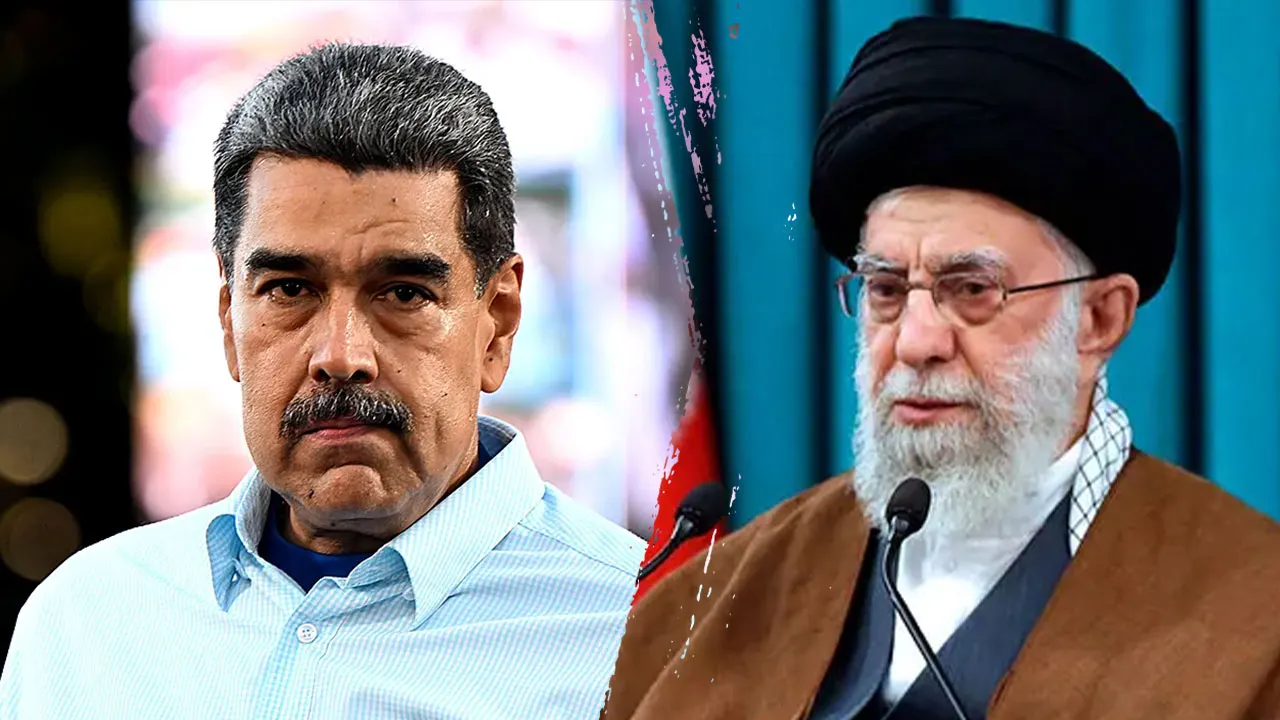
US Weighs Iran Strategy as Protests Mount, Contrasting Venezuela Operation
Fresh off a successful operation in Venezuela, the United States is evaluating its options as Iran’s leadership intensifies a violent crackdown on anti-government protesters. This has raised questions about whether similar military pressure could be applied to Tehran, though experts caution that Iran presents a fundamentally different challenge.
The swift capture of Nicolás Maduro in Caracas by U.S. special operators demonstrated American capabilities for targeted operations, but any comparable effort against Iran would face a state with significantly greater military depth and the ability to strike well beyond its borders.
“Thinking of this as an operation, as in the case of Venezuela or the nuclear program, is the wrong framing,” explains Behnam Ben Taleblu, senior fellow at the Foundation for Defense of Democracies. “This has to be seen as a campaign.”
Unlike Venezuela, Iran’s power structure is deliberately distributed across clerical institutions, security services, and the Islamic Revolutionary Guard Corps (IRGC). This system is designed to withstand the loss of individual leaders rather than collapse with them.
“Musical chairs at the top is highly unlikely to work in Iran,” Taleblu noted, pointing to the IRGC’s central role as “the tip of the spear of the world’s foremost state sponsor of terrorism.” Removing a single figure would leave a hardened security apparatus intact—and potentially more dangerous.
Iran’s military capabilities far exceed those Venezuela possessed. Despite recent Israeli strikes that degraded parts of Iran’s arsenal during their 12-day conflict, Tehran maintains a substantial inventory of short and medium-range ballistic missiles that can be fired from mobile launchers—providing a credible deterrent and retaliatory capability.
The numbers tell a stark story: Iran’s armed forces include nearly one million active and reserve personnel compared to Venezuela’s approximately 120,000 troops. This disparity highlights the dramatically different military environments U.S. planners would face in any potential operation.
The ideological foundations of both regimes also differ significantly. Iran’s antagonism toward the United States stems from the 1979 Islamic Revolution, which established opposition to Western influence—particularly the U.S. and Israel—as a core state principle. Venezuela’s conflicts with Washington have been more pragmatic, centered on political power, sanctions and control over oil revenues.
In Venezuela, Trump administration officials framed the operation not as regime change but as a limited action to advance U.S. interests—specifically prosecuting Maduro on drug trafficking charges and securing leverage over the country’s oil sector. After Maduro’s capture, Trump allowed Vice President Delcy Rodríguez to assume power temporarily.
Any military action against Iran, however, would inevitably be interpreted as a direct challenge to the regime itself. Unlike Venezuela, where the state apparatus remained intact after Maduro’s removal, targeting Iran’s leadership risks expanding a narrow strike into a broader campaign against the regime’s entire security infrastructure.
“You could conduct an attack against the leadership, including the supreme leader, but that raises lots of questions about who comes next,” said Seth Jones, senior vice president at the Center for Strategic and International Studies and former Pentagon official. “Is it Khamenei’s son? Is it Sadegh Larijani? Is it Hassan Khameini? Or do you start to look at other options?”
Jones emphasized that this uncertainty transforms a leadership-targeting strike into a far riskier proposition. “The more this starts to be not just the removal of a leader, but regime change, the more it becomes an expansive targeting problem,” he explained.
The fundamental challenge for U.S. planners isn’t whether military force could be employed, but rather what political objective it would serve. “The big question becomes what’s the objective—not just militarily, but what’s the political objective in Iran and how does that translate into what types of military resources you need?” Jones added.
Such an expansion could potentially lead to a prolonged and destabilizing conflict in a country of Iran’s size and complexity. “The more you start looking at regime change and using military force for that, the more messy the situation in Iran could get,” Jones cautioned. “It’s really hard to social engineer from the outside.”
Fact Checker
Verify the accuracy of this article using The Disinformation Commission analysis and real-time sources.

7 Comments
The article raises important points about the complexities of addressing Iran versus Venezuela. The US will need to carefully weigh its options and approach, given the significant differences in the two situations.
Absolutely, a targeted operation like in Venezuela is unlikely to work with Iran. The US will need to take a more comprehensive, multifaceted approach to deal with the Iran challenge effectively.
Fascinating analysis. Iran’s military capabilities and political structure pose very different challenges compared to Venezuela. Applying pressure on Tehran would require a long-term, multi-faceted strategy rather than a targeted operation.
The contrasts between the Iran and Venezuela situations highlighted in the article are quite stark. Iran’s distributed power structure and ability to project force make it a much tougher adversary for the US to confront.
The article highlights the complexity of the situation with Iran versus the relatively straightforward Venezuela scenario. Iran’s distributed power structure and ability to retaliate make it a much tougher challenge for the US to address.
Agree, a ‘campaign’ approach rather than a single operation is likely needed to effectively deal with the Iran situation. The stakes are also much higher geopolitically.
Interesting to see the contrasts between Iran and Venezuela highlighted. Iran’s military depth and reach beyond its borders do seem to present a far greater challenge for the US to navigate. A nuanced, long-term strategy will be crucial.