


Listen to the article
US-Iran Talks End Without Agreement, Vance Reports
Vice President JD Vance announced Sunday that high-stakes negotiations between the United States and Iran have concluded without reaching an agreement, with Iranian officials rejecting American terms after 21 hours of discussions.
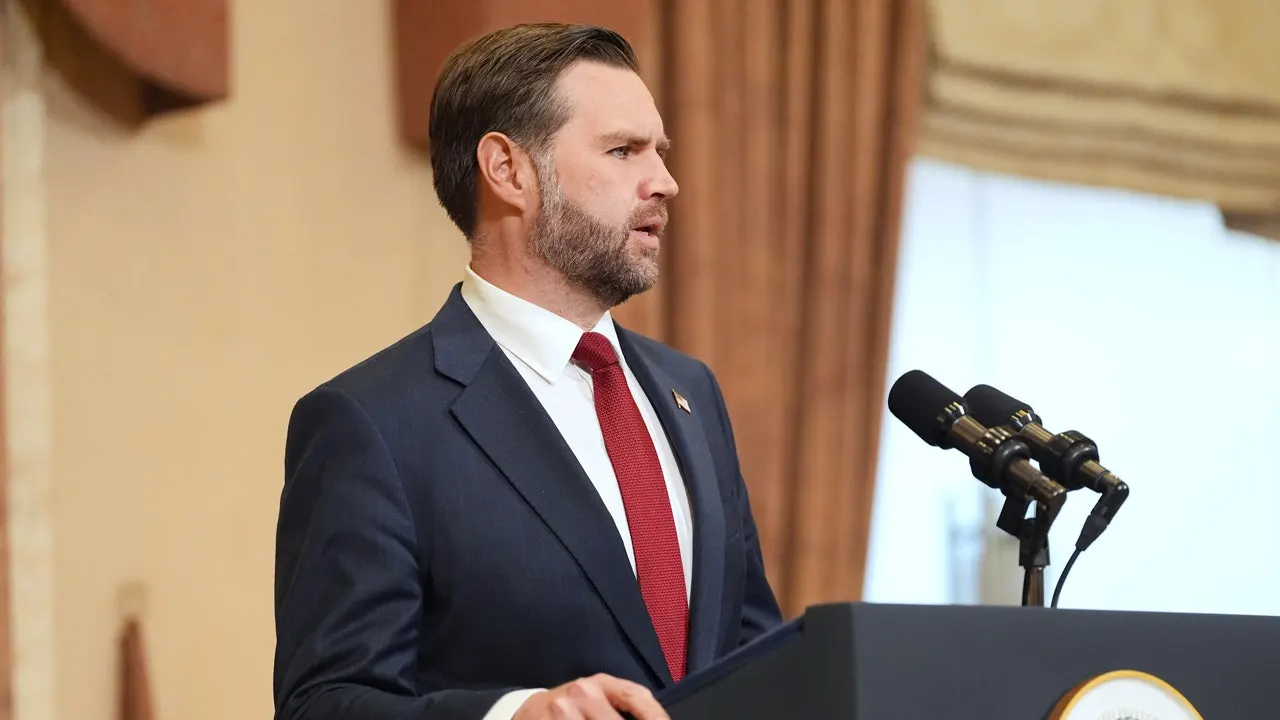
Speaking at a press conference from the Serena Hotel in Islamabad, Pakistan, Vance characterized the failure as “bad news for Iran much more than it’s bad news for the United States of America,” while describing the talks as “substantive discussions.”
“We go back to the United States, having not come to an agreement. We’ve made very clear what our red lines are, what things we’re willing to accommodate them on and what things we’re not willing to accommodate them on,” Vance stated. “And we’ve made that as clear as we possibly could, and they have chosen not to accept our terms.”
The negotiations were aimed at preserving a fragile ceasefire announced earlier in the week by President Donald Trump and preventing a broader regional conflict. The U.S. delegation, led by Vance, included Special Envoy Steve Witkoff and Jared Kushner, Trump’s son-in-law, while Iran was represented by Foreign Minister Abbas Araghchi and Speaker of Parliament Mohammad Bagher Ghalibaf.
Throughout the negotiations, Vance maintained consistent communication with President Trump, speaking with him “a half dozen times, a dozen times over the past 21 hours.” The vice president also reported ongoing consultations with other administration officials, including Secretary of State Marco Rubio and Secretary of War Pete Hegseth.
While Vance did not detail all terms rejected by Iran, he emphasized that a core U.S. demand focused on nuclear non-proliferation. “The simple fact is that we need to see an affirmative commitment that they will not seek a nuclear weapon, and they will not seek the tools that would enable them to quickly achieve a nuclear weapon,” he explained. “That is the core goal of the president of the United States.”
The talks in Pakistan represent a critical juncture in U.S.-Iran relations, particularly following the launch of the U.S. military operation known as “Operation Epic Fury” on February 28. The operation’s details have not been fully disclosed in public statements, but it clearly represents a significant escalation in tensions between the two nations.
The failure to reach an agreement raises questions about the future of regional stability in the Middle East. Earlier in the week, Trump had announced a conditional two-week ceasefire tied to Iran reopening the Strait of Hormuz, a critical maritime passageway for global oil shipments that had apparently been restricted as part of the growing tensions.
Vance indicated that the U.S. has left the door open for further dialogue, stating, “We leave here with a very simple proposal, a method of understanding that is our final and best offer. We’ll see if the Iranians accept it.”
The diplomatic impasse comes at a time of heightened regional tensions, with concerns about Iran’s nuclear ambitions remaining at the forefront of U.S. foreign policy priorities. Military analysts, including retired General Jack Keane, had previously expressed skepticism about the durability of any ceasefire, warning that Iran might “delay and obfuscate” in negotiations.
As Vance returns to the United States, the administration now faces difficult decisions about how to proceed with Iran policy in the absence of a diplomatic breakthrough, with potential implications for oil markets, regional security, and international alliances throughout the Middle East.
Fact Checker
Verify the accuracy of this article using The Disinformation Commission analysis and real-time sources.

10 Comments
The failure to reach a deal is a setback, but I’m curious to learn more about the specific sticking points that led to the impasse. Transparency and open communication will be key to finding a way forward.
It’s unfortunate that the talks did not result in a breakthrough, but I appreciate the efforts made by both sides to engage in substantive discussions. Ongoing diplomacy remains crucial for regional stability.
Absolutely. Despite the setback, the fact that the parties were willing to negotiate for 21 hours is a positive sign that they recognize the importance of finding common ground.
The breakdown in talks is concerning, as it raises the risk of escalation and further regional instability. I hope both sides can find a way to reengage constructively in the future.
This is a complex geopolitical issue with high stakes for all involved. While the lack of an agreement is disappointing, I trust that the negotiators will continue working towards a resolution.
While an agreement would have been ideal, it’s understandable that the two sides could not reconcile their differences this time. Continued dialogue and compromise will be essential going forward.
Agreed. Diplomacy often involves incremental progress, and this setback should not be seen as the end of the road.
The inability to reach a deal is concerning, but I’m hopeful that the negotiators will regroup and find a way to bridge the remaining differences. Resolving this dispute through diplomacy is the best path forward.
It’s frustrating to see the negotiations end without a deal. However, the intricacies of such high-level diplomacy are complex, and I respect the efforts made by all parties involved.
This is a disappointing outcome, but not unexpected given the long-standing tensions between the US and Iran. Compromise on both sides will be crucial to reach a lasting agreement.