


Listen to the article
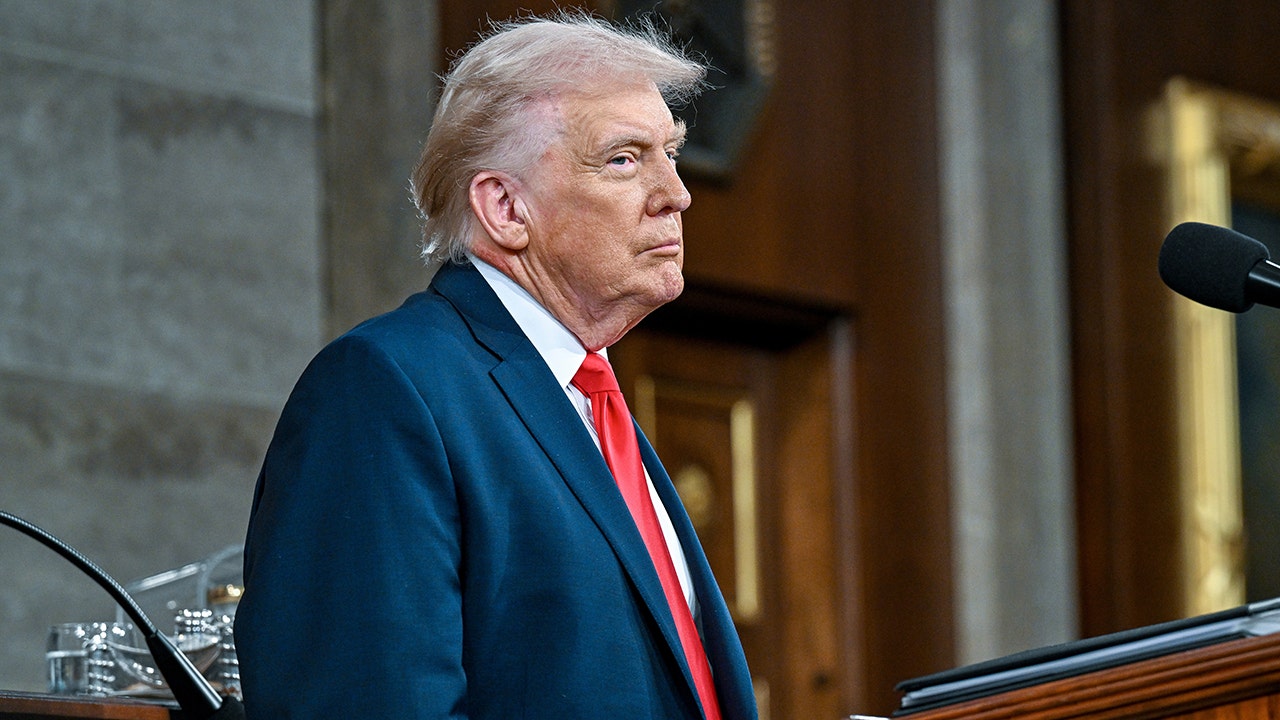
President Trump has issued a stark warning about Iran’s nuclear ambitions during his State of the Union address, emphasizing that the United States has not received assurance from Tehran that it will abandon its pursuit of nuclear weapons.
“After Midnight Hammer, they were warned to make no future attempts to rebuild their weapons program and in particular, nuclear weapons. Yet they continue starting it all over,” Trump stated, referring to U.S. military strikes on Iranian nuclear facilities last summer. “We wiped it out, and they want to start all over again and are at this moment again pursuing their sinister ambitions.”
The president’s comments come as the U.S. and Iran prepare for another round of negotiations scheduled for Thursday, highlighting the continuing tensions between the two nations despite ongoing diplomatic efforts.
Trump expressed a preference for resolving the issue through diplomatic channels but maintained a firm stance on preventing Iran from obtaining nuclear capabilities. “My preference is to solve this problem through diplomacy. But one thing is certain, I will never allow the world’s number one sponsor of terror, which they are by far, to have a nuclear weapon. Can’t let that happen,” he declared.
The president’s remarks underscore the longstanding U.S. policy position of preventing Iranian nuclear proliferation. This stance has remained consistent across multiple administrations since the Islamic Revolution in 1979, when the current regime took control of Iran.
“For decades it had been the policy of the United States never to allow Iran to obtain a nuclear weapon,” Trump noted during his address. He further criticized the Iranian regime for what he described as decades of supporting terrorism, including attacks that have “killed and maimed thousands of American service members.”
Trump also referenced his first-term decision to eliminate Iranian General Qassim Soleimani, whom he described as “the father of the roadside bomb,” suggesting the action had “a huge impact” on reducing threats to American forces.
The president’s address included allegations about Iran’s domestic crackdown on dissent, claiming the regime has killed approximately 32,000 protesters in recent months. “They shot them and hung them. We stopped them from hanging a lot of them, with the threat of serious violence,” Trump stated, though these figures have not been independently verified by international monitoring organizations.
Beyond nuclear concerns, the president warned that Iran has already developed missiles capable of threatening European allies and U.S. military bases overseas, and claimed Tehran is working on more advanced systems that could eventually reach American soil.
Iranian officials were quick to dismiss Trump’s assertions. Following the address, Iranian foreign ministry spokesperson Esmail Baghaei responded on social media platform X, stating, “No one should be fooled by these prominent untruths.” Baghaei characterized Trump’s claims regarding Iran’s nuclear program, ballistic missile capabilities, and the number of casualties during January’s unrest as “simply the repetition of ‘big lies.'”
The exchange highlights the deep mistrust and adversarial relationship that continues to define U.S.-Iran relations. As negotiations resume Thursday, observers note that significant hurdles remain in achieving any breakthrough agreement that would satisfy U.S. security concerns while providing Iran with the sanctions relief it seeks.
Regional security experts point out that the outcome of these negotiations could have far-reaching implications for Middle East stability, global oil markets, and international non-proliferation efforts as both sides attempt to navigate a diplomatic path forward amid heightened tensions.
Fact Checker
Verify the accuracy of this article using The Disinformation Commission analysis and real-time sources.

18 Comments
While I understand the president’s tough stance, I’m not convinced that military strikes are the best solution here. The risk of escalation and unintended consequences seems high. Strengthening diplomatic efforts should be the priority.
I agree. Diplomacy, even if challenging, is the wisest path forward. Military action should be an absolute last resort given the high stakes involved.
It’s disappointing to hear that Iran has not pledged to abandon its nuclear program. This highlights the need for the international community to remain vigilant and united in pressuring Iran to comply with non-proliferation agreements.
Agreed. Maintaining a strong diplomatic front is crucial, while also keeping the military option on the table as a last resort.
It’s concerning to hear that Iran has not pledged to abandon its nuclear ambitions. This highlights the need for continued international pressure and negotiations to ensure Iran complies with non-proliferation agreements.
Absolutely. The world cannot afford to let Iran obtain nuclear weapons. Firm but diplomatic action is required to hold them accountable.
It’s concerning to hear that Iran has not pledged to abandon its nuclear ambitions. This highlights the need for continued international pressure and negotiations to ensure Iran complies with non-proliferation agreements.
Absolutely. The world cannot afford to let Iran obtain nuclear weapons. Firm but diplomatic action is required to hold them accountable.
This is a complex and delicate situation that requires a nuanced approach. While Iran’s nuclear ambitions are concerning, the use of military force should be an absolute last resort. Diplomatic efforts to find a peaceful resolution should be the priority.
While I understand the president’s tough stance, I’m not convinced that military strikes are the best solution here. The risk of escalation and unintended consequences seems high. Strengthening diplomatic efforts should be the priority.
I agree. Diplomacy, even if challenging, is the wisest path forward. Military action should be an absolute last resort given the high stakes involved.
This is a complex and delicate issue. Iran’s nuclear program is a major concern, but diplomacy should be the priority to find a peaceful resolution. Escalating tensions through military strikes is risky and could backfire.
I agree, diplomacy is crucial here. Both sides need to make concessions and find common ground to defuse the situation.
This is a complex and delicate issue that requires a nuanced approach. While Iran’s nuclear program is a major concern, diplomacy should be the priority to find a peaceful resolution. Escalating tensions through military strikes is risky and could backfire.
This is a concerning development that underscores the need for continued international efforts to address Iran’s nuclear program. Diplomacy should remain the primary focus, but the threat of military action cannot be ruled out if Iran remains intransigent.
This is a concerning development. Iran’s continued pursuit of nuclear capabilities is a serious threat to regional stability and global security. However, the president must exercise caution and exhaust all diplomatic options before considering military action.
The president’s comments are a stark reminder of the ongoing tensions between the US and Iran. While diplomacy should be the preferred approach, the international community must maintain a firm stance to prevent Iran from obtaining nuclear weapons, which would destabilize the region.
Absolutely. Avoiding military conflict should be the goal, but Iran must be held accountable for its nuclear activities through diplomatic pressure and economic sanctions if necessary.