


Listen to the article
Gas Price Surge Challenges Republican Economic Messaging Amid Iran Conflict
A sharp rise in energy prices stemming from the U.S.-Israeli conflict with Iran is threatening to undermine one of the Republican Party’s key campaign messages ahead of November’s midterm elections.
Gas prices have surged an average of 50 cents per gallon since Operation Epic Fury began on February 28, with the national average reaching $3.63 per gallon on Friday, according to AAA. Diesel prices have also climbed to $4.89 per gallon as oil prices exceeded $100 per barrel Thursday for the first time since 2022.
The price spike comes as the strategically crucial Strait of Hormuz, a vital waterway through which much of the world’s oil supply passes, remains effectively shuttered due to the ongoing conflict.
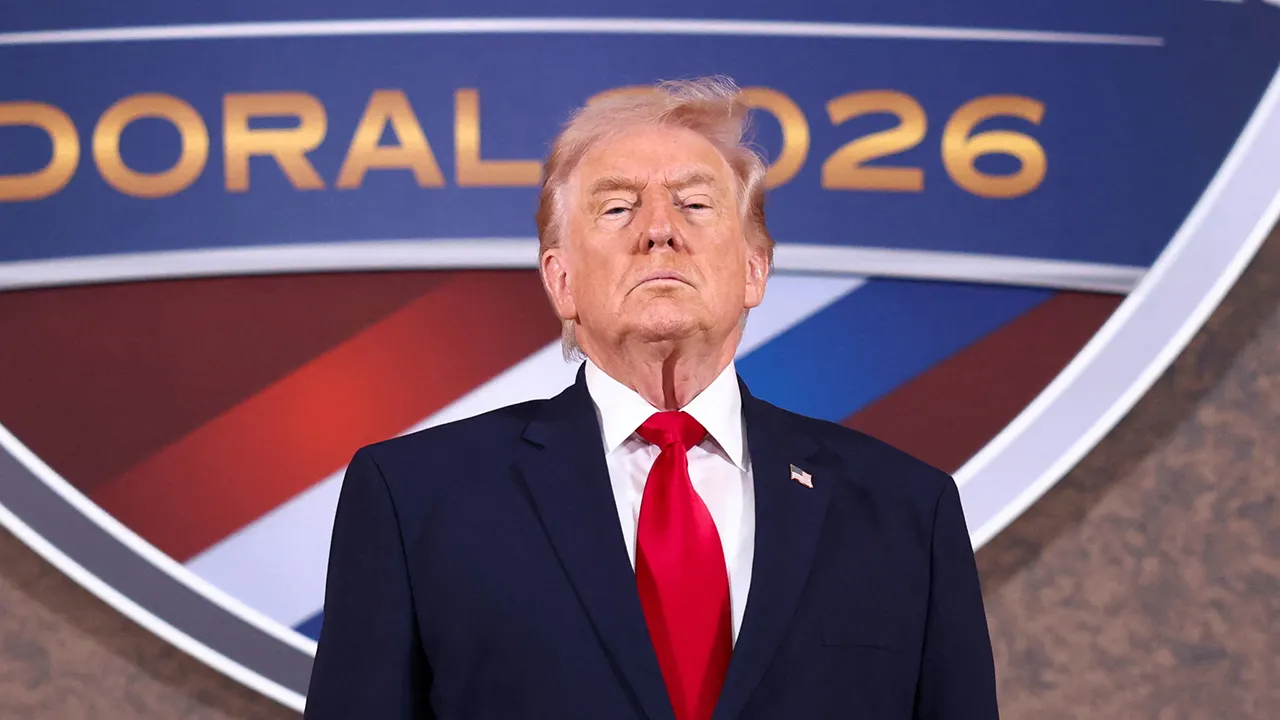
President Donald Trump, who previously made lower gas prices a centerpiece of his economic agenda, has pivoted to characterize the recent increases as “a very small price to pay” in a Truth Social post Sunday. This marks a significant departure from his earlier messaging that celebrated declining fuel costs.
Just days before Operation Epic Fury began, Trump highlighted falling gas prices during his State of the Union address, noting: “Gasoline, which reached a peak of over $6 a gallon in some states under my predecessor — it was quite honestly a disaster — is now below $2.30 a gallon in most states. And in some places, $1.99 a gallon.”
The president’s campaign rhetoric frequently criticized former President Joe Biden’s “war on American energy,” blaming his policies for higher gas prices that averaged $3.45 per gallon during Biden’s term, peaking above $5 per gallon in June 2022 following Russia’s invasion of Ukraine.
In an effort to mitigate the price surge, Trump ordered the release of 172 million gallons of crude oil from the Strategic Petroleum Reserve on Wednesday. “I filled it up once, and I’ll fill it up again, but right now, we’ll reduce it a little bit, and that brings the prices down,” Trump told Cincinnati news station WKRC.
Democrats have seized on the rising costs at the pump as a political opportunity. Senate Minority Leader Chuck Schumer directly linked the price increases to the administration’s policies, writing on social media: “Donald Trump’s war has sent gas prices skyrocketing through the roof. What contempt. What cluelessness.”
Senator Angus King, an Independent who caucuses with Democrats, questioned the administration’s foresight, stating: “I wish the administration thought about this before they started this unnecessary war.”
Republican lawmakers have expressed confidence that the price increases will be temporary. Senator Steve Daines of Montana, who recently suspended his re-election campaign, emphasized that gas prices were under $3 per gallon prior to Trump’s State of the Union speech, calling it “an important win for the American people.”
White House Press Secretary Karoline Leavitt reinforced this position during a Tuesday briefing, describing the recent increases as “temporary” and predicting that “once the national security objectives of Operation Epic Fury are fully achieved, Americans will see oil and gas prices drop rapidly, potentially even lower than they were prior to the start of the operation.”
Some Republicans have gone further, suggesting that defeating Iran will ultimately create more stability in global energy markets. “Once you take the largest state sponsor of terrorism off the planet, who depends on oil for their revenue, that’s a more stable world,” Senator Lindsey Graham told reporters.
However, not all Republicans share this optimism. Senator Rand Paul warned of potential electoral consequences, telling Fox Business: “I think if you add in high gas prices, high oil prices, and if we are still bombing Iran with kinetic action… I think you’re going to see a disastrous election.”
Public opinion appears to align with Paul’s concerns. According to a Reuters-Ipsos poll released Monday, nearly seven in ten Americans—including 44% of Republicans—expect gas prices to continue rising in the coming months.
The administration has taken a hard line against any further disruption to oil flows. Trump threatened Iran with “Death, Fire, and Fury” if the regime restricts movement through the Strait of Hormuz, adding that he hopes “it does not happen.”
As the conflict continues and November’s elections approach, the administration faces mounting pressure to resolve the situation in the Middle East while preventing further economic pain for American consumers at the gas pump.
Fact Checker
Verify the accuracy of this article using The Disinformation Commission analysis and real-time sources.

20 Comments
This situation illustrates the delicate balance between energy security, geopolitical stability, and domestic economic concerns. Policymakers on both sides of the aisle will need to find creative solutions to address these competing priorities.
Ultimately, the ability to navigate these complex tradeoffs may be a key factor in how voters assess the performance of elected leaders in the coming midterm elections.
It’s understandable that voters would be frustrated by the higher gas prices, even if they recognize the complex factors at play. The GOP will need to carefully calibrate their messaging to avoid appearing out of touch.
At the same time, the Biden administration will face pressure to take action to bring down prices, which could be challenging given the underlying geopolitical dynamics.
The political fallout from these price hikes could be significant, as voters are likely to feel the pinch at the pump. Both parties will need to find ways to address the concerns of their constituents.
It will be interesting to see how the Biden administration and congressional leaders respond to this challenge, and whether they can find solutions that balance geopolitical, economic, and political considerations.
The surge in gas prices is a stark reminder of the fragility of global energy supply chains and the sensitivity of prices to geopolitical tensions. Policymakers will have to work quickly to mitigate the economic impacts.
From a market perspective, these price increases could drive greater interest in alternative energy sources and conservation efforts. But the short-term political fallout may be difficult to manage.
The surge in gas prices is a stark reminder of the vulnerability of our energy systems to global events. Policymakers will need to carefully weigh the tradeoffs between short-term relief and long-term resilience.
From an investor perspective, this situation could create opportunities in the energy sector, particularly in companies focused on alternative or more secure energy sources.
The spike in gas prices is a stark reminder of the fragility of our energy systems and the need for greater investment in diversifying our energy sources. Policymakers should use this opportunity to accelerate the transition to more sustainable and resilient solutions.
Ultimately, the ability to navigate these complex trade-offs and find solutions that balance energy security, economic concerns, and environmental sustainability will be a key test of leadership for both parties.
This situation underscores the complex interdependencies between global events, energy markets, and domestic politics. Policymakers will need to take a nuanced and comprehensive approach to address these challenges.
From an economic perspective, the higher gas prices could also have ripple effects on other sectors, potentially compounding the challenges for policymakers and consumers alike.
The rising gas prices amid the Iran conflict pose a tricky political challenge for the GOP. Voters may not appreciate paying more at the pump, even if it’s seen as a necessary price to pay for stability in the region.
It will be interesting to see how Republicans balance their usual pro-energy messaging with the need to justify the higher prices. Careful positioning will be key.
This situation highlights the need for a more comprehensive and long-term approach to energy policy that considers geopolitical, economic, and environmental factors. Policymakers should seize this moment to push for bold, transformative solutions.
It will be interesting to see how the public discourse around these issues evolves, and whether it leads to a shift in the political landscape and policy priorities in the coming years.
This situation highlights the complex interplay between geopolitics, energy markets, and domestic politics. The Biden administration will need to carefully manage the messaging and potential fallout from these price hikes.
Striking the right balance between supporting allies, maintaining global energy security, and shielding American consumers from the impacts will be a delicate balancing act.