


Listen to the article
U.S. and Israeli military forces have launched coordinated strikes on Iranian targets in an operation dubbed “Epic Fury,” marking a significant escalation in Middle East tensions. The campaign, which began Saturday, has targeted Iranian leadership and military installations, with officials suggesting operations could continue for several days.
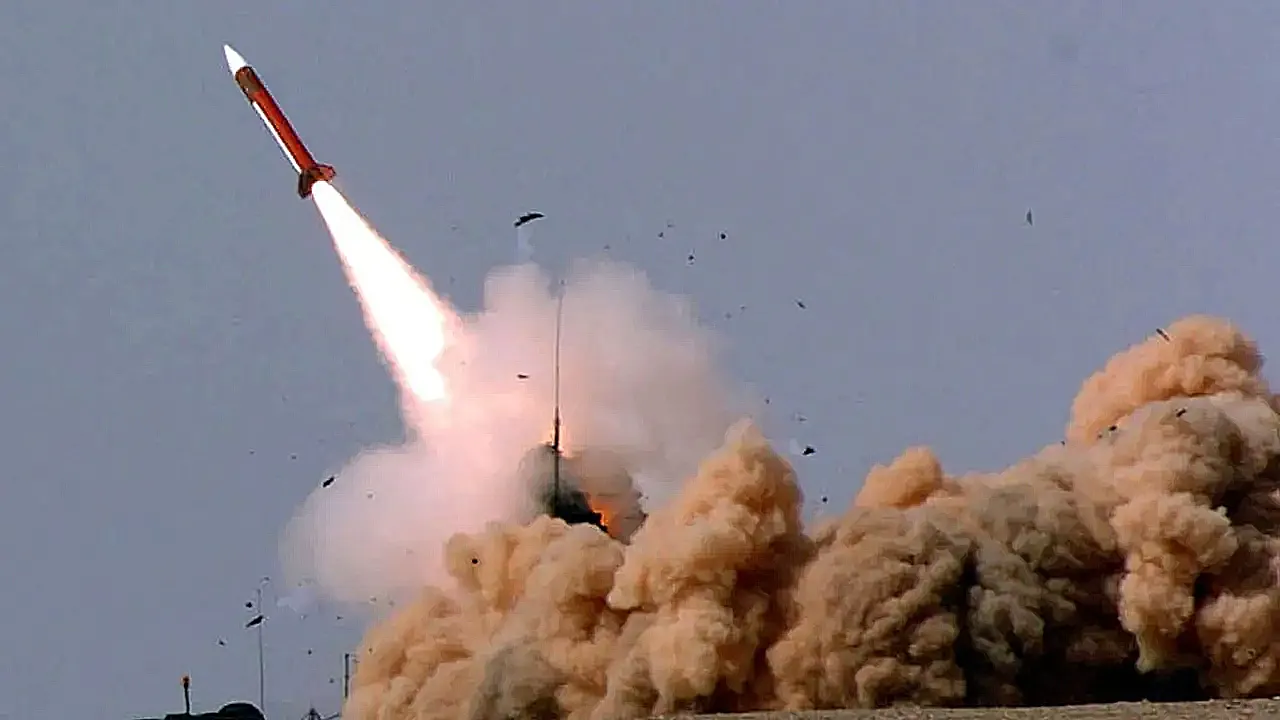
Defense experts warn that while the U.S. can sustain a limited strike lasting days, a broader confrontation involving hundreds of incoming missiles would strain America’s missile defense capabilities. The Pentagon faces a critical “zero-sum” dilemma as defensive systems required to protect U.S. bases in the Middle East are simultaneously needed for Ukraine’s defense and Israel’s protection.
Iran has already responded with counterattacks near U.S. positions in Bahrain, Qatar, the United Arab Emirates, Kuwait, and Jordan. Several host governments report their air defense systems successfully intercepted incoming projectiles. No U.S. service member casualties have been reported as of Saturday, according to a U.S. official speaking to Fox News Digital.
The current military action follows a pattern of regional confrontations. During the June 2025 Iran-Israel conflict, U.S. forces depleted approximately 25 percent of the global Terminal High Altitude Area Defense (THAAD) interceptor inventory, along with numerous ship-based standard missiles. This depletion stems from the dual demands of supplying Ukraine against Russian cruise missiles while simultaneously reinforcing Middle Eastern defenses.
“The issue will be defensive weapons — Patriot, SM-3, and the Arrow system in Israel,” said retired Air Force Gen. Charles Wald, former deputy commander of U.S. European Command. “You can never have enough defense.”
The production constraints for these sophisticated defense systems present a strategic vulnerability. Current U.S. manufacturing capacity produces roughly 600-650 Patriot PAC-3 MSE missiles annually, reflecting recent efforts to increase production. However, analysts note that in high-intensity combat scenarios, where multiple interceptors are often required to defeat a single incoming missile, even a year’s production could be exhausted within weeks.
“There is a limit to how many THAAD missiles can be used,” explained Israeli defense analyst Ehud Eilam. “These are not systems you can reproduce overnight.”
The Pentagon maintains a confident stance regarding its capabilities. “The Department of War has everything it needs to execute any mission at the time and place of the President’s choosing and on any timeline,” stated Chief Pentagon spokesman Sean Parnell.
Iran’s arsenal presents a formidable challenge to U.S. defensive systems. Intelligence assessments indicate Iran possesses between 1,500 and 2,000 ballistic missiles, supplemented by drones and shorter-range rockets capable of striking U.S. bases and Gulf energy infrastructure.
Recent U.S. military successes, including Operation Absolute Resolve in Venezuela in January 2026 and the 12-day exchange with Iran in summer 2025, have bolstered confidence in American military capabilities. However, former defense officials caution that these relatively contained operations could create a false sense of security when contemplating action against Iran.
“Iran is a very different problem,” one former official noted, describing it as a heavily armed state with extensive missile forces and regional proxy networks that would not yield to a short, surgical operation.
Beyond the immediate military considerations, the economic consequences of a protracted conflict could prove substantial. Approximately one-fifth of the world’s oil supply passes through the Strait of Hormuz, and even limited disruption could send global energy prices sharply higher.
For Washington, the strategic calculus extends beyond the Middle East. China remains the primary long-term competitor, with the war in Ukraine already consuming significant resources. A sustained regional conflict would draw on naval assets and air-defense systems that planners must also reserve for potential future contingencies involving Taiwan or North Korea.
Officials familiar with internal deliberations indicate that President Donald Trump has sought a high degree of confidence in how an Iran contingency would unfold—a standard that becomes increasingly difficult to meet in scenarios involving escalation and political fallout.
Fact Checker
Verify the accuracy of this article using The Disinformation Commission analysis and real-time sources.

14 Comments
This conflict has the potential to disrupt global energy and commodity markets, which could have far-reaching economic consequences. Maintaining a stable global supply of critical resources should be a key consideration for policymakers as they navigate this crisis.
You raise an important issue. The potential impact on energy and commodities markets is something that will need to be closely monitored and factored into the strategic calculus.
The ‘zero-sum’ dilemma facing the Pentagon is a concerning strategic challenge. Balancing the defense needs of the Middle East, Ukraine, and Israel will require extraordinary coordination and resource management.
You raise a valid point. The US military’s resources are stretched thin, and tough choices will have to be made about where to prioritize its defensive capabilities.
The US faces some difficult tradeoffs in managing its missile defense capabilities across multiple theaters. Prioritizing the protection of US bases, Ukraine, and Israel will require careful coordination and resource allocation.
That’s a good point. The Pentagon will have to make some tough decisions on where to allocate its finite missile defense assets to best protect US interests and allies.
This conflict highlights the complex geopolitical dynamics at play in the Middle East. All parties involved need to exercise restraint and focus on finding diplomatic solutions to avoid further escalation and potential regional destabilization.
I agree, the regional implications of this conflict could be far-reaching. Diplomatic efforts to de-escalate the situation and prevent a broader war should be the top priority.
Iran’s retaliatory attacks on US positions in the region show how quickly this conflict could escalate. All sides need to exercise maximum restraint to prevent a broader regional war that could have devastating consequences.
Absolutely. The potential for miscalculation and unintended escalation is high in a situation like this. Diplomatic channels need to remain open to manage the crisis.
This is certainly a concerning escalation in the Middle East conflict. It will be critical for all parties to exercise restraint and focus on diplomatic solutions to avoid further destabilization of the region.
You’re right, de-escalation and diplomatic efforts will be key. The US and its allies need to carefully weigh their strategic options to avoid a protracted confrontation that could strain their military resources.
The strain on US missile supplies is a concerning aspect of this escalating conflict. Effective resource management and coordination with allies will be critical to maintaining a credible deterrent while also supporting Ukraine and Israel.
That’s a good point. The US will need to carefully balance its missile defense commitments across multiple fronts to avoid overextending its capabilities.