


Listen to the article
US-Iran Ceasefire Shows Signs of Strain Within Hours of Agreement
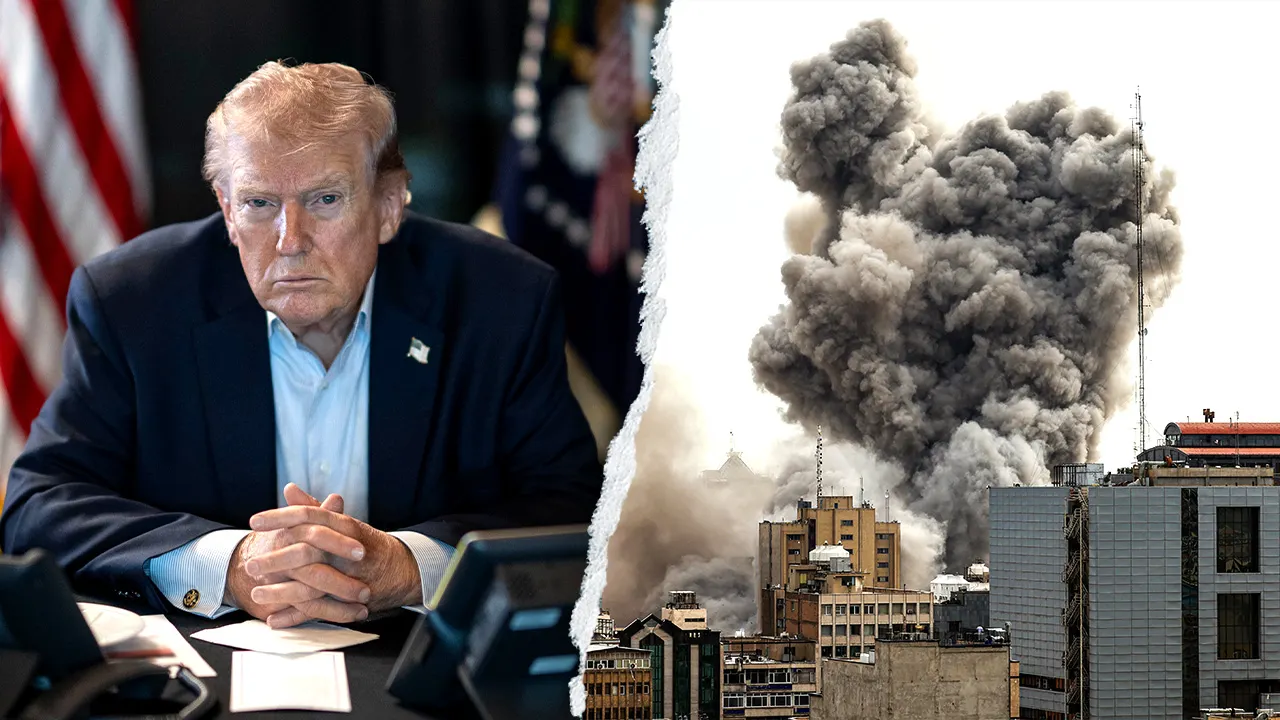
In a dramatic shift Tuesday night, President Donald Trump announced a ceasefire with Iran just hours after threatening the regime with devastating consequences. However, within a remarkably short time, the fragile agreement already appears under significant pressure as regional attacks continued and tensions remain high.
The two-week ceasefire, brokered with Pakistan’s assistance, was presented by the White House as a stepping stone toward broader negotiations. While U.S. defense officials confirmed that American strikes on Iran had halted following Trump’s announcement, the regional situation quickly deteriorated on multiple fronts.
Within hours of the agreement, Israel launched its largest strike yet on Hezbollah in Lebanon—an action not covered by the ceasefire terms. Meanwhile, Iranian state media signaled that Tehran might again restrict access to the strategically vital Strait of Hormuz if fighting in Lebanon continues, potentially undermining a key condition of the agreement.
“The Iran–U.S. Ceasefire terms are clear and explicit: the U.S. must choose—ceasefire or continued war via Israel. It cannot have both,” Iranian Foreign Minister Abbas Araghchi declared in a statement posted to social media. “The world sees the massacres in Lebanon. The ball is in the U.S. court, and the world is watching whether it will act on its commitments.”
Multiple Gulf states reported attacks in the immediate aftermath of the ceasefire announcement. Saudi Arabia intercepted nine drones, while the United Arab Emirates reported intercepting 17 ballistic missiles and 35 drones. Kuwait’s military said it intercepted 42 drones and four ballistic missiles launched since early Wednesday, with some targeting critical infrastructure including oil facilities and power stations. Bahrain also reported injuries and damage after debris from an intercepted Iranian drone fell in a residential area.
Further complicating matters, Iran launched missile barrages toward Israel around the time of the ceasefire announcement, triggering air raid sirens across major Israeli cities including Tel Aviv and Jerusalem. An Israel Defense Forces spokesperson confirmed to Fox News Digital that Iranian launches toward Israel continued even after the ceasefire took effect.
“This is a fragile truce,” White House Press Secretary Karoline Leavitt acknowledged during Wednesday’s press briefing. “Ceasefires are fragile by nature. We’ve seen this with respect to the 12-day war with Iran in Israel last year. It takes time sometimes for these ceasefires to be fully effectuated.”
Pakistani Prime Minister Shehbaz Sharif, who helped mediate the agreement, also noted that “violations of ceasefire have been reported at few places,” while urging all parties to exercise restraint.
War Secretary Pete Hegseth offered a similar assessment: “It takes time sometimes for ceasefires to take hold. We’re prepared if necessary, but we hope and believe it will hold.”
A key condition of Trump’s agreement to pause strikes was the “complete, immediate, and safe” reopening of the Strait of Hormuz—a critical global shipping chokepoint through which approximately 20% of the world’s oil passes. However, according to Wall Street Journal reports, the Iranian navy continues to tell ships they need Iran’s permission to transit the waterway.
When confronted with these reports, Leavitt called Iran’s actions “completely unacceptable” but noted, “Privately, we have seen an uptick of traffic in the strait today.” She reiterated “the president’s expectation and demand that the Strait of Hormuz is reopened immediately.”
In a surprising development, Trump suggested to ABC News on Wednesday that both Iran and the U.S. may collect tolls from the strait in a “joint venture,” though specific details about this arrangement remain unclear.
The White House has announced that Vice President JD Vance and White House envoys Steve Witkoff and Jared Kushner will travel to Pakistan this Saturday for the first round of peace talks with Iran. However, these discussions may face significant challenges given the continuing regional attacks and rising tensions.
As both sides navigate this tenuous agreement, the international community watches closely to see if this temporary pause in hostilities can evolve into a more sustainable resolution or whether the region will slide back into open conflict.
Fact Checker
Verify the accuracy of this article using The Disinformation Commission analysis and real-time sources.

16 Comments
The ceasefire’s failure to hold is a disappointing setback, but it’s not entirely surprising given the long history of hostility between the US and Iran. Salvaging the agreement and moving towards broader negotiations will require strong leadership and a commitment to conflict resolution from all parties.
Well said. The path forward will not be easy, but the potential rewards of a negotiated solution are significant. All sides must demonstrate the political will to make difficult compromises for the sake of regional stability.
The continued military actions by Israel and Iran’s threats regarding the Strait of Hormuz are concerning signs that the ceasefire may be on shaky ground. Strict adherence to the terms of the agreement will be crucial to avoiding a return to open conflict.
Agreed, the actions by Israel and Iran’s warnings are worrying. Both sides need to demonstrate a clear commitment to upholding the ceasefire, even in the face of ongoing regional tensions and dynamics.
The continued regional attacks and escalating rhetoric are troubling signs that the ceasefire may be unraveling. Maintaining open communication channels and a focus on de-escalation will be crucial to preventing a return to full-scale conflict.
Absolutely, the situation remains highly volatile. Both the US and Iran need to demonstrate restraint and a genuine commitment to the ceasefire terms if there is to be any hope of progressing to broader negotiations.
This ceasefire is an important first step, but it will take sustained diplomacy and compromise from all sides to reach a lasting solution. The stakes are high, as continued conflict could have serious consequences.
You’re right, the stakes are very high. All parties need to approach this in good faith and with a focus on finding common ground, rather than escalating tensions further.
The Iran-US ceasefire appears fragile, as regional attacks continue despite the agreement. Maintaining peace will require both sides to uphold the terms and work towards broader negotiations.
Agreed, the situation remains delicate. Upholding the ceasefire and making progress on negotiations will be crucial to de-escalating the tensions in the region.
The reported missile and drone attacks are concerning, as they could undermine the ceasefire and lead to a renewed cycle of retaliation. Maintaining open communication channels will be critical to preventing miscalculation.
Absolutely, clear communication and transparency between the parties will be essential. Any further escalation risks derailing the ceasefire and the potential for broader negotiations.
This ceasefire represents a fragile opportunity to de-escalate the tensions between the US and Iran. However, the quick unraveling of the agreement highlights the deep-rooted mistrust and conflicting interests at play in the region.
You’re right, the mistrust and competing interests in the region are significant obstacles to a lasting peace. Rebuilding that trust will require patience, compromise, and a willingness to address the core issues driving the conflict.
While the ceasefire is a positive development, the regional dynamics remain highly complex. Addressing the underlying issues that drive the conflict will require patience and a willingness to compromise from all sides.
You make a good point. The regional dynamics are deeply entrenched, and resolving this conflict will take time and sustained effort. Maintaining the ceasefire is just the first step in a longer process.