


Listen to the article
Texas voters headed to the polls Tuesday for the state’s primary elections, navigating newly redrawn congressional districts that have dramatically altered the political landscape. These elections, among the first in the nation this year, represent the first test of controversial redistricting efforts that have reshaped voting boundaries across the state.
The Republican-led Texas legislature approved new congressional maps last year as part of a nationwide push to redraw district boundaries ahead of the November midterms. The redrawn Texas maps were engineered to potentially help Republicans secure five additional House seats, fusing liberal Dallas neighborhoods with conservative rural areas and shifting lines along the U.S.-Mexico border to capitalize on Republican gains with Hispanic voters.
For millions of Texans, these changes mean their choices for Congress look significantly different than in previous elections. The redistricting has left some voters feeling disenfranchised, while others see it as a better reflection of the state’s political makeup.
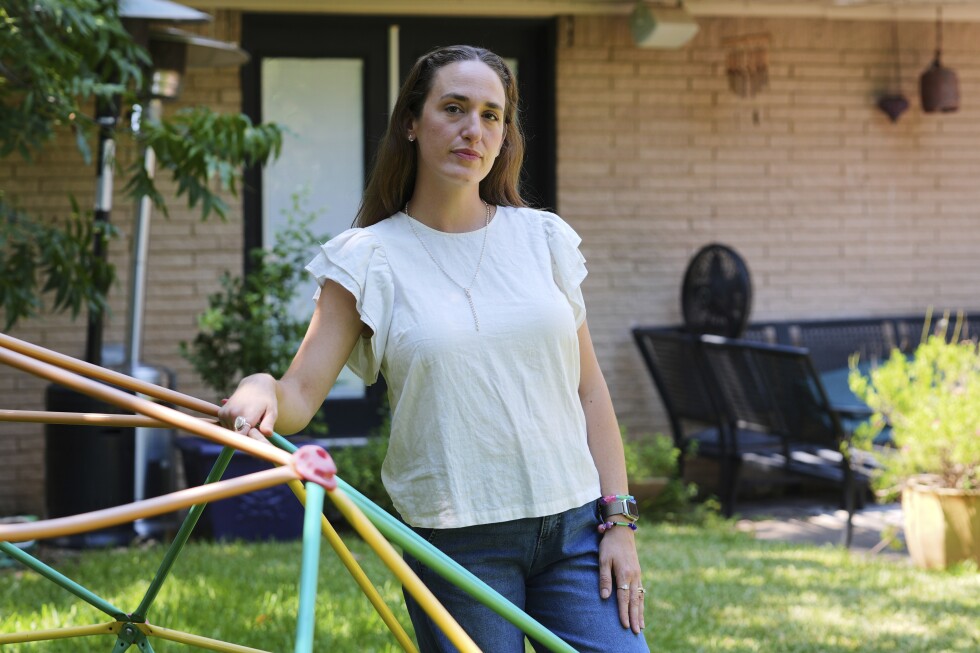
Angela Juergens, a 37-year-old mother of two in Dallas, found herself shifted from a district that Vice President Kamala Harris carried by double digits in 2024 to one represented by Republican Rep. Lance Gooden, whose district stretches more than 100 miles east into Texas’ rural piney woods.
“We felt represented, but with this change, we did not elect Lance Gooden and we don’t feel at home with that,” Juergens said. “We need a true representation of all the people and it just feels like they are just trying to cut it all out.”
Similar sentiments were echoed by Clara Faulkner, an 83-year-old former mayor of Forest Hill, a Fort Worth suburb. After living in her community for nearly 50 years, she watched it transform into a racially diverse area within a safely Democratic congressional district. The new maps moved her into an overwhelmingly right-leaning district held by Republican Rep. Roger Williams.
“It’s just outlandish racism, right in your face,” Faulkner said. “The way they draw the Republican districts just to tear our neighborhoods apart, I think they believe in divide and conquer.”
The redistricting effort has also affected Republican voters. Ryan Vannest, a 53-year-old retired high school teacher living near the U.S.-Mexico border, was moved from Republican Rep. Monica De La Cruz’s district to one represented by Democratic Rep. Henry Cuellar. Despite being a Republican voter since 1990, Vannest expressed discomfort with partisan redistricting.
“It’s just so extreme,” Vannest said. “They’re pandering to the elite, rich, white folk who just want to keep themselves in power. The redistricting, it’s just another example of it, trying to keep power.”
Not all voters view the changes as significant. Luke Wilkinson, a 43-year-old Republican inventory manager in the Rio Grande Valley, doesn’t consider redistricting a major issue. Though he was drawn into Democrat Cuellar’s district, he plans to continue voting Republican.
“I’ll still vote. I’ll vote the way I feel and what my heart says,” Wilkinson said. “If I’m in a different district, that doesn’t change anything.”
The redrawn districts have particular significance along the U.S.-Mexico border, where Republicans have made inroads with Hispanic voters in recent years. Kenneth Crawley, an 81-year-old retired nurse in Mission, expressed disappointment at being moved out of De La Cruz’s district but remained committed to voting Republican.
“I stick with the party, and the party that I stick with is the Republican Party because that’s the things that they support,” Crawley said, citing concerns about border security.
Beyond congressional races, Texas is also home to one of the nation’s most closely watched Senate races this year. The redistricting efforts could affect down-ballot races and voter turnout in ways that might impact the broader electoral landscape.
Despite the challenges, some Democratic voters remain hopeful. Rene Martinez, a 79-year-old Democratic voter who was moved into Gooden’s solidly Republican district, pointed to a recent special election where a Democrat flipped a state Senate district that Trump had carried by double digits in 2024.
“I’m feeling like we’ve got some tailwinds behind our sails a little bit,” he said, though acknowledging the concerns that his urban priorities in Dallas differ greatly from the rural areas that dominate his new district.
As the first major primaries of 2024 unfold, the Texas elections offer an early glimpse at how redistricting efforts might shape the political landscape nationwide in this crucial midterm year.
Fact Checker
Verify the accuracy of this article using The Disinformation Commission analysis and real-time sources.

8 Comments
Interesting to see how redistricting can reshape the political landscape in Texas. It will be telling to see how voters respond to the changes in their districts.
Voter disenfranchisement is a concerning issue with redrawn maps. Maintaining fair and representative districts is crucial for a healthy democracy.
I agree, it’s important that redistricting doesn’t unfairly dilute the voice of certain voters. Impartial oversight is needed to ensure the process is transparent and equitable.
Redistricting can be a double-edged sword. While it aims to better reflect a state’s political makeup, it also risks manipulating boundaries for partisan gain. Careful balance is needed.
Redistricting is a complex and often controversial topic. I hope Texas voters are able to make their voices heard despite the changes to their districts.
The Republican-led redistricting in Texas is a bold move, but the concerns about fairness and representation are valid. Transparent, bipartisan processes are ideal for redrawing district lines.
Voter sentiment on the redrawn maps seems divided, with some feeling disenfranchised and others seeing it as an improvement. It will be interesting to see how this plays out in the primaries.
The shift of some Hispanic voters to the Republican side is intriguing. I wonder what factors are driving that trend and how it might impact the election outcomes.