


Listen to the article
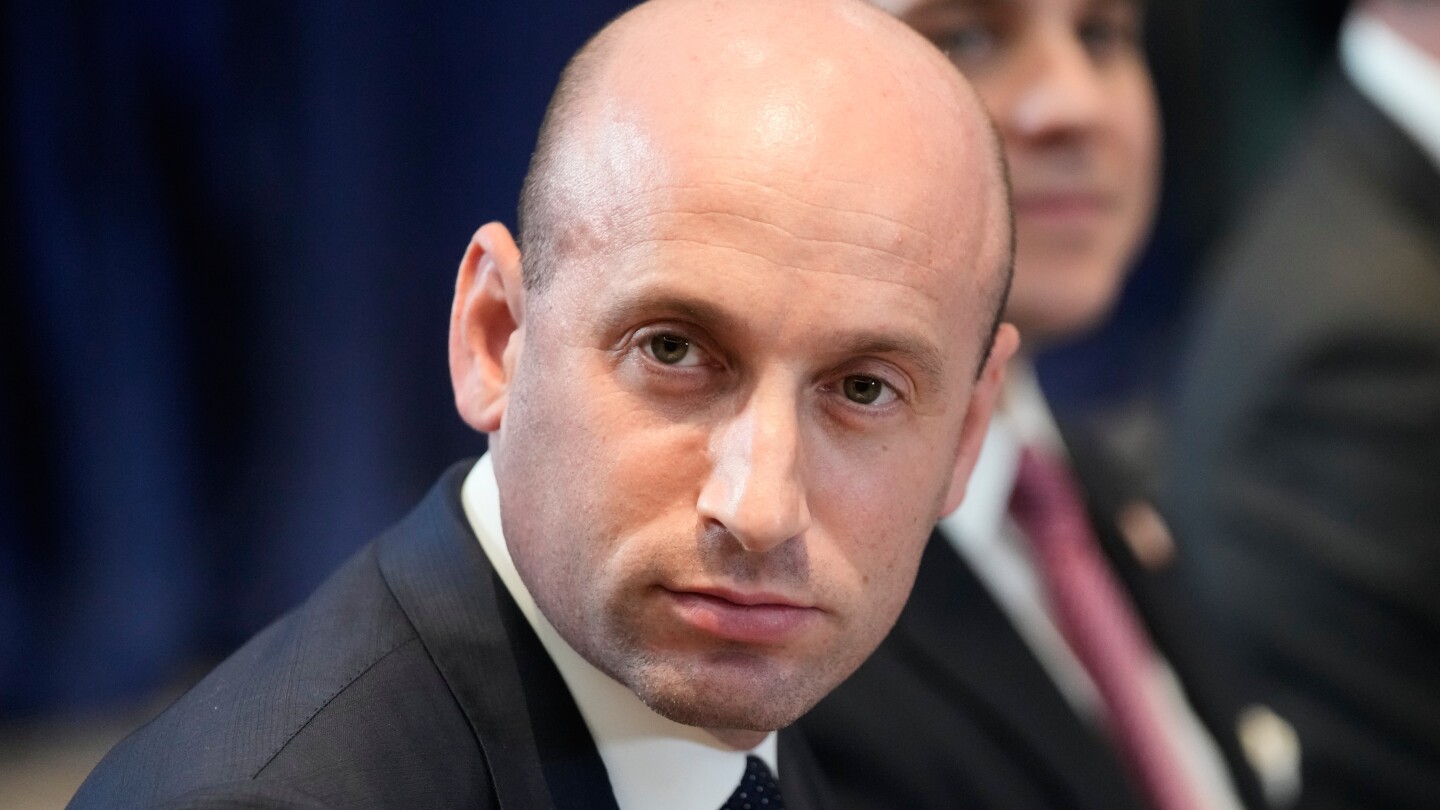
U.S. official Stephen Miller has been laying extensive rhetorical groundwork for the recent American military operation that deposed Venezuelan President Nicolás Maduro, according to an analysis of his public statements over the past year.
Miller, who now serves as the White House chief of staff for policy, had claimed more than a year before the operation that Maduro was “dispatching gang members into the United States.” During the closing stretch of President Donald Trump’s 2024 comeback campaign, Miller posed the question: “If you’re a dictator of a poor country with a high crime rate, wouldn’t you send your criminals to our open border?”
Known for his bombastic style and zero-sum worldview, Miller has become a controversial figure within the administration. Critics contend that his rhetoric about foreign nations and immigrants reflects racist and imperialist ideas that have historically underpinned U.S. military interventions abroad.
The military operation in Venezuela has drawn significant international criticism. Spain and five Latin American countries issued a joint statement calling for “mutual respect, the peaceful settlement of disputes, and nonintervention” among nations in the region. Senator Bernie Sanders (I-VT) characterized the administration’s Venezuela policy as “old-fashioned imperialism.”
White House spokesperson Abigail Jackson defended Miller, stating, “Advocating for policies that put American citizens first isn’t racist. Anyone who says so is either intentionally lying or just plain stupid.”
Shortly after Maduro’s capture, Miller took to social media with controversial historical claims, writing that after World War II, Western nations dissolved their empires and began sending “colossal sums of taxpayer-funded aid” to former colonies while opening borders to create “a kind of reverse colonization.” He described the “neoliberal experiment” as “a long self-punishment of the places and peoples that built the modern world.”
Miller has consistently framed U.S.-Venezuela relations through an explicitly transactional and power-based lens. Two weeks before Maduro’s arrest, he claimed that American companies built Venezuela’s oil industry, characterizing its nationalization as “the largest recorded theft of American wealth and property.” He further alleged these “pillaged assets were then used to fund terrorism and flood our streets with killers, mercenaries and drugs.”
In January, Miller told reporters that Venezuela’s government was effectively under U.S. control, stating, “We have an oil embargo in Venezuela for them to do any kind of commerce. They need our permission.” He added that due to America’s “massive fleet or armada still present there,” the U.S. government “set the terms and conditions” in what he described as “an active and ongoing U.S. government military operation.”
During a CNN interview with Jake Tapper, Miller repeatedly emphasized power over international norms. “We live in a world… that is governed by strength, that is governed by force, that is governed by power. These are the iron laws of the world,” he said. When asked about potential conflicts with European allies over Trump’s stated desire to acquire Greenland from Denmark, Miller dismissed concerns, saying, “Nobody’s going to fight the United States militarily over the future of Greenland.”
Miller has explicitly rejected traditional diplomatic approaches in the Western Hemisphere. When asked whether Venezuela should hold elections, he responded, “The United States is using its military to secure our interests unapologetically in our hemisphere. We’re a superpower, and under President Trump, we are going to conduct ourselves as a superpower.”
He went on to invoke the Monroe Doctrine alongside what he called the “Trump Doctrine,” emphasizing that both are “all about securing the national interest of America.” Miller contrasted this approach with previous U.S. foreign policy, criticizing efforts to build democracies in the Middle East and what he called the West’s post-World War II “apologizing and groveling.”
More recently, Miller has returned to domestic issues following immigration enforcement actions that sparked protests in Minneapolis after an Immigration and Customs Enforcement officer shot and killed a woman. He characterized these demonstrations as Democrats and activists supporting “violent resistance against federal law enforcement” despite Americans “voting overwhelmingly for mass deportation.”
Fact Checker
Verify the accuracy of this article using The Disinformation Commission analysis and real-time sources.

12 Comments
While I understand the administration’s desire to project strength on the global stage, Miller’s combative approach seems more likely to inflame tensions than resolve complex geopolitical challenges. We need seasoned diplomats, not ideologues, shaping foreign policy.
Absolutely. Effective foreign policy requires nuance, empathy, and a commitment to peaceful conflict resolution. Overreliance on military force and inflammatory rhetoric is a recipe for escalating crises, not solving them.
The administration’s actions in Venezuela are concerning. While the political situation there is complex, unilateral military intervention rarely resolves such conflicts peacefully. I worry Miller’s aggressive rhetoric is setting the stage for further escalation and regional instability.
I agree. Maintaining regional stability and respecting national sovereignty should be key priorities. The administration needs to pursue a more balanced, diplomatic approach that brings together international partners to find a constructive solution.
As a longtime supporter of the mining and energy industries, I’m troubled by the apparent disconnect between Miller’s rhetoric and the realities of global trade and security. Scapegoating immigrants and foreign nations is counterproductive and could undermine economic and political cooperation.
That’s a fair point. The mining and energy sectors rely heavily on global supply chains and international partnerships. Inflammatory statements that strain diplomatic relations could have serious repercussions for these critical industries.
As an investor in mining and energy equities, I’m closely monitoring the administration’s actions and rhetoric around global affairs. While stability and security are important, I worry Miller’s approach could lead to harmful trade disruptions and geopolitical instability that could negatively impact my portfolio.
That’s a valid concern. Investors in these sectors need policy predictability and reliable international cooperation to manage risk effectively. Reckless saber-rattling and unilateral interventionism could create significant volatility and undermine shareholder value.
Miller’s arguments seem to rely heavily on fearmongering and unsubstantiated claims. As a senior White House official, he should be held to a higher standard of factual accuracy, especially when discussing sensitive foreign policy matters. I hope Congress will scrutinize these statements closely.
Well said. Inflammatory rhetoric from government leaders can have serious consequences, both domestically and internationally. Robust oversight and a commitment to truth are essential, especially around issues of national security and military intervention.
Interesting to see the administration’s justification for military action abroad. While protecting national security is important, I’m concerned Miller’s rhetoric appears to scapegoat immigrants and foreign nations. We should be cautious about interventionist policies that could lead to more global instability.
I share your concerns. Inflammatory rhetoric often precedes military action, and the claims about ‘criminals’ and ‘dictators’ seem dangerously simplistic. We need a more nuanced, diplomatic approach to global issues.