


Listen to the article
Immigration Expert Attributes Healthcare Fears to Sanctuary Policies, Not ICE Operations
A former immigration judge and policy expert has countered claims that Immigration and Customs Enforcement (ICE) operations are preventing Minnesota residents from seeking medical care, suggesting that sanctuary policies are the root cause of the problem.
The debate emerged following a news conference held by Democratic lawmakers and medical professionals in Minnesota, where providers claimed that both undocumented immigrants and U.S. citizens are avoiding critical healthcare services out of fear of ICE enforcement. According to the Minnesota Star Tribune, patients are reportedly skipping diabetes treatments, regular checkups, and even hospital births due to these concerns.
Department of Homeland Security spokesperson Tricia McLaughlin firmly denied these allegations, stating that “ICE does not conduct enforcement at hospitals — period.” This position was reinforced by Andrew Arthur, a law and policy fellow at the Center for Immigration Studies.
“There have not been any reports that ICE has gone into any medical facility, any hospital, any clinic, any doctor’s office,” Arthur told Fox News Digital. “There also aren’t any ICE roadblocks being set up to check everybody for their status, so it’s not like they’re going to be looking for them in that context.”
Arthur attributed the increased federal law enforcement presence in Minnesota to the state’s reluctance to cooperate with immigration authorities. He explained that Minnesota’s sanctuary policies have forced ICE to conduct targeted operations in communities rather than taking custody of individuals directly from local jails.
“This situation has been created by the sanctuary policies,” Arthur explained. “What ICE is doing is targeted operations against specific individuals that they are looking for in Minnesota. And, of course, that is because… [the state] issued an opinion that said that local county jails in Minnesota could not hold people based on immigration detainers.”
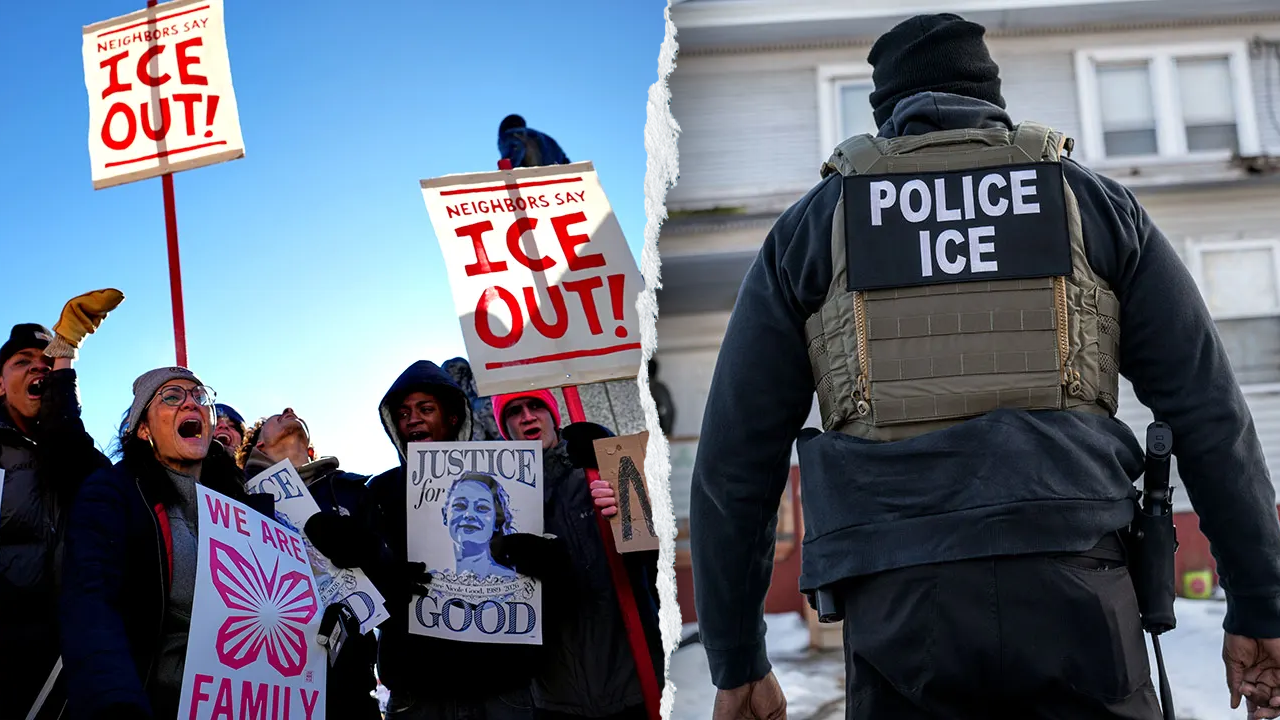
The controversy comes amid heightened tensions in the Minneapolis-St. Paul area following a fatal shooting involving an ICE officer. Protests have erupted across the region, with some organizations reportedly encouraging workers to use sick leave to participate in anti-ICE demonstrations.
Minnesota’s situation reflects a broader national debate over sanctuary policies, which limit local cooperation with federal immigration enforcement. Critics argue these policies protect public safety by encouraging immigrant communities to report crimes and access essential services without fear, while supporters of stronger enforcement contend they undermine immigration laws and potentially release individuals who pose public safety risks.
Arthur disputed the framing of the issue as a public health concern. “Framing it as a public health issue is almost too cute by half, because the issue isn’t whether somebody can get medical treatment or not, the issue is whether somebody has lawful status in the United States or they don’t,” he said.
He added that fear of ICE enforcement typically stems from immigration status concerns: “The only reason that any individual would be afraid of ICE enforcement is because they don’t have status in the United States, either because they entered illegally or because they overstayed non-immigrant visas or because they committed some crime that would make them removable from the United States.”
The situation has drawn judicial attention, with a federal judge recently imposing restrictions on ICE agents amid the ongoing protests. Meanwhile, healthcare providers continue to express concern about patients avoiding necessary medical care, creating a complex intersection of immigration enforcement, public health, and community safety that remains unresolved in Minnesota and similar sanctuary jurisdictions across the country.
Fact Checker
Verify the accuracy of this article using The Disinformation Commission analysis and real-time sources.

13 Comments
The reported cases of people avoiding critical healthcare services due to fears about ICE are concerning, regardless of the root cause. Ensuring access to medical care should be a top priority.
Absolutely, the wellbeing of patients has to come first in this discussion. Finding solutions to address any barriers to care is crucial.
I appreciate the DHS spokesperson’s clear statement that ICE does not conduct enforcement at medical facilities. That helps provide some needed clarity on the agency’s policies and practices.
It’s interesting to see the debate around the claims that ICE operations are preventing people from seeking medical care. I’d like to hear more about the specific data and evidence on both sides of this issue.
Yes, it’s important to get a clear and accurate understanding of the situation. Relying on anecdotal reports alone doesn’t provide a complete picture.
The immigration expert’s perspective that sanctuary policies may be a bigger factor seems plausible, but I’d want to see more data to fully evaluate the claims. It’s a complex issue without easy answers.
Agreed, this is a nuanced topic that requires careful analysis of the facts on the ground. Avoiding politicization and focusing on the evidence is key.
This debate highlights the need for balanced, fact-based discussions on sensitive topics like immigration and healthcare access. Avoiding partisan rhetoric and focusing on real-world impacts is crucial.
Well said. Finding common ground and pragmatic solutions should be the goal, rather than scoring political points.
This debate touches on the complex intersection of immigration enforcement, public health, and civil liberties. It will be interesting to see how it plays out and what lessons can be learned.
While the DHS denial of ICE enforcement at medical facilities is reassuring, the reported cases of people avoiding care are still concerning. More transparency and dialogue may be needed to address the underlying fears.
The immigration expert’s point about sanctuary policies potentially contributing to the problem is worth considering, but I’d want to see more evidence to fully evaluate that claim.
Agreed, it’s important to look at the nuances and avoid oversimplifying a multi-faceted issue like this one.