


Listen to the article
Schools across America face dramatic enrollment drops as immigration policies take effect, posing financial challenges to districts that have long served immigrant families.
From Miami to San Diego, school districts are reporting significant declines in immigrant student enrollment, creating unexpected budget shortfalls and forcing administrators to adjust staffing and resources. The trend stems from multiple factors, including deportations, voluntary returns to home countries, and most significantly, the sharp reduction in families crossing the U.S. border.
Miami-Dade County Public Schools has seen one of the most dramatic shifts. Only about 2,550 students have entered the district from another country this academic year, compared to nearly 14,000 last year and more than 20,000 the year before. This decline has erased approximately $70 million from the district’s annual budget.
“I was one of those arrivals when I was 8 years old,” said school board member Luisa Santos. “And this country and our public schools — I’ll never get tired of saying it — gave me everything.”
The enrollment decreases compound existing challenges for traditional public schools already experiencing declining numbers due to demographic shifts and competition from private schools and homeschooling. Despite requiring English language instruction and additional social supports, immigrant students have helped maintain enrollment levels and secure critical per-pupil funding in many districts.
In Albertville, Alabama, where approximately 60% of students identify as Hispanic, Superintendent Bart Reeves reports that the district’s newcomer academy hasn’t enrolled any new students this year. “That’s just not happening this year with the closure of the border,” Reeves explained. The resulting budget shortfall will likely eliminate about 12 teaching positions.
The human toll extends beyond enrollment statistics. In Florida, a Guatemalan mother of seven was detained on immigration charges, leading to all her children eventually boarding a plane to Guatemala. The family is now living in a rural area without reliable phone service, with the children missing the start of the school year in their new country.
“My house feels like a garden without flowers,” said Edna, a 63-year-old immigrant from El Salvador who temporarily cared for the children before they departed. “They’re all gone.”
The enrollment decline became evident during summer registration periods. Denver Public Schools enrolled just 400 new-to-country students this summer, down from 1,500 the previous year. Near Chicago, Waukegan Community Unified School District 60 registered 100 fewer immigrant students. Houston Independent School District closed its Las Americas Newcomer School after enrollment plummeted from 111 to just 21 students.
Chelsea, Massachusetts, a traditional immigration destination outside Boston, has experienced a similar pattern. The city’s 6,000-student school system enrolled only 152 newcomers over the summer, compared to 592 during the same period last year.
“This year has been different. Much more quiet,” noted Daniel Mojica, director of Chelsea’s parent information center.
Since January, 844 students have withdrawn from Chelsea schools, with about a quarter returning to their native countries – a higher percentage than in previous years. Mojica attributes this partly to the visible presence of Immigration and Customs Enforcement officers in the community.
“You can feel the fear in the air,” he said.
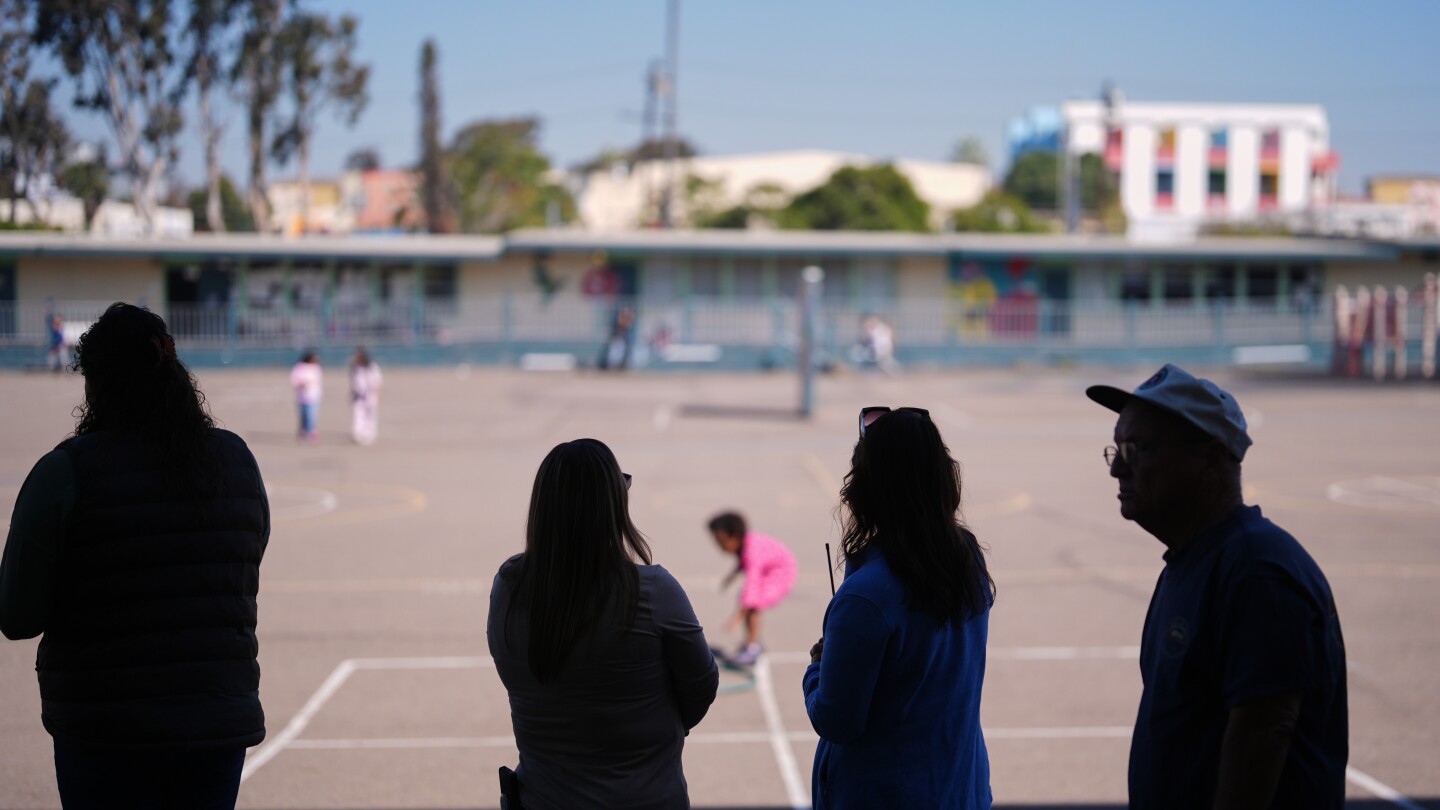
Educators worry about the broader impact on student development. In San Diego, Principal Fernando Hernandez hasn’t enrolled a single newcomer student this academic year at Perkins K-8 school, which previously welcomed students from across Latin America. He fears students are missing valuable opportunities to develop social skills and cultural understanding.
“This is like a repeat of the pandemic where the kids are isolated, locked up, not socializing,” Hernandez said. “These kids, they have to be in school.”
Some immigrant families continue sending their children to school despite heightened anxieties. Natacha, who fled Venezuela with her family to California, described checking her rearview mirror constantly when driving her daughters home from school, fearing that someone might be following her car.
“I entrust myself to God,” she said.
As districts adjust to these new realities, the financial and educational repercussions continue to unfold, affecting not just immigrant families but entire school communities across the nation.
Fact Checker
Verify the accuracy of this article using The Disinformation Commission analysis and real-time sources.

22 Comments
This is a complex issue that deserves careful consideration. I appreciate the balanced perspective provided in the article, highlighting both the challenges and the human stories behind them.
Agreed. By understanding the nuances, we’re more likely to identify sustainable solutions that support all students and families, regardless of immigration status.
While the enrollment declines pose challenges, I’m hopeful that school districts can find ways to adapt and continue providing high-quality education to all their students, regardless of background.
Absolutely. With creativity and commitment, I believe these districts can overcome the financial hurdles and ensure no student is left behind.
The financial impact on school districts is significant. I wonder what creative solutions administrators are exploring to adapt to these enrollment shifts while maintaining high-quality education.
Good point. Flexibility and innovative thinking will be key as districts navigate these challenges. I hope they can find ways to do more with less.
This is a complex issue with no easy answers. I appreciate the nuanced perspective provided in the article, highlighting the multifaceted factors at play.
Agreed. Simplistic narratives often fail to capture the full reality of these situations. Thoughtful, evidence-based approaches are needed.
This is a concerning trend for schools that have long served immigrant communities. I hope policymakers find ways to support these districts and ensure all students have access to quality education.
Agreed. Immigrant students bring valuable diversity and perspectives to our schools. We should be investing in their futures, not creating barriers.
It’s heartening to hear stories like the school board member’s, who benefited from public education as an immigrant child. These schools serve a vital role in integrating new arrivals.
Yes, public schools have long been a gateway to opportunity for immigrant families. Preserving that role should be a priority for policymakers.
The financial strain on districts is concerning, but the human impact on individual students and families is perhaps even more worrying. I hope supports are in place to ease this transition.
Good point. The social-emotional needs of immigrant students and their families should not be overlooked. Wraparound services will be crucial.
This is a concerning trend with far-reaching implications. I hope policymakers and education leaders work together to find sustainable solutions that support all students, regardless of immigration status.
Agreed. A collaborative, multi-stakeholder approach will be essential to address the root causes and ensure equitable access to quality education.
The personal story of the school board member is a powerful reminder of the transformative role public education can play in the lives of immigrant families. I hope more success stories like this emerge.
Yes, that anecdote really highlights the profound impact schools can have. Maintaining that opportunity for future generations of immigrants should be a top priority.
While the financial challenges are significant, I’m encouraged to see school districts exploring creative ways to adapt. Maintaining a welcoming environment for immigrant students should be a key priority.
Absolutely. With resourcefulness and a commitment to inclusion, these districts can find ways to weather the enrollment shifts and continue serving their diverse communities.
This is a complex issue with no easy answers. While immigration policies play a role, we should also consider the broader social and economic factors driving these enrollment changes.
Absolutely. A holistic, nuanced approach is needed to understand and address the root causes. Simplistic solutions are unlikely to be effective.