


Listen to the article
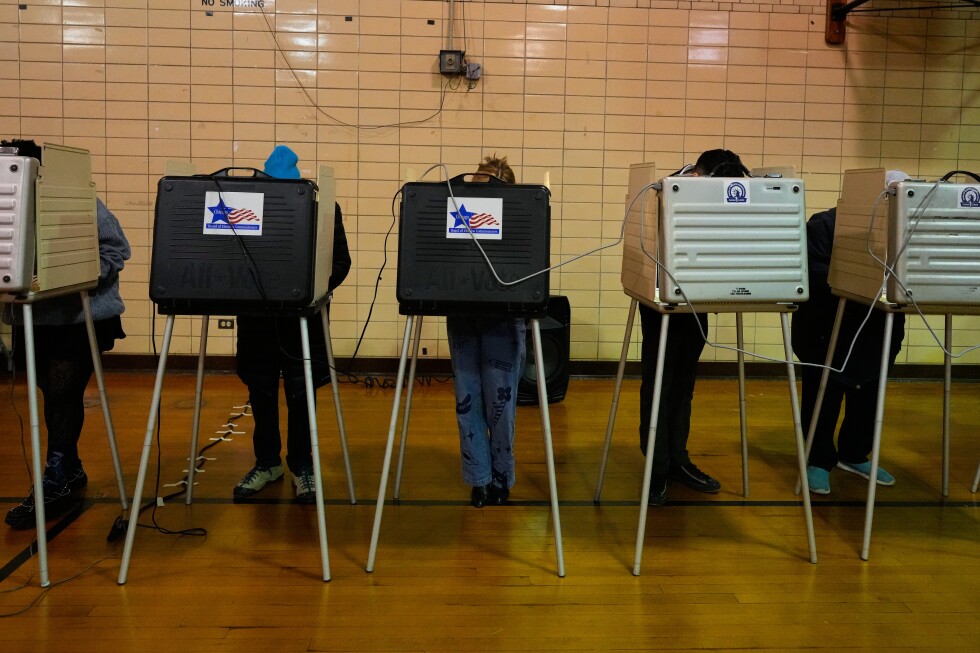
Illinois voters cast ballots Tuesday in primary elections that will usher in a new generation of leadership for the state’s heavily Democratic congressional delegation, with competitive races for six open U.S. House and Senate seats drawing significant attention and spending.
The retirement of five-term Sen. Dick Durbin, the Senate’s second-ranking Democrat, triggered an intense campaign featuring two sitting House members and the state’s lieutenant governor. The race became a test of Democratic Gov. JB Pritzker’s political influence, as the billionaire governor – often mentioned as a potential 2028 presidential candidate – invested heavily in support of his running mate.
Across the Chicago area, a wave of House retirements created open seats with crowded fields of candidates. Given Illinois’ Democratic leanings, most primary winners in these districts are likely to prevail in November’s general election, raising the stakes of Tuesday’s contests.
External groups, including the American Israel Public Affairs Committee (AIPAC) and political action committees supporting cryptocurrency and artificial intelligence industries, poured substantial resources into several races, highlighting the national significance of Illinois’ shifting political landscape.
In the Senate race, three prominent Democrats emerged as frontrunners to replace Durbin: Chicago-area Representatives Raja Krishnamoorthi and Robin Kelly, along with Lt. Gov. Juliana Stratton. Krishnamoorthi dominated fundraising efforts, entering 2026 with over $15 million on hand after spending more than $6 million in late 2025.
Stratton, meanwhile, received a significant boost when Gov. Pritzker directed $5 million to a super PAC largely aimed at supporting her candidacy. She campaigned heavily on Pritzker’s endorsement while criticizing Krishnamoorthi’s voting record and campaign donations, particularly targeting contributions from a contractor linked to U.S. Immigration and Customs Enforcement.
“That is not the example of somebody who’s going to stand up to Donald Trump and fight for all of our communities,” Stratton said during a January debate. “I want to abolish ICE.”
Krishnamoorthi, who has called for dismantling ICE, countered that he had donated the controversial funds to immigrant rights groups and accused Stratton of attacking him because she “didn’t have any policy ideas.”
The influence of AIPAC money became a significant factor for some voters. Chicago resident Rochelle Brockenborough, 64, cited this issue when explaining her support for Stratton: “I wanted to make sure there was no AIPAC money. That’s important to me,” she said, adding that U.S. tax dollars shouldn’t support Israel.
Kelly, the third major Democratic contender, questioned Pritzker’s involvement in the race, suggesting that a sitting governor should not interfere in the primary process. Her supporter, Shana Sumers, 36, emphasized domestic priorities: “We really need to be able to afford housing, afford health care, afford to go to the grocery store.”
The campaign saw candidates highlighting connections to iconic Chicago political figures, including former President Barack Obama and the late Rev. Jesse Jackson, who died last month. A controversy erupted when Jackson’s family had to withdraw an endorsement that Stratton’s campaign had released, stating it was not meant for public circulation.
On the Republican side, six candidates sought the nomination, including former Illinois Republican Party chairman Don Tracy and attorney Jeannie Evans. However, Illinois has not elected a Republican senator since Mark Kirk, who was defeated by current Democratic Sen. Tammy Duckworth a decade ago.
The House races were equally competitive, with dozens of candidates vying for five open seats in the Chicago area. In the 2nd District, being vacated by Kelly, ten Democrats competed, including former U.S. Rep. Jesse Jackson Jr., son of the late civil rights leader, along with Cook County Commissioner Donna Miller and state Sen. Robert Peters.
Krishnamoorthi’s suburban 8th District attracted eight Democratic candidates, including former U.S. Rep. Melissa Bean and Cook County Commissioner Kevin Morrison.
The retirement of long-serving Representatives Danny Davis (7th District) and Jan Schakowsky (9th District) created additional openings. Davis, who first won election in 1996, leaves a district covering parts of downtown Chicago, the West Side, and surrounding suburbs. Democratic frontrunners to replace him included state Rep. La Shawn Ford, City Treasurer Melissa Conyears-Ervin, and community organizer Kina Collins.
Schakowsky’s departure after 14 terms yielded the most crowded primary field, with 15 Democrats including Evanston Mayor Daniel Biss, digital creator Kat Abughazaleh, and state Sen. Laura Fine.
Meanwhile, Gov. Pritzker, who ran unopposed in his primary, is seeking a third term – the first Illinois governor to do so since the 1980s. The Hyatt Hotel fortune heir and vocal critic of former President Donald Trump has emphasized his opposition to federal immigration crackdowns in Chicago.
The primary results will significantly reshape Illinois’ congressional representation and test the political strength of various factions within the state’s Democratic Party, which has dominated state politics in recent years.
Fact Checker
Verify the accuracy of this article using The Disinformation Commission analysis and real-time sources.

9 Comments
With Illinois being a Democratic stronghold, the primary winners will likely cruise to victory in the general election. This could have ripple effects on the national political landscape, especially if any of the new House members become rising stars.
Interesting to see a new generation of Democrats emerge in Illinois after so many retirements. This could signal a shift in the state’s political landscape. I’m curious to see how the newly elected officials approach issues like the economy, energy, and infrastructure.
I hope the new generation of Democrats in Illinois will take a pragmatic approach and focus on issues that matter most to their constituents, like jobs, infrastructure, and supporting the state’s mining, energy, and manufacturing sectors.
All these open House seats in the Chicago area create a lot of opportunities for new voices and ideas to emerge. I’ll be watching to see how the winners approach issues like trade, technology, and the mining/energy sectors.
With the governor’s political influence at stake, this primary could have broader implications for the Democratic party in Illinois. I’ll be watching to see if the winners align closely with Pritzker’s agenda or chart their own independent course.
While the Democratic dominance in Illinois may not change, I’m curious to see if the new crop of elected officials will bring fresh ideas and a willingness to work across the aisle on issues impacting the state’s economy and communities.
The race for Durbin’s Senate seat sounds intense, with the governor’s political influence being tested. It will be interesting to see how the results impact the broader Democratic party in the state and nationally.
The influx of outside money from groups like AIPAC and crypto/AI PACs is noteworthy. Curious to see how that influences the policy positions and priorities of the newly elected officials, especially on topics like foreign affairs and emerging technologies.
The retirement of so many long-serving members of Congress is a significant changing of the guard. It will be intriguing to see how the new lawmakers navigate issues like trade, energy policy, and relations with the Biden administration.