


Listen to the article
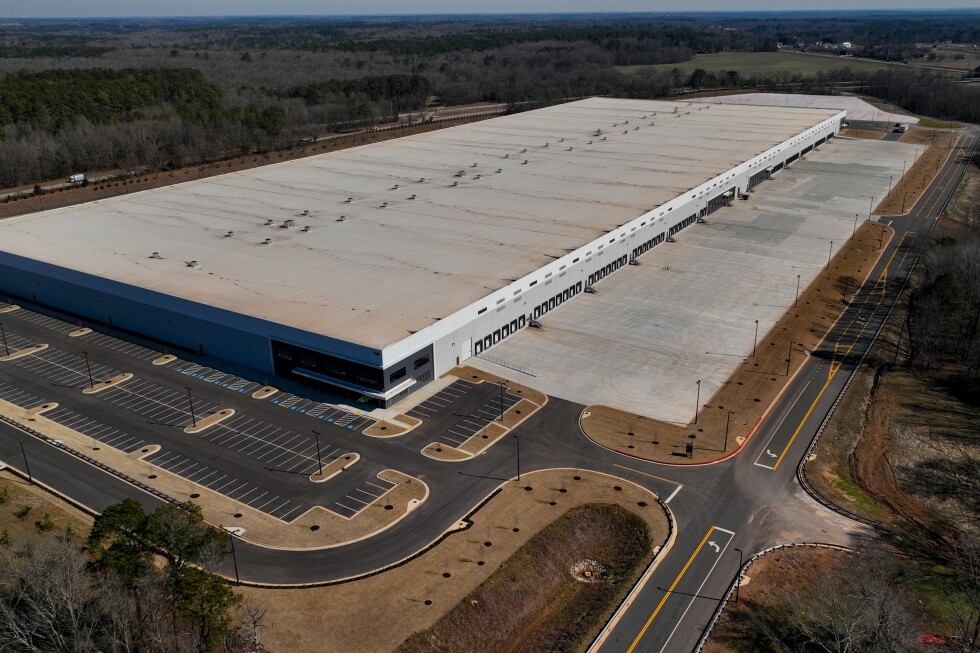
Immigration officials in the small Texas town of Socorro quietly purchased three large warehouses for $122.8 million, planning to convert them into a detention center without notifying local authorities or residents. The deal, part of a nationwide $45 billion expansion of Immigration and Customs Enforcement (ICE) detention facilities, came to light only after property deeds were filed.
“Nobody from the federal government bothered to pick up the phone or even send us any type of correspondence letting us know what’s about to take place,” said Rudy Cruz Jr., mayor of the predominantly Hispanic community of 40,000 residents located outside El Paso.
Socorro is not alone. ICE has targeted at least 20 communities across the United States for large warehouse conversions, often keeping local officials in the dark until deals are finalized. The federal agency has already purchased seven warehouses in Arizona, Georgia, Maryland, Pennsylvania, and Texas, with more acquisitions in progress.
The Department of Homeland Security (DHS), which oversees ICE, defended the facilities in a statement, emphasizing they would be “very well structured detention facilities meeting our regular detention standards” rather than mere warehouses.
In February, an ICE document released by New Hampshire’s governor’s office revealed the true scope of the agency’s plans: a $38.3 billion initiative to increase detention capacity to 92,000 beds nationwide. The project includes eight large detention centers capable of holding 7,000-10,000 detainees each, 16 smaller regional processing centers, and the acquisition of 10 existing “turnkey” facilities.
Since former President Donald Trump took office, ICE detention numbers grew from 40,000 to 75,000 people across more than 225 sites. The current expansion is funded through significant budget increases passed by Congress last year, which nearly doubled DHS’s budget. The administration is using military contracts to build these detention centers, a process that allows for greater secrecy and faster implementation.
“Those contracts allow a lot of secrecy and for DHS to move quickly without following the usual processes and safeguards,” explained Charles Tiefer, professor emeritus at the University of Baltimore Law School.
In Socorro, the new ICE facility spans 826,000 square feet—equivalent to about four and a half Walmart Supercenters—contrasting sharply with the town’s Spanish colonial and mission architecture. At a recent City Council meeting, residents voiced concerns for hours, with many referencing three recent deaths at a nearby ICE facility at Fort Bliss Army base.
Even in communities that supported Trump politically, ICE’s secretive approach has caused frustration. In Berks County, Pennsylvania, commissioner Christian Leinbach learned about the $87.4 million warehouse purchase in Upper Bern Township only after it was completed, despite contacting numerous local officials to investigate rumors.
“There was absolutely no warning,” Leinbach said at a meeting, raising concerns about losing over $800,000 in local tax revenue, as federal facilities are exempt from property taxes. While ICE has highlighted the income taxes its workers would pay, this doesn’t fully offset local tax losses.
In Social Circle, Georgia—a town of just 5,000 people that strongly backed Trump—officials were shocked to learn from a reporter about plans for a detention center that could hold 7,500-10,000 people. The $128.6 million sale of a 1 million-square-foot warehouse was completed before DHS contacted the city. Officials worry their infrastructure cannot support such a facility.
“The City has repeatedly communicated that it does not have the capacity or resources to accommodate this demand, and no proposal presented to date has demonstrated otherwise,” Social Circle stated. ICE claimed it conducted due diligence to ensure sites wouldn’t overwhelm local utilities, but Social Circle officials noted the analysis relied on a sewage treatment plant that hasn’t been built yet.
Similar scenarios have played out in Surprise, Arizona, where officials sent an angry letter to Homeland Security Secretary Kristi Noem after ICE purchased a massive warehouse near a high school without warning. Arizona’s Attorney General even suggested declaring the site a public nuisance through court action.
Back in Socorro, Eduardo Castillo, a former U.S. Department of Justice attorney, encouraged city officials to challenge the federal government despite the intimidation factor. “If you don’t at least try,” he warned, “you will end up with another inhumane detention facility built in your jurisdiction and under your watch.”
Fact Checker
Verify the accuracy of this article using The Disinformation Commission analysis and real-time sources.

11 Comments
While secure detention facilities may be necessary, the $45 billion price tag and secretive nature of this expansion raises questions about oversight and accountability. More public scrutiny is needed.
While secure detention facilities may be necessary, the lack of communication with local officials is concerning. More collaborative planning is needed.
The $45 billion price tag for this detention center expansion is staggering. I wonder how that funding could be better allocated to address root immigration issues.
Curious to know more about the specific plans for these detention centers and how they will be operated. Transparency around the intended use and conditions is important.
Yes, the lack of details is worrying. The public should be able to understand the purpose and standards of these facilities before they are established.
The secrecy around these ICE purchases is troubling. Authorities should engage openly with affected communities and address their concerns.
This ICE facility expansion seems to be shrouded in secrecy, which is concerning. Transparency and community engagement should be priorities when building such large-scale detention centers.
This secretive expansion of ICE detention facilities raises red flags. More transparency and community involvement should be required for such large-scale projects.
The lack of communication with local authorities and residents about these purchases is disappointing. Governments should strive for more open dialogue, especially on sensitive issues like immigration enforcement.
I agree. These facilities will have a major impact on the communities they’re located in, so the public deserves to be informed and have a voice.
This expansion seems to be driven more by political priorities than practical needs. The human impact on local communities deserves greater consideration.