


Listen to the article
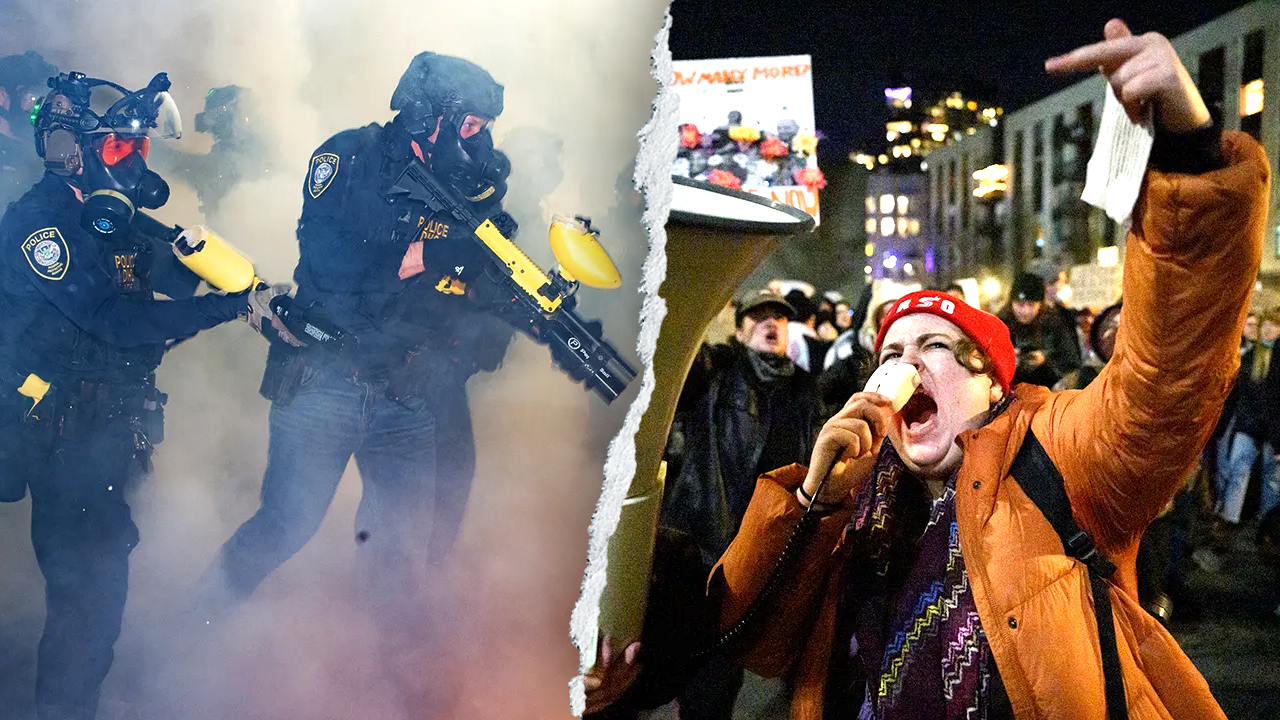
A former high-ranking intelligence official is warning that technologically sophisticated anti-ICE activism poses growing threats to immigration enforcement operations across the United States.
Stewart Baker, who served as NSA general counsel under Presidents George H.W. Bush and Bill Clinton and as DHS assistant secretary for policy under President George W. Bush, told Fox News Digital that coordinated digital resistance efforts have fundamentally altered the operational landscape for Immigration and Customs Enforcement (ICE).
“It’s already a game changer,” Baker said. “We’re going to see more of that, and it’s not easy to stop. Much of what’s being done there is perfectly lawful speech, but it is on the edge of causing serious harm.”
The digital resistance includes the use of encrypted messaging apps like Signal to track and coordinate responses to ICE operations. Beyond messaging platforms, activists are reportedly employing sophisticated counter-surveillance technology to detect law enforcement presence in their communities.
Among these technologies is hardware called “OUI-SPY” and a database called “DeFlock” that can be used to detect and log the presence of law enforcement surveillance equipment. Another tool mentioned is WiGLE, an open-source app that reportedly can alert users when specific Wi-Fi or Bluetooth signals from federal law enforcement are detected nearby.
The Electronic Frontier Foundation (EFF), a digital civil liberties organization, has documented these methods in a piece titled “How Hackers Are Fighting Back Against ICE.” While the EFF notes it is not affiliated with these projects and does not endorse them, the organization defends people’s rights to observe law enforcement activities in public spaces.
Cindy Cohn, EFF executive director, told Fox News Digital, “We defend people’s indisputable constitutional right to observe and record law enforcement activities that occur in public places, so long as that recording does not interfere with those activities.” She added that “the predominant danger today… derives from the violent tactics being used by federal forces in U.S. cities, rather than from the tools observers are using to document this behavior.”
Baker expressed skepticism about the effectiveness of some of the technologies being deployed by activists but acknowledged the sophisticated level of organization behind these efforts. He noted that technology has been “moving to a place where anonymity is just impossible” over the past three decades.
“You can identify [people] from the signals that their tires send to the dashboard to say you’re flat. You can identify them by their Bluetooth signals, by their Wi-Fi signals… there are so many signals that we put off that increasingly trying to keep them all from being read by the rest of the world is just going to fail,” Baker explained.
The cybersecurity expert warned that these technological confrontations are creating more dangerous situations for everyone involved – agents, protesters, bystanders, and even the undocumented immigrants being targeted. He pointed to the fatal shootings of activists Alex Pretti and Renee Good earlier this year as evidence of escalating tensions.
“The people who are protesting ICE have set up a network for getting hostile people at the scene of ICE operations and [U.S. Customs and Border Protection] operations as quickly as possible and in as large numbers as possible,” Baker explained. “That is setting up more confrontations that are also going to end badly for the people who go there.”
Previous reporting has indicated that anti-ICE mobilization efforts in Minneapolis following Pretti’s death showed hallmarks of insurgency tactics used globally. These include encrypted communications, command-and-control centers, rapid-response propaganda, and orchestrated confrontations with law enforcement.
Baker’s ultimate concern extends beyond the immediate threat to immigration enforcement officers. “We’re all going to be living in a world where we are doxed by people who don’t like us. And ICE agents are there first, but plenty of other people are going to end up there and tracked,” he warned.
“There are people who are willing to use violence against agents, and that fear of violence is going to drive hair-trigger responses by the agents. It’s a very dangerous situation,” Baker concluded. “It’s dangerous for everybody.”
Fact Checker
Verify the accuracy of this article using The Disinformation Commission analysis and real-time sources.

10 Comments
The use of encrypted messaging and counter-surveillance tech by anti-ICE groups highlights how technology is empowering grassroots movements. It will be interesting to see how the government responds to these emerging digital tactics.
Agreed, this is a significant shift in the operational landscape for law enforcement. It will be a delicate balance going forward.
While I can appreciate the motivations behind the anti-ICE activism, the use of sophisticated digital tactics to disrupt law enforcement operations is quite concerning. This has the potential to escalate tensions and lead to unintended consequences.
As someone interested in the intersection of technology and politics, I’m closely following this story. The digital resistance tactics seem both creative and worrying. I wonder how policymakers will adapt to this new reality.
The growth of anti-ICE resistance groups and their use of advanced technologies is a significant development. It will be important for officials to find ways to balance public safety and civil liberties as they respond to these emerging threats.
This is a complex issue without easy answers. On one hand, the use of technology to empower grassroots movements is fascinating. On the other, the potential for disrupting critical law enforcement operations is concerning. I’ll be watching this space closely.
While I understand the motivations behind the anti-ICE activism, the use of sophisticated technology to disrupt enforcement operations is concerning. This could potentially escalate tensions and lead to unintended consequences.
That’s a fair point. The stakes are high, and both sides will need to exercise caution and restraint.
This is a concerning trend. While activism and free speech are important, using sophisticated tech to disrupt law enforcement operations seems problematic. I wonder how officials will balance public safety and civil liberties in responding to these threats.
You raise a good point about the need to balance competing priorities. It’s a complex issue without easy solutions.