


Listen to the article
UK-US “Special Relationship” Under Strain After Starmer-Trump Discord
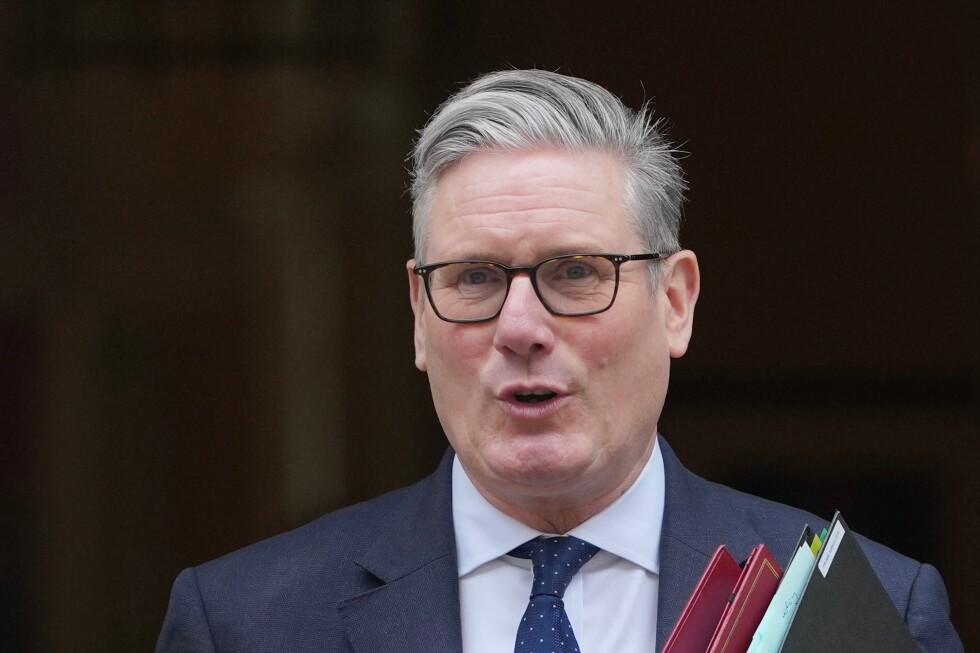
Opposition politicians accused U.K. Prime Minister Keir Starmer on Wednesday of damaging Britain’s “special relationship” with the United States following a public disagreement with U.S. President Donald Trump over Iran policy.
The diplomatic tension erupted after Trump labeled Britain “uncooperative” and criticized Starmer as “not Winston Churchill” when the prime minister initially refused a U.S. request to use U.K. bases for military strikes against Iran. Starmer later reversed course, confirming that American planes could utilize bases in England and on the Indian Ocean island of Diego Garcia to target Iranian missile systems threatening allies in the Middle East.
Despite this concession, Trump remains displeased, and Starmer’s government is now concerned about potential impacts on trans-Atlantic relations and trade agreements. The incident marks a notable rough patch in the historically close alliance between the two nations.
The “special relationship” between Britain and the United States was famously articulated by Churchill in 1946 during a speech at Westminster College in Missouri. Since then, the bond has been maintained through shared language, interests, military cooperation, and cultural ties. The relationship has sometimes been strengthened by personal friendships between leaders, such as Margaret Thatcher and Ronald Reagan in the 1980s, or Tony Blair and Bill Clinton in the 1990s.
However, history shows this relationship has weathered significant challenges. The 1956 Suez Crisis represented a stark reminder of America’s growing dominance when President Eisenhower refused to back Britain’s attempt to seize control of the canal from Egypt. Similarly, tensions rose in the 1960s when Prime Minister Harold Wilson declined President Johnson’s pressure to join the Vietnam War.
More recently, Tony Blair’s controversial decision to support the U.S.-led invasion of Iraq in 2003 remains one of the most divisive choices by a British leader in modern times. The war, based on faulty intelligence about weapons of mass destruction, resulted in significant casualties, including 179 British troops.
The center-left Starmer had previously developed surprisingly cordial relations with Trump since the president’s return to office in 2025. However, friction has been building for months. Trump condemned Britain’s agreement to hand over the Chagos Islands, home to the Diego Garcia military base, to Mauritius, despite his administration’s earlier support for the deal.
Starmer has implied that he considers the war on Iran illegal, stating his government doesn’t believe in “regime change from the skies.” Cabinet minister James Murray defended the prime minister’s approach, saying Starmer was acting with “a cool head” and maintaining that Britain’s relationship with the U.S. remains “historic, long-lasting and deep.”
Critics, particularly from right-wing media and opposition parties, argue that Starmer is diminishing the UK’s global standing at a critical time, even after an Iranian-made drone struck a British air force base on Cyprus without causing injuries. The Daily Mail’s headline proclaimed: “Starmer takes the Great out of Britain.”
In Parliament, Conservative leader Kemi Badenoch criticized Starmer for not immediately supporting the U.S.-Israeli offensive, while Conservative MP Gareth Bacon accused the prime minister of a “dithering and equivocal response.”
Starmer defended his position in the House of Commons, emphasizing that practical cooperation continues: “American planes are operating out of British bases. That is the special relationship in action. British jets are shooting down drones and missiles to protect American lives in the Middle East on our joint bases. That is the special relationship in action.”
British officials hope Trump’s displeasure will be temporary, particularly given the president’s sometimes volatile diplomatic stances. The stakes are significant—Trump recently threatened to cut off trade with Spain after Prime Minister Pedro Sánchez condemned the Iran strikes as “unjustifiable” and “dangerous.”
Several important agreements now hang in the balance. The U.K.’s deal with Mauritius regarding the Chagos Islands remains on hold pending U.S. approval. Additionally, a trade agreement signed by Trump and Starmer in May awaits finalization and faces uncertainty given Trump’s recent tariff pronouncements.
Peter Ricketts, a former U.K. national security adviser, suggested that Trump appears to demand “completely blind loyalty” from allies and launched an “unfair” critique of Starmer. Nevertheless, he advised British authorities against overreaction, telling the BBC: “I think the prime minister should keep calm and carry on.”
Fact Checker
Verify the accuracy of this article using The Disinformation Commission analysis and real-time sources.

7 Comments
Disagreements between allies are inevitable, but the US-UK relationship has historically been able to withstand such challenges. It will be important for both sides to engage in constructive dialogue to resolve this dispute and avoid further damage to the ‘special relationship’.
Tensions between allies can be tricky to manage, but the historical ‘special relationship’ between the US and UK is usually resilient. I’m curious to see if cooler heads will prevail and the two countries find a way to work through this dispute constructively.
The UK’s strategic location makes its cooperation valuable to the US, so there may be incentives for both sides to smooth over this disagreement and preserve the alliance.
This seems like a complex geopolitical situation with implications for the US-UK relationship. It will be interesting to see how the two nations navigate this diplomatic tension and whether they can preserve the ‘special relationship’ despite the discord over Iran policy.
Starmer’s decision to reverse course and allow use of UK bases for strikes against Iran suggests he is trying to strike a balance and maintain ties with the US, despite the initial disagreement.
The ‘special relationship’ between the US and UK has weathered many storms over the decades. While this disagreement on Iran policy is certainly concerning, I’m optimistic the two nations can work through it and keep their alliance strong.
This incident highlights the challenges of maintaining stable international relationships, even between longtime allies like the US and UK. Hopefully the leaders can find a diplomatic solution that satisfies both countries’ interests.