


Listen to the article
President Trump Announces Iran Ceasefire After Dramatic Shift in Rhetoric
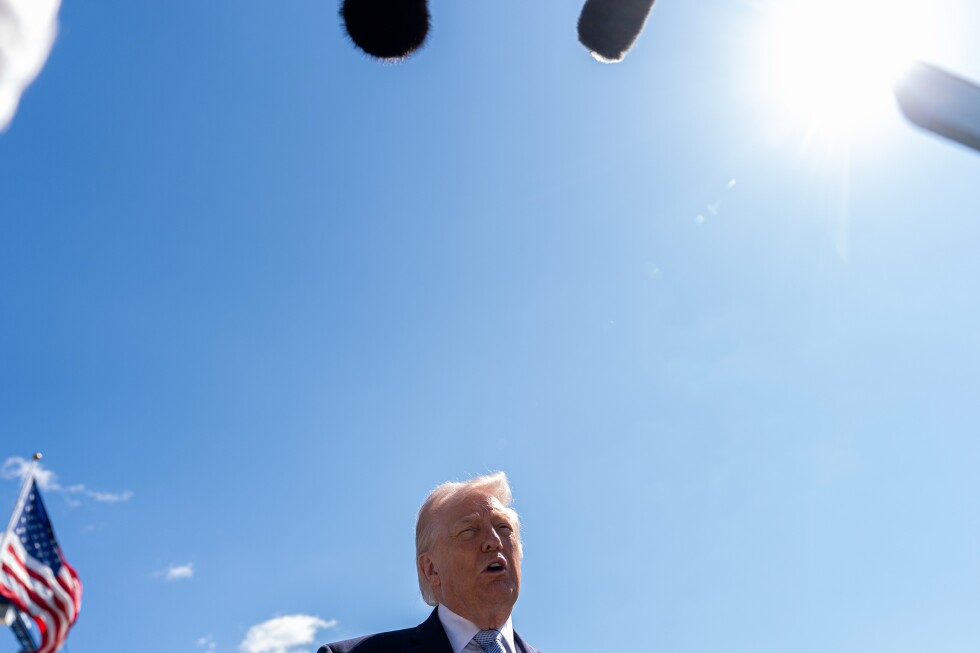
President Donald Trump abruptly shifted from threatening Iran with “annihilation” to announcing a 14-day ceasefire agreement, claiming the United States has “met and exceeded all Military objectives” in the nearly six-week conflict. The surprising diplomatic breakthrough came just 90 minutes before Trump’s deadline for Tehran to reopen the critical Strait of Hormuz or face devastating strikes on its infrastructure.
Behind-the-scenes diplomatic efforts led by Pakistan played a crucial role in averting further escalation. Even China, Iran’s largest trading partner and America’s chief economic rival, worked quietly through intermediaries to facilitate the ceasefire, according to officials familiar with the negotiations who spoke on condition of anonymity.
The sudden de-escalation followed growing international criticism of Trump’s rhetoric. Democratic lawmakers had condemned his threat to “wipe away an entire civilization” as “a moral failure,” while Pope Leo XIV warned that striking civilian infrastructure would violate international law, calling such threats “truly unacceptable.”
Analysts suggest Trump’s retreat from his hardline stance may reflect the sobering reality of what a protracted conflict with Iran would entail. Despite his campaign promises to avoid “forever wars,” an extended military operation to control the Strait of Hormuz could have required a massive, long-term American commitment.
“This would be an indefinite operation — so, you know, think: be ready to do this for 20 years,” explained Ben Connable, executive director of the Battle Research Group and a retired Marine Corps intelligence officer. Connable estimated that securing the strait could require three U.S. infantry divisions—approximately 30,000 to 45,000 troops—to prevent Iran from firing missiles at passing ships.
The conflict began with the killing of Ayatollah Ali Khamenei in the initial stages, but Trump appears to have underestimated Iran’s historical willingness to endure prolonged struggles. Despite being outgunned, Iranian leadership projected confidence that it could bog down American forces in a costly, extended conflict.
The ceasefire agreement includes a controversial provision allowing both Iran and Oman to charge fees on ships transiting through the Strait of Hormuz, through which roughly 20% of the world’s oil flows daily. A regional official indicated Iran would use its collected fees for reconstruction efforts, though Oman’s intended use for the funds remains unclear. This arrangement has already drawn criticism, with Senator Chris Murphy (D-Conn.) calling it “a history-changing win for Iran” that effectively gives Tehran “control” of the vital waterway.
The ceasefire announcement came after Pakistan’s Prime Minister Shehbaz Sharif urged Trump to extend his deadline by two weeks to allow for diplomatic progress. This timeline aligns with Trump’s pattern of using two-week intervals for major decisions throughout his presidency, often setting deadlines that lead to scaled-back actions or compromises.
This pattern of backing away from maximalist demands has been evident throughout Trump’s second term. Earlier examples include retreating from sweeping “Liberation Day” tariffs after market turmoil, and abandoning threats to impose widespread European tariffs to gain control of Greenland.
The White House celebrated the ceasefire as a diplomatic victory, with press secretary Karoline Leavitt crediting “the success of our military” for creating “maximum leverage” that allowed for negotiations. “Never underestimate President Trump’s ability to successfully advance America’s interests and broker peace,” she stated.
President Trump is scheduled to meet with NATO Secretary-General Mark Rutte at the White House on Wednesday, where the ceasefire and plan to reopen the strait are expected to dominate discussions.
Fact Checker
Verify the accuracy of this article using The Disinformation Commission analysis and real-time sources.

8 Comments
The shift in rhetoric from Trump is quite remarkable. I wonder what factors led to this diplomatic breakthrough, given the earlier threats of “annihilation.” Curious to see if this ceasefire holds.
Interesting to see the diplomatic efforts behind the scenes that led to this ceasefire. It’s good to see de-escalation after the heated rhetoric, though the situation remains delicate.
Absolutely, the role of intermediaries like Pakistan and China in facilitating this agreement is noteworthy. Hopefully this lull in tensions can lead to more substantive negotiations.
It’s good to see international pressure and criticism of the aggressive rhetoric seemingly having an impact. Diplomacy and de-escalation are critical, especially when it comes to conflicts that could roil global commodity markets.
Agreed. The role of China and other intermediaries in facilitating this ceasefire should not be overlooked. Maintaining open lines of communication will be key to preventing further flare-ups.
While I’m glad to see the ceasefire, I’m concerned about the broader implications of this conflict and how it may impact global energy and commodity markets, especially for key minerals like copper and lithium.
Good point. Any prolonged instability in the Middle East could disrupt critical supply chains and trade flows that the mining industry relies on. Monitoring this situation closely will be important.
As an investor in mining and energy stocks, I’ll be watching this situation closely. Geopolitical tensions can have a big impact on commodity prices and market volatility. Hopefully this ceasefire leads to more durable negotiations.