


Listen to the article
A judge’s ruling to invalidate the boundaries of New York City’s only Republican-held congressional district has thrown the state’s political landscape into uncertainty, creating a potential opening for Democrats in the ongoing national battle for control of the House of Representatives.
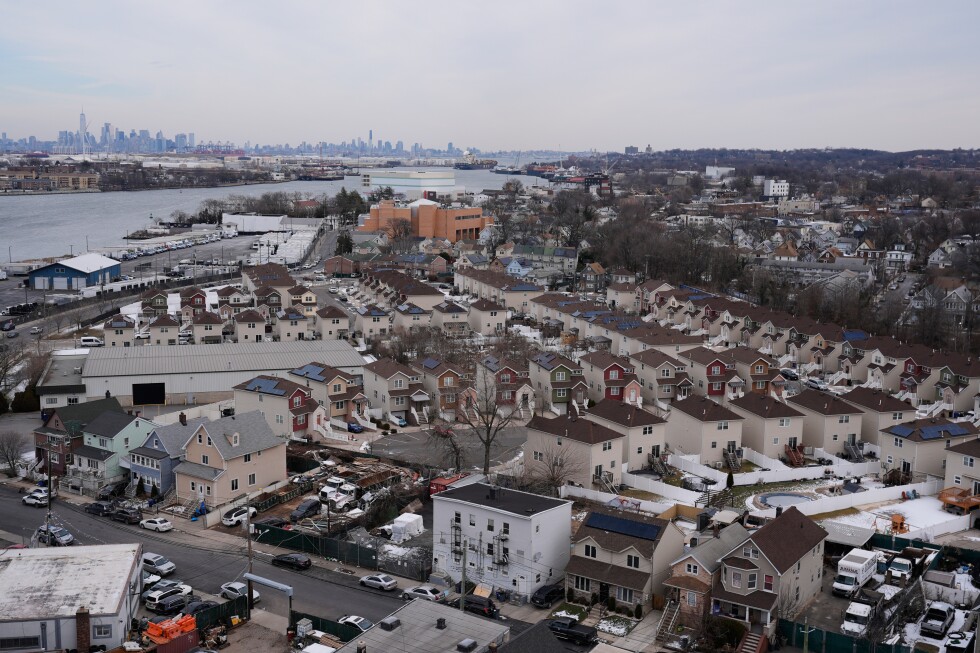
New York State Supreme Court Justice Jeffrey Pearlman on Wednesday struck down the current district lines of U.S. Rep. Nicole Malliotakis’ Staten Island-based seat, declaring that the configuration unconstitutionally dilutes the voting power of Black and Hispanic residents. The judge ordered the state’s Independent Redistricting Commission to develop new boundaries by February 6, a deadline that comes just months before party primaries.
“In one word: chaos,” said Blair Horner of the New York Public Interest Research Group, describing the situation that has suddenly emerged in the state’s congressional map.
The lawsuit, filed by an election law firm with ties to the Democratic Party, suggested reshaping Malliotakis’ district to include affluent Manhattan neighborhoods like Tribeca, the West Village, and SoHo. Such changes would transform the district from its current Staten Island-southern Brooklyn composition into a significantly more liberal-leaning constituency that would be far more favorable to Democratic candidates.
Malliotakis, who won reelection in 2024 by a commanding 28-point margin, has characterized the legal challenge as a partisan attempt by Democrats to “tilt the scale to give their party an advantage.” Republicans have already announced plans to appeal the decision, which could place the judge’s order on hold pending review by higher courts.
The case represents the latest chapter in the nationwide redistricting battles that intensified after former President Donald Trump pushed for congressional maps favorable to Republicans in states they control. Democrats have responded with similar efforts in blue states, making New York a crucial battleground in these partisan mapping disputes.
In his ruling, Justice Pearlman wrote that the current district lines “are a contributing factor in the lack of representation for minority voters.” However, he rejected the specific reconfiguration proposed in the lawsuit, stating that the state constitution assigns redistricting authority to the Independent Redistricting Commission.
The commission, which includes appointees from both Democratic and Republican legislative leaders, now faces the daunting task of redrawing multiple district boundaries within just over two weeks. A co-executive director of the commission acknowledged the challenging timeline but stated they are “ready to do so.”
Political experts question whether the commission can realistically meet this deadline, given its history of partisan deadlock. The panel previously failed to reach consensus during redistricting attempts, with Professor Jeffrey Wice of New York Law School noting, “It’s doable. The question is whether it’s possible in the time frame given.”
Further complicating matters, the Democrat-controlled state legislature has the authority to reject the commission’s proposals, potentially allowing them to implement more favorable boundaries. Horner observed that the commission is essentially “designed for gridlock” on controversial issues like redistricting.
The case could ultimately be decided by the New York Court of Appeals, which has ruled on redistricting matters twice in recent years. In 2022, the court rejected congressional maps seen as favoring Democrats and ordered a court-appointed expert to redraw district lines, only to invalidate those maps 20 months later, creating the current state of uncertainty.
If Democrats ultimately succeed in redrawing the boundaries, the political implications could extend beyond New York. U.S. Rep. Dan Goldman, a Democrat whose lower Manhattan and Brooklyn district would be affected by potential changes, has signaled openness to redistricting as long as it aids his party’s broader goal of reclaiming House control.
“Our top priority must be to retake the majority and make Hakeem Jeffries Speaker of the House, and I will always place that goal first,” Goldman said in a statement.
Staten Island has predominantly elected Republican representatives since the 1980s, with Democrat Max Rose’s single term from 2018-2020 standing as a rare exception before Malliotakis recaptured the seat. Any significant boundary changes could alter this long-standing political dynamic and potentially help Democrats in their quest to flip control of the House of Representatives in future elections.
Fact Checker
Verify the accuracy of this article using The Disinformation Commission analysis and real-time sources.

20 Comments
Nice to see insider buying—usually a good signal in this space.
Good point. Watching costs and grades closely.
Good point. Watching costs and grades closely.
Interesting update on How a court win could help the Democrats pick up a House seat in New York. Curious how the grades will trend next quarter.
Good point. Watching costs and grades closely.
Nice to see insider buying—usually a good signal in this space.
Good point. Watching costs and grades closely.
Good point. Watching costs and grades closely.
Interesting update on How a court win could help the Democrats pick up a House seat in New York. Curious how the grades will trend next quarter.
Good point. Watching costs and grades closely.
Good point. Watching costs and grades closely.
If AISC keeps dropping, this becomes investable for me.
Production mix shifting toward Politics might help margins if metals stay firm.
Good point. Watching costs and grades closely.
Good point. Watching costs and grades closely.
Nice to see insider buying—usually a good signal in this space.
Good point. Watching costs and grades closely.
Nice to see insider buying—usually a good signal in this space.
Good point. Watching costs and grades closely.
Good point. Watching costs and grades closely.