


Listen to the article
Congressional Republicans advanced a resolution Wednesday to end a 20-year moratorium on mining near Minnesota’s Boundary Waters Canoe Area Wilderness, clearing the House despite environmental concerns about potential watershed contamination. The measure now heads to the Senate, where Republican approval would send it to President Trump’s desk for signature.
The resolution targets a Biden administration ban imposed in 2023 that prohibited mining on approximately 400 square miles of Superior National Forest land adjacent to the wilderness area. The move comes as Chilean company Twin Metals Minnesota, a subsidiary of Antofagasta Minerals, seeks to develop a copper mine in the region.
“Minnesota’s Boundary Waters is one of our nation’s most iconic wilderness areas,” said Jackie Feinberg, the Sierra Club’s national lands conservation campaign manager, who characterized the effort as “a clear giveaway to corporate polluters” that puts the ecosystem at risk.
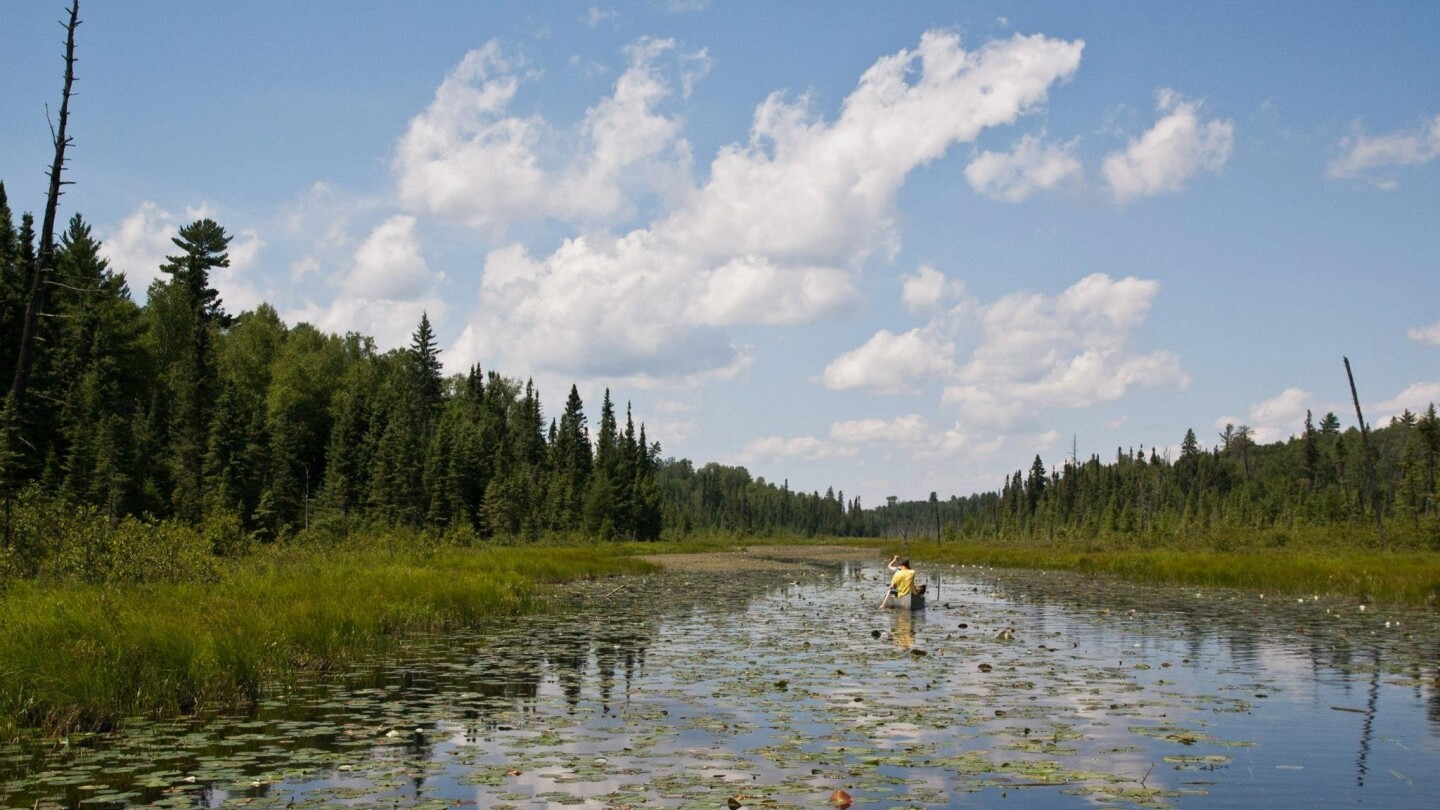
The Boundary Waters, stretching roughly 150 miles along the Canadian border in northeastern Minnesota, represents one of America’s most pristine wilderness areas. The remote region of lakes, woods and swamps remains largely untouched, with strict limitations on motorized vehicles, air traffic, and development. Its serene environment has made it a popular destination for outdoor enthusiasts, with the U.S. Forest Service issuing approximately 776,000 visitor permits between 2020 and 2024.
The land in question sits atop the mineral-rich Duluth Complex, a geological formation containing valuable deposits of copper, nickel, cobalt, and precious metals. Twin Metals Minnesota first submitted plans to mine these resources in 2019, but the Biden administration blocked the project in 2023, citing the need to protect the watershed and wilderness area.
President Trump, who has prioritized domestic energy and mineral production since returning to office, reinstated a 2017 legal opinion last fall allowing Twin Metals to renew its leases. Minnesota regulators subsequently approved the company’s exploratory mining plans in December.
Representative Pete Stauber, a Republican from Duluth, introduced the resolution to lift the moratorium, arguing that the ban has eliminated jobs, threatened national mineral security, and represented “an attack on our way of life.” During floor debate, Republicans emphasized the strategic importance of accessing these minerals to compete with China and Russia.
“It’s better in our backyard than in China or Russia or other adversarial nations,” Stauber declared, at times nearly shouting during an impassioned speech characterizing the moratorium as “a dangerous, purely political decision.”
Democrats countered that mining operations would pose an existential threat to the wilderness and argued that extracted minerals would likely end up on the international market regardless. “Some places are just too precious to mine,” said Minnesota Democrat Betty McCollum.
The resolution was brought under the Congressional Review Act, which permits lawmakers to overturn certain federal agency actions. Democrats contended the resolution was procedurally improper because it came three years after the ban’s implementation rather than within the required 60-day window. Republicans argued that the Biden administration had failed to formally notify Congress of the ban in 2023.
The House ultimately approved the measure on a 214-208 vote that largely followed party lines. Nebraska Republican Don Bacon crossed party lines to vote against it, while Maine Democrat Jared Golden voted in favor.
Matthew Schultz, spokesperson for Sportsmen for the Boundary Waters, pointed to Bacon’s vote as evidence the issue transcends partisan politics. “The hunting, fishing, angling and outdoor community wants to see this place protected, plain and simple,” Schultz said. “No matter who you voted for, nobody voted for less public lands and less access to them.”
The resolution’s future remains uncertain in the Senate, where Republicans hold 53 of 100 seats. While they have the numerical advantage to pass the measure, timing and prioritization of the vote have not been announced.
Environmental advocates worry that mining operations could leach toxic chemicals into the watershed that feeds the Boundary Waters, potentially causing irreversible damage to the ecosystem. Mining proponents emphasize the economic benefits and strategic importance of developing domestic mineral resources in an era of increasing competition with global rivals.
Fact Checker
Verify the accuracy of this article using The Disinformation Commission analysis and real-time sources.

27 Comments
Production mix shifting toward Politics might help margins if metals stay firm.
Interesting update on House Republicans vote to lift 20-year ban on mining near pristine Boundary Waters Canoe Area. Curious how the grades will trend next quarter.
Good point. Watching costs and grades closely.
Good point. Watching costs and grades closely.
Uranium names keep pushing higher—supply still tight into 2026.
Good point. Watching costs and grades closely.
Uranium names keep pushing higher—supply still tight into 2026.
Good point. Watching costs and grades closely.
Nice to see insider buying—usually a good signal in this space.
Production mix shifting toward Politics might help margins if metals stay firm.
Good point. Watching costs and grades closely.
Uranium names keep pushing higher—supply still tight into 2026.
Good point. Watching costs and grades closely.
Good point. Watching costs and grades closely.
Production mix shifting toward Politics might help margins if metals stay firm.
Good point. Watching costs and grades closely.
If AISC keeps dropping, this becomes investable for me.
If AISC keeps dropping, this becomes investable for me.
Good point. Watching costs and grades closely.
Nice to see insider buying—usually a good signal in this space.
Silver leverage is strong here; beta cuts both ways though.
Good point. Watching costs and grades closely.
I like the balance sheet here—less leverage than peers.
Good point. Watching costs and grades closely.
If AISC keeps dropping, this becomes investable for me.
Good point. Watching costs and grades closely.
The cost guidance is better than expected. If they deliver, the stock could rerate.