


Listen to the article
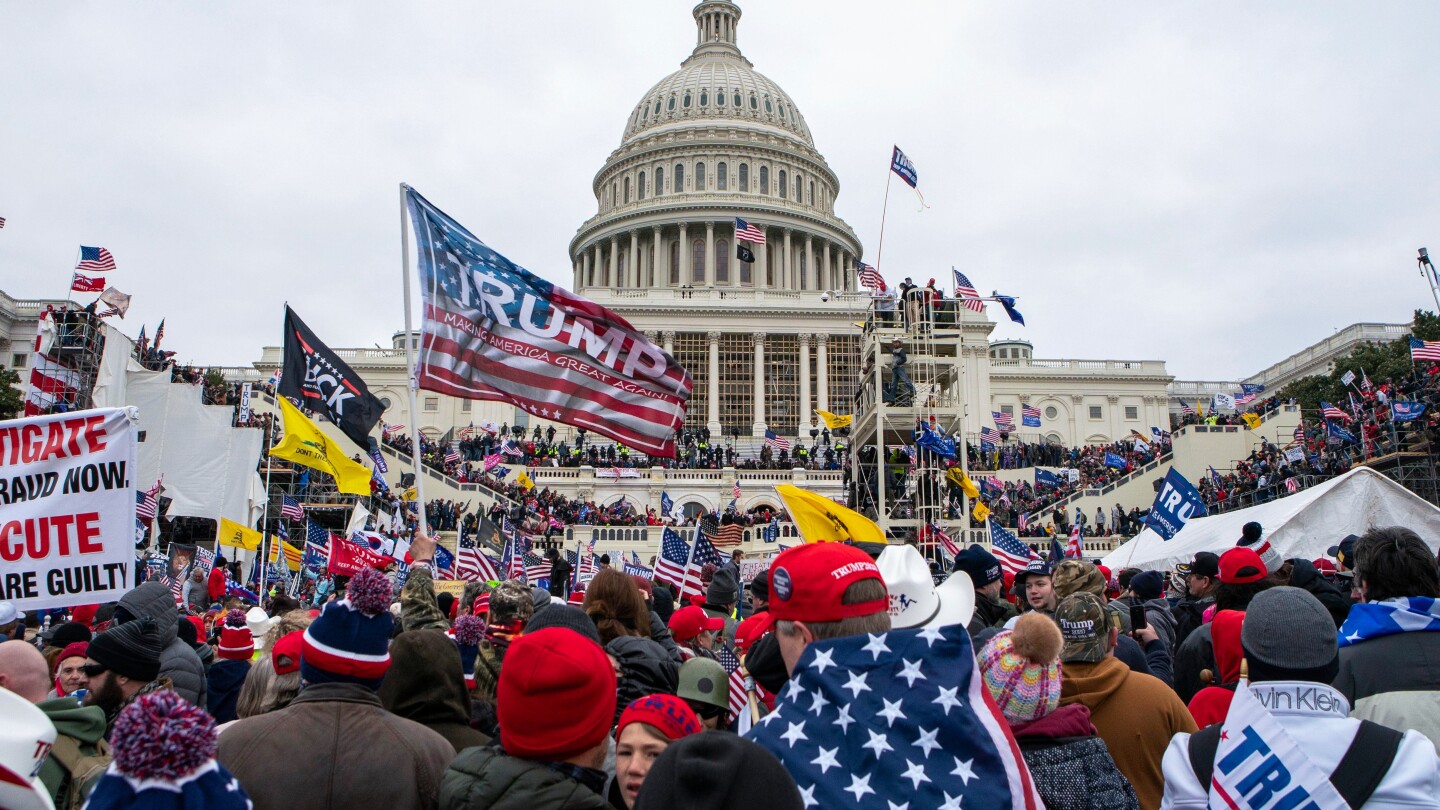
Five years after the January 6 Capitol attack, House Republicans are actively reframing the historical narrative of that day through a new select committee investigation. In their first hearing Wednesday, what began as an examination of the FBI’s pipe bomb investigation quickly evolved into a broader challenge of established accounts of the insurrection.
The hearing, chaired by Rep. Barry Loudermilk (R-Ga.), ostensibly aimed to scrutinize the FBI’s handling of pipe bombs discovered outside Democratic and Republican headquarters during the Capitol siege—a case that remained unsolved until a suspect was arrested last month. However, the proceedings rapidly shifted focus as committee Republicans explored alternative theories about the motivations behind the violent mob that stormed the Capitol.
“There’s been a lot of talk about conspiracy theories and narratives,” Loudermilk acknowledged as tensions escalated during the two-hour session. He insisted his “objective is to get to the truth.”
The committee’s top Democrat, Rep. Jamie Raskin of Maryland, pushed back forcefully against what he characterized as historical revisionism. “The truth is a resilient thing,” Raskin said. “We’re not going to put up with a pack of lies in this subcommittee and a bunch of conspiracy theories.”
In a striking visual that underscored the hearing’s contentious nature, Stewart Rhodes, founder of the militant Oath Keepers who was convicted of seditious conspiracy for his role in the attack, sat prominently in the front row. Rhodes was among the more than 1,500 January 6 participants pardoned by Donald Trump after the former president returned to office in 2024.
This marks the second committee established by House Republicans to investigate January 6 since they took control of the chamber, effectively challenging the findings of the original bipartisan panel formed in the riot’s aftermath. That initial committee, which concluded its work in 2022, placed direct responsibility on Trump for inciting the violence as part of his months-long campaign to overturn the 2020 election results.
Some Republican lawmakers openly dismissed the original committee’s work. Rep. Troy Nehls of Texas—who was among those seen at the barricaded House chamber doors during the attack—called it a “total sham” and questioned the testimony of police officers who described being bloodied and injured during the riot, characterizing their accounts as “highly scripted” statements from “Trump haters.”
Republican committee members attempted to attribute the Capitol violence to “certain agitators” and suggested that militia groups central to the siege had been entrapped by federal authorities. This revisionist approach visibly frustrated Democratic members, with Rep. Jasmine Crockett of Texas exclaiming, “The conspiracy theories are driving me insane.”
The committee did examine the pipe bomb investigation, questioning why it took federal law enforcement approximately five years to make an arrest. Last month, the FBI apprehended Brian Cole Jr. of Virginia on suspicion of placing the devices. Cole reportedly told investigators he believed someone needed to “speak up” for people who thought the 2020 election was stolen and expressed disappointment in Trump’s loss to Biden.
Republican lawmakers, including Rep. Morgan Griffith of Virginia, pressed witnesses on perceived investigative failures, including why bomb-sniffing dogs didn’t detect the explosives outside party headquarters. John Nantz, a former FBI special agent testifying to the panel, criticized the Bureau’s resource allocation under then-Director Christopher Wray.
The hearing also addressed Trump’s controversial pardons of January 6 participants. Mike Romano, a former Justice Department prosecutor, described these clemency actions as “ill-advised,” noting that many pardon recipients remained proud of their conduct and “have celebrated the pardons and tried to lie about what happened.”
When questioned by Raskin about whether Trump’s pardon authority would extend to Cole if he were convicted in the pipe bomb case, Romano acknowledged legal uncertainty. “I don’t know that there’s a clear yes or no,” he testified. “And I think that’s a problem.”
As the nation continues processing the Capitol attack’s legacy, this hearing demonstrates how January 6 remains a deeply divisive political flashpoint, with fundamental disagreements not just about policy responses, but about the basic historical record of what occurred that day.
Fact Checker
Verify the accuracy of this article using The Disinformation Commission analysis and real-time sources.

8 Comments
The truth about January 6th is resilient, as Rep. Raskin said. I’m skeptical of this GOP committee’s motives, but I hope they can put politics aside and genuinely investigate what happened that day in a fair and impartial manner.
It’s concerning to see the GOP reframing the events of January 6th. The attack on the Capitol was a serious threat to our democracy, and we need a fair and impartial investigation to uncover the full truth of what happened that day.
I’m curious to see what this new GOP committee uncovers about the FBI’s handling of the pipe bomb investigation. However, I’m concerned that the hearings are quickly pivoting to challenge the established narrative of the Capitol attack. Maintaining objectivity and focusing on facts will be crucial.
It’s troubling to see the GOP seemingly trying to downplay or distort the events of January 6th. We need a thorough, nonpartisan investigation to uncover the full truth, not political revisionism. The Capitol attack was a dark moment in American history that must be honestly reckoned with.
This new GOP committee on the Capitol attack raises a lot of red flags for me. Reframing the historical narrative around such a serious threat to our democracy is deeply concerning. I hope they prioritize facts and accountability over partisan agendas.
While I appreciate the GOP wanting to examine the FBI’s handling of the pipe bomb investigation, it’s concerning that the hearings are quickly shifting to challenge the established narrative of the Capitol attack. I hope they stay focused on finding the facts, not spreading conspiracy theories.
This new GOP committee seems to be more interested in pushing alternative theories than getting to the bottom of what really occurred. I hope they approach this with an open mind and a commitment to the facts, not partisan revisionism.
I agree, the truth about January 6th needs to be protected from political spin. A thorough, nonpartisan investigation is crucial for understanding that dark day and ensuring it never happens again.