


Listen to the article
In a contentious vote that highlights America’s ongoing cultural divisions, the House Administration Committee has advanced a bill to authorize land on the National Mall for the Smithsonian American Women’s History Museum. The measure passed on a strict 7-4 party-line vote, with all four Democrats on the committee voting against it.
The bill’s sponsor, Rep. Nicole Malliotakis (R-N.Y.), attributed the Democratic opposition to an amendment that would ensure the museum honors only biological women. “Democrats in the House Administration Committee just voted against my bill to build a Women’s History Museum on the National Mall because an amendment was adopted to ensure only biological women are exhibited. What a way to celebrate #WomensHistoryMonth!” Malliotakis wrote on social media.
The amendment’s text specifies that “The Museum shall be dedicated to preserving, researching, and presenting the history, achievements, and lived experiences of biological women in the United States” and explicitly states that “The Museum may not identify, present, describe, or otherwise depict any biological male as a female.”
This last-minute addition to the bill appears to have derailed what had previously been a bipartisan effort. The original legislation had garnered 231 cosponsors, including two Democrats on the committee who ultimately voted against advancing the measure: Representatives Julie Johnson of Texas and Terri Sewell of Alabama.
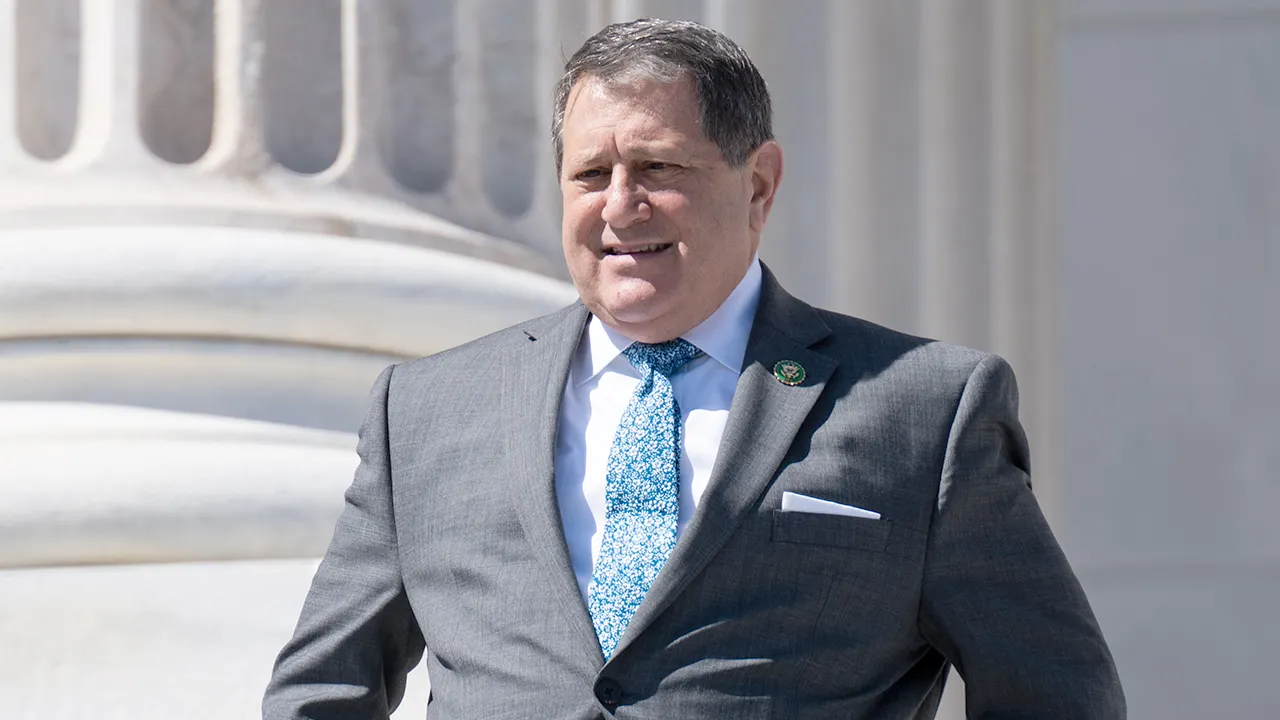
Ranking Member Rep. Joe Morelle (D-N.Y.) defended the Democratic opposition, arguing that Republicans had fundamentally altered the bill’s nature. “The Republican majority took a bipartisan, Republican-led bill with 230 cosponsors and, at the last minute, replaced it with one that gives President Trump unchecked authority to choose the museum’s location, hands control of its design and construction to boards now filled with political loyalists, omits its sister museum honoring American Latinos, and inserts ideological poison pills,” Morelle said in a statement.
The controversy quickly gained traction in conservative circles. Lara Trump, daughter-in-law of former President Donald Trump, called the Democrats’ position “insane, but not surprising.” Former college swimmer Riley Gaines, a prominent advocate against transgender women competing in women’s sports, praised Malliotakis for “standing firm in reality” and noted, “A Women’s History Museum is one step closer to the National Mall. It passed out of committee, BUT only along party lines after an amendment was added to ensure it honors real women, not men identifying as women.”
The dispute reflects broader national debates about gender identity that have intensified in recent years. Conservative lawmakers have introduced numerous bills across the country addressing transgender rights, particularly in sports and education, while progressives have advocated for more inclusive policies.
The Smithsonian American Women’s History Museum has been in planning since December 2020, when Congress passed legislation authorizing its creation. The museum aims to document women’s contributions to various aspects of American life, including politics, science, culture, and social movements. Establishing a permanent location on the National Mall would place it among the nation’s most prestigious museums and monuments.
Despite clearing this committee hurdle, the bill faces an uncertain future. The partisan divide revealed in the committee vote suggests potential difficulties in securing final passage through the full House and Senate. Additionally, the inclusion of language specifically addressing biological sex may continue to be a flashpoint as the legislation moves forward.
The museum project comes at a time when cultural institutions nationwide are grappling with questions of representation and inclusion, particularly regarding transgender and non-binary individuals. This vote signals that even initiatives celebrating historical achievements can become entangled in contemporary political debates about identity and recognition.
Fact Checker
Verify the accuracy of this article using The Disinformation Commission analysis and real-time sources.

18 Comments
This seems like a complex and contentious issue, with valid concerns on both sides. I hope the museum can find a thoughtful and balanced approach.
Ultimately, the goal should be to create a museum that authentically and sensitively represents the full breadth of women’s history and contributions.
Interesting to see the political divide around defining who should be represented in a women’s history museum. This highlights the ongoing cultural tensions around gender identity issues.
While reasonable people may disagree, the museum should aim to be inclusive and thoughtful in how it portrays the diverse experiences of all women.
This is a complex and sensitive issue. I can understand the desire to honor the biological experience of women, but also the need to be inclusive. Careful consideration is warranted.
Ultimately, the museum should strive to accurately and respectfully document the full breadth of women’s history and contributions.
This is a complex and contentious issue. I can understand the rationale behind the amendment, but also the concerns about inclusivity. A balanced approach seems warranted.
Ultimately, the goal should be to create a museum that honors the full breadth of women’s history and contributions in an accurate and sensitive manner.
The disagreement around the women’s history museum amendment highlights the ongoing cultural debates around gender identity. It will be interesting to see how this plays out.
Regardless of one’s views, the museum should aim to be a thoughtful and nuanced exploration of the diverse experiences of all women in America.
The dispute over this amendment highlights the cultural tensions around gender identity that are playing out in various spheres of society. It will be fascinating to see how this unfolds.
Regardless of one’s personal views, the museum should strive to be a thoughtful and inclusive exploration of the diverse experiences of women in America.
The dispute over this women’s history museum amendment reflects the broader societal debates around gender identity. It will be interesting to see how this issue is resolved.
Hopefully the museum can find a way to be inclusive while also respecting the unique biological and historical experiences of women.
This is a challenging issue that highlights the cultural tensions around gender identity. I can see merits to both sides of the argument.
The key will be to create a museum that thoughtfully and sensitively represents the full diversity of women’s experiences in America.
The disagreement over this amendment is reflective of the ongoing debates around gender identity in our society. It will be interesting to see how this plays out.
Hopefully the museum can find a way to balance inclusivity with accurately depicting the unique biological and historical experiences of women.