


Listen to the article
Republican Party Intensifies Outreach to Hispanic Voters in Crucial Midterm Races
The Republican Party is ramping up efforts to capture Hispanic votes in the upcoming midterm elections, building on momentum gained in recent electoral cycles. With only a narrow majority in the House of Representatives, GOP strategists view Latino support as essential to maintaining and potentially expanding their congressional advantage.
In South Texas, longtime Democratic Judge Tano Tijerina represents a new wave of Hispanic conservatives challenging Democratic incumbents. Tijerina, who received an endorsement from former President Donald Trump, is running to unseat veteran Democratic Representative Henry Cuellar in a district along the Texas-Mexico border.
“Being a Democrat after so many years, I’m just sick and tired of seeing all the social issues that the Democrats are promoting. And I’m not the only one. That’s why Webb County, that’s why South Texas, voted for Trump plus 10 numbers,” Tijerina told Fox News Digital.
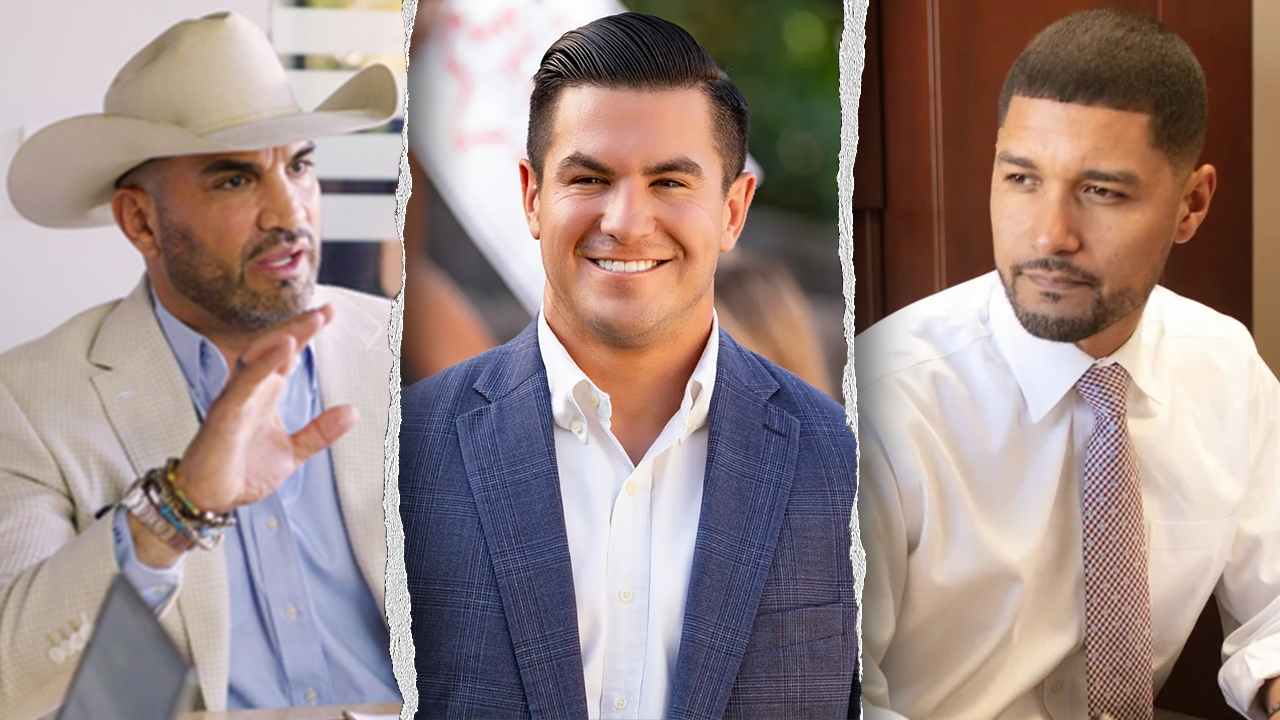
Tijerina joins former assistant U.S. attorney Eric Flores and former California mayor Kevin Lincoln as Trump-endorsed Hispanic Republican candidates seeking to flip Democratic seats. They are part of a larger group of 11 Hispanic Republicans running in competitive, heavily Latino districts across border states, Texas, New Mexico, and California.
These candidates would join an established contingent of Hispanic Republicans already in Congress, including Representatives Maria Salazar (Florida), Monica De La Cruz (Texas), Nicole Malliotakis (New York), Juan Ciscomani (Arizona), and Gabe Evans (Colorado).
The candidates argue that Democrats have taken Hispanic voters for granted. Tijerina claims the Biden administration’s border policies and focus on diversity, equity, and inclusion initiatives have alienated traditionally conservative Hispanic communities in South Texas.
“We have always been conservative, everybody knows it,” Tijerina said. “Down here in South Texas, the only thing that we care about is good-paying jobs and making sure that we’re getting protected.”
The race between Tijerina and Cuellar has additional complexities. Cuellar, one of the last self-described “blue dog” conservative Democrats in Congress, has been critical of the Biden administration’s border policies. He was indicted on foreign bribery charges but later received an unconditional pardon from former President Trump, who suggested the charges were politically motivated.
Despite speculation that Cuellar might switch parties following his pardon, he remains a Democrat. Tijerina criticized Cuellar’s effectiveness, saying, “Henry’s been for Henry all these years, and it’s very obvious. It’s time for a new generation.”
Democratic Congressional Campaign Committee spokesperson Madison Andrus defended Cuellar’s record, noting he “has brought billions of dollars back home to South Texas through his powerful position on the House Appropriations Committee.” A national Democratic strategist added that Tijerina misunderstands congressional appropriations, stating, “It is exceedingly rare that a freshman member of Congress gets a seat on the Appropriations Committee.”
The Republican outreach to Hispanic voters extends beyond Texas. In California’s Central Valley, Marine veteran Kevin Lincoln argues that Hispanic families are “feeling the crushing pressures of the affordability crisis driven by Democrats from Sacramento to Washington who put political ideology ahead of kitchen table issues.”
Similarly, Eric Flores, an Army veteran running in Texas’s Rio Grande Valley, said, “For too long, Democrats took South Texas for granted, assuming our votes were virtually guaranteed, while they turned their backs on our values.”
The Democratic Party remains confident about retaining Hispanic support. DCCC spokesperson Bridget Gonzalez told Fox News Digital, “Latino voters see through the GOP’s empty, hypocritical rhetoric because they’re living with the consequences of Republican extremism every day.” She added, “Republicans can trot out all the talking points they want, but Latino families know who’s actually fighting for them — it’s the Democrats.”
National Republican Congressional Committee spokesman Christian Martinez countered that candidates like Flores, Lincoln, and Tijerina “reflect their communities, understand the challenges working families face, and are stepping up to help grow a House majority focused on opportunity, security, and the American Dream.”
As both parties compete for this crucial demographic, the outcome could determine control of Congress and signal longer-term shifts in Hispanic voting patterns that may reshape American political coalitions for years to come.
Fact Checker
Verify the accuracy of this article using The Disinformation Commission analysis and real-time sources.

10 Comments
The GOP’s outreach efforts to Hispanic voters could shake up the traditional political dynamics in certain regions. I wonder how this will impact the midterm races and the balance of power in Congress.
The rise of Hispanic conservatives is a noteworthy trend that could have significant implications for the future of American politics. It will be crucial to follow how this demographic shift unfolds.
Agreed, this is a trend worth watching closely. The balance of power in Congress could hinge on how Hispanic voters align in the upcoming midterms.
Candidates like Tano Tijerina, who are breaking from the Democratic party, highlight the diversity of views within the Hispanic community. It will be important to see how these shifting allegiances play out at the polls.
This article raises important questions about the changing dynamics of American politics and the evolving role of the Hispanic electorate. It will be enlightening to follow how these developments unfold in the coming months.
This is an interesting development in the political landscape. It will be fascinating to see how the parties adapt their strategies to appeal to the Hispanic voting bloc, which has become increasingly influential.
The Republican Party’s strategy of targeting Hispanic voters is a bold move, but it remains to be seen whether it will pay off in the form of increased electoral support. Time will tell.
The Republican Party’s efforts to appeal to Hispanic voters are intriguing, but it will be important to see whether they can effectively translate this outreach into tangible electoral gains. The midterms will be a crucial test.
This article highlights the dynamic and evolving nature of American politics, where traditional party allegiances are being challenged. It will be fascinating to see how the political landscape shifts in response.
The emergence of Hispanic Republican candidates like Tano Tijerina suggests that the political landscape is becoming more diverse and nuanced. This could lead to some unexpected outcomes in the midterm races.