


Listen to the article
The ongoing partial shutdown of the Department of Homeland Security could significantly hamper America’s ability to address potential terrorist threats, especially as tensions escalate with Iran, according to public safety experts. The timing is particularly concerning given recent incidents and international developments.
Jeffrey Halstead, a retired police chief from Fort Worth, Texas, and former Homeland Security commander for Phoenix police, expressed serious concerns about the shutdown’s impact on national security. “We’ve seen historically that any time there is a conflict, especially in the Middle East with escalating tensions, military action and now a declaration of war, there is a significant impact on the ability for us to work collectively to share intelligence,” Halstead told Fox News Digital.
The shutdown of key federal agencies could create dangerous gaps in the intelligence-sharing pipeline. “With the current Department of Homeland Security shutdown, if something were to occur here in the United States, there could be some significant delays because FEMA and other very, very critical divisions of the federal government are basically shut down,” Halstead explained.
His warning comes in the wake of a deadly attack in Austin, Texas, where three people, including the shooter, were killed and 14 others injured. Authorities identified the suspect as Ndiaga Diagne, a 53-year-old naturalized U.S. citizen born in Senegal, who was reportedly wearing a “Property of Allah” sweatshirt and an undershirt depicting the Iranian flag during the attack. A Quran was recovered from his vehicle, and investigators found an Iranian flag and images of regime leaders at his home.
The Austin shooting occurred just as U.S.-Israeli joint military strikes against Iran began, resulting in the death of Supreme Leader Ali Khamenei and other Iranian officials, further intensifying Middle East conflicts. Authorities are investigating the Austin incident as having a “potential nexus to terrorism.”
Halstead, who also serves as director of strategic accounts at Genasys, a communications provider that assists communities during emergencies, pointed to upcoming high-profile events in the U.S. as potential security risks. The World Cup soccer matches and America’s 250th anniversary celebrations could become “escalated targets” if Middle East conflicts persist, he warned.
The government shutdown creates a “pretty significant distraction, both politically and administratively, in every facet of our federal government,” according to Halstead. He emphasized that reduced staffing in critical agencies means important intelligence about terrorist threats may not reach local law enforcement in a timely manner.
“This will delay and possibly impede some of that critical intelligence, which could be terroristic threat level intelligence, that needs to be in the hands of local police,” Halstead said. He warned that such delays could prove “very, very catastrophic” if vital information is ignored or not transmitted properly.
While Halstead clarified that he has seen no evidence directly linking the Austin shooting to the government shutdown, he noted that military actions overseas often “elevate the mindset for other people to take actions against American citizens and institutions in America,” particularly among “lone wolf-style actors.”
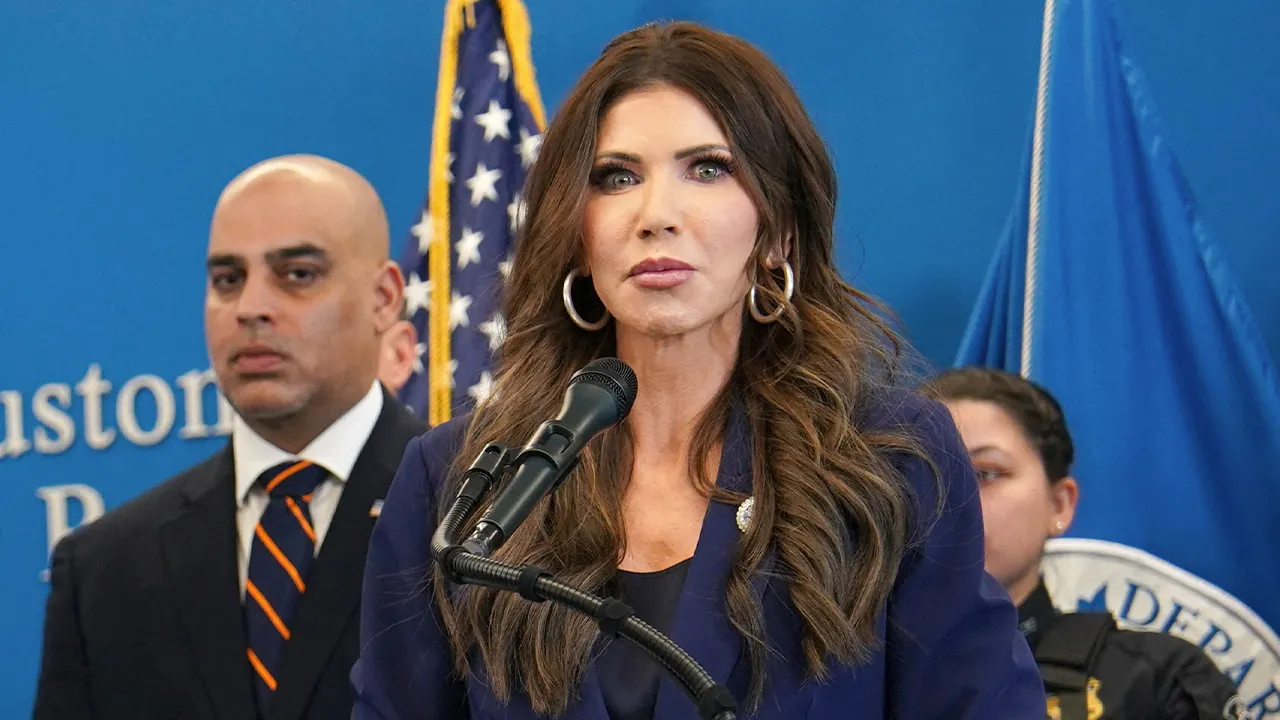
The political divide over the shutdown remains sharp. Department of Homeland Security Secretary Kristi Noem stated she is “in direct coordination with our federal intelligence and law enforcement partners” to monitor potential threats. Meanwhile, Republican lawmakers blame Democrats for the shutdown, arguing that the Iran conflict makes DHS funding even more crucial.
Democratic lawmakers remain unmoved. Senator Tim Kaine of Virginia contended that DHS still has funds remaining from previous appropriations, while Senator Angus King of Maine dismissed any connection between the funding negotiations and the Iran conflict.
House Majority Leader Steve Scalise criticized Democrats on social media, writing: “Following the successful strikes on Iran and the FBI’s warning of elevated threats here at home, it is dangerous for Democrats in Washington to keep the Department of Homeland Security shut down.”
Halstead characterized the current political environment as particularly divisive. “This is probably some of the worst infighting I think I’ve seen in almost 40 years,” he remarked, describing the shutdown battle as another example of partisan gridlock where “it becomes one side against the other” with strong allegations and public retaliation.
As international tensions rise and domestic security concerns grow, the impasse over DHS funding continues to raise questions about America’s readiness to address potential threats during a critical time.
Fact Checker
Verify the accuracy of this article using The Disinformation Commission analysis and real-time sources.

8 Comments
This is concerning news. The potential impact on our ability to respond to terrorism is very worrying, especially with the volatile situation with Iran. Hopefully this shutdown can be resolved quickly to ensure our national security is not compromised.
I agree, the timing could not be worse. Intelligence sharing and coordination are critical to preventing attacks. The administration needs to find a way to keep these vital agencies fully operational.
This is a very worrying development. Anything that hampers our ability to address terrorist threats is deeply concerning, especially with the heightened tensions with Iran. Hopefully the shutdown can be resolved swiftly to mitigate the risks to our national security.
I agree, this is a serious issue that needs to be addressed urgently. The administration must find a way to restore full functionality to DHS and other critical agencies to ensure our security is not compromised.
The retired police chief’s assessment is quite alarming. Any disruption to homeland security operations, especially with the Iran situation, could leave us vulnerable. This is a concerning development that demands immediate attention from our leaders.
I’m quite concerned about the potential national security implications of this partial DHS shutdown. The timing is especially worrying given the rising tensions with Iran. We need to ensure our intelligence-sharing and response capabilities remain fully intact.
As an expert in public safety, the retired police chief’s assessment is quite alarming. Any disruption to homeland security operations could leave us vulnerable, especially with heightened geopolitical tensions. This is a serious issue that demands immediate attention.
Absolutely. The shutdown’s impact on FEMA and other key agencies is very troubling. We cannot afford any gaps in our ability to respond to potential terrorist threats, especially at such a delicate time.