


Listen to the article
Homeland Security Shutdown Looms as Negotiations Stall in Washington
A potential shutdown of the Department of Homeland Security could disrupt critical operations across multiple agencies, federal officials warned a House panel on Wednesday, as negotiations between Democrats and the White House showed little progress ahead of Friday’s funding deadline.
Unlike most federal departments, which have secured full-year funding, Homeland Security has been operating under a short-term funding patch set to expire this week. The standoff has intensified following the killing of two American citizens in Minneapolis, with Democrats insisting on changes to immigration enforcement operations before approving continued funding.
“We’re very hopeful that can be worked out,” said Speaker Mike Johnson, who noted he visited the White House late Wednesday and that the administration “is sending over a few terms.” Johnson added that House Republicans should expect a vote Friday on a measure to keep Homeland Security funded.
Senate Majority Leader John Thune urged negotiators to “double down, sharpen their pencils and strike a deal,” as the prospects of avoiding a shutdown dimmed. Democrats have rejected an initial White House proposal, describing it as “incomplete and insufficient.”
The Democratic demands include better identification procedures for Immigration and Customs Enforcement (ICE), the use of judicial warrants, and an end to racial profiling. Republicans have countered that even during a shutdown, the immigration enforcement operations that Democrats are most concerned about would continue uninterrupted.
“Removal operations will continue. Wall construction will continue,” said Rep. Mark Amodei, the Republican chairman of the House Appropriations subcommittee on Homeland Security, noting that last year’s tax and spending legislation provided ICE with approximately $75 billion for detention expansion and enforcement operations.
Agency officials testified that the greatest impact would fall on other critical security functions. Transportation Security Administration official Ha Nguyen McNeill told lawmakers that about 95% of the agency’s 61,000 workers would continue working without pay during a shutdown.
“We heard reports of officers sleeping in their cars at airports to save money on gas, selling their blood and plasma and taking on second jobs to make ends meet,” McNeill said, referring to last fall’s 43-day shutdown. “Many are still reeling from it. We cannot put them through another such experience.”
The financial strain could lead to unscheduled absences among airport screeners, potentially causing longer wait times for travelers during the busy summer travel season.
Vice Admiral Thomas Allan of the U.S. Coast Guard echoed these concerns, noting that while law enforcement and emergency response missions would continue, the prospect of missed paychecks creates significant hardships for personnel.
“Shutdowns cripple morale and directly harm our ability to recruit and retain the talented Americans we need to meet growing demands,” Allan testified.
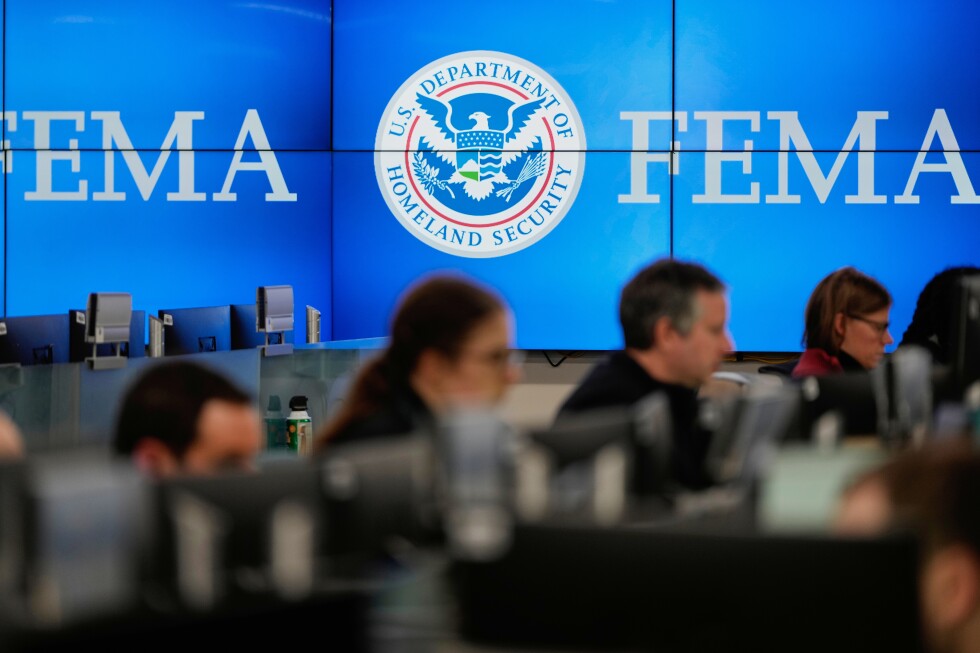
The Federal Emergency Management Agency (FEMA) would also face challenges. Gregg Phillips, a FEMA associate administrator, said the agency’s disaster relief fund has sufficient balances to continue emergency response activities initially, but a shutdown would disrupt training for first responders and coordination with state and local partners.
“The import of these trainings cannot be measured,” Phillips said. “And their absence will be felt in our local communities.”
Cybersecurity operations would likewise suffer. Madhu Gottumukkala, acting director of the agency responsible for protecting public and private networks from cyber threats, warned that a shutdown would “degrade our capacity to provide timely and actionable guidance to help partners defend their networks.”
“I want to be clear, when the government shuts down, cyber threats do not,” he emphasized.
Rep. Henry Cuellar, the ranking Democrat on the panel, acknowledged the complexity of the situation, particularly in light of the Minneapolis tragedy that claimed the lives of Renee Good and Alex Pretti.
“When enforcement actions lead to outcomes like that, we have an obligation to ask the hard questions and to make sure our laws and policies are working as intended,” Cuellar said. He expressed optimism that an agreement could still be reached, noting, “We were almost there. We were there, Democrats and Republicans and everybody, but the second shooting brought different dynamics.”
As Friday’s deadline approaches, the standoff highlights the ongoing tensions between security imperatives and immigration policy concerns, with thousands of federal workers once again caught in the middle of Washington’s political impasse.
Fact Checker
Verify the accuracy of this article using The Disinformation Commission analysis and real-time sources.

14 Comments
A potential Homeland Security shutdown is deeply troubling. These agencies play a vital role in safeguarding our nation. I sincerely hope the Democrats and White House can reach an agreement to avoid this disruption.
Agreed. Homeland security is too important to be held hostage by political gridlock. All sides need to come together and do what’s best for the country.
A Homeland Security shutdown would be extremely concerning, as it could leave critical infrastructure and the public at risk. I hope the politicians can put partisan differences aside and reach an agreement.
Absolutely. Homeland security should be a non-partisan issue. The public deserves to have these vital services maintained without disruption.
While immigration is a contentious topic, keeping the country secure from external threats has to be the top priority here. I’m skeptical that the Democrats and White House can reach a deal in time.
I share your skepticism. The political divisions seem deep on this issue. Hopefully cooler heads can prevail and they find a compromise solution.
This is a complex issue with valid concerns on both sides. I’m curious to see if they can find a middle ground that addresses immigration enforcement while keeping Homeland Security fully operational.
You raise a good point. Balancing security needs with policy changes is always challenging. Hoping for a pragmatic solution that keeps the country safe.
This is a concerning situation that highlights the partisan divide in Washington. While immigration is a contentious issue, the security of the homeland should be a non-negotiable priority. I hope the politicians can find a compromise solution.
Well said. Homeland security transcends party lines. The American people deserve leaders who can put aside differences and ensure the country’s safety and security.
A potential Homeland Security shutdown is concerning, as it could disrupt critical security operations. I hope the Democrats and White House can reach an agreement before the funding deadline to avoid disrupting these vital services.
Agreed. Maintaining homeland security should be a top priority, regardless of political differences. Hopefully the negotiations can find a compromise solution.
This is a concerning situation. A Homeland Security shutdown could have severe consequences for public safety and national security. I hope the negotiators can put politics aside and focus on the best interests of the country.
Well said. Protecting the homeland should transcend partisan politics. The American people deserve leaders who can put aside differences and get the job done.