


Listen to the article
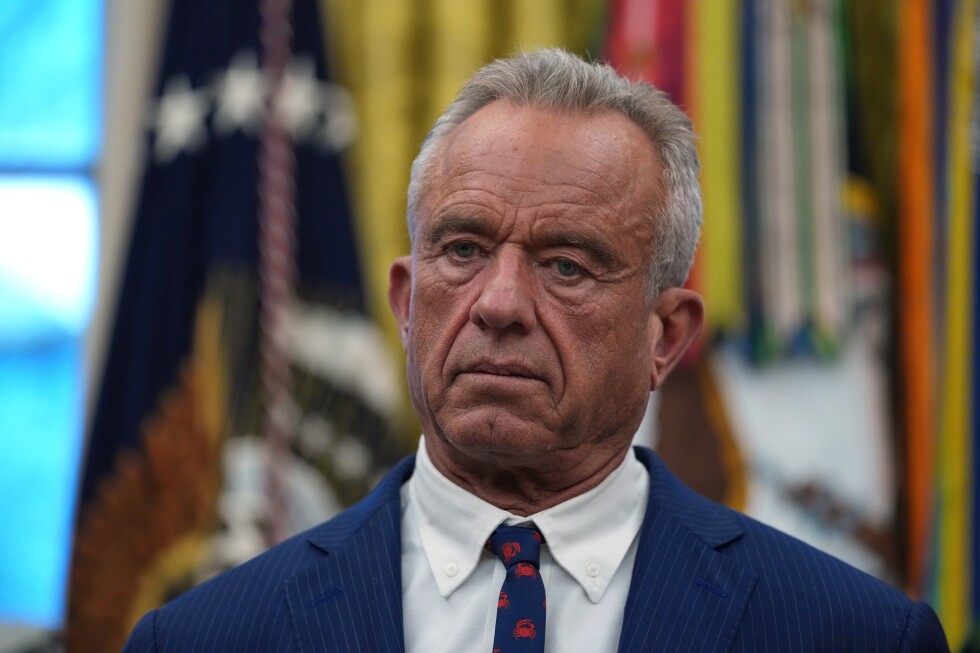
Health Secretary Robert F. Kennedy Jr. unveiled a $100 million pilot program on Monday aimed at tackling homelessness and substance abuse across eight cities nationwide. The announcement, made during the Substance Abuse and Mental Health Services Administration’s annual “Prevention Day” event in New York, builds upon an executive order signed by President Donald Trump last week.
The initiative, dubbed STREETS (Safety Through Recovery, Engagement and Evidence-Based Treatment and Supports), represents an early implementation of Trump’s “Great American Recovery Initiative,” which seeks to better coordinate federal resources in addressing the nation’s addiction crisis.
“We’re creating integrated care systems for people experiencing homelessness, substance abuse and mental health challenges,” Kennedy said, explaining that the program will also assist participants with housing and employment opportunities. The Department of Health and Human Services has not yet specified which eight communities will receive the funding.
In addition to the STREETS program, Kennedy announced that faith-based organizations will now be eligible for addiction-related grants. The administration will also expand states’ ability to utilize federal health funding for substance abuse treatment in specific situations involving children.
These measures align with Kennedy’s personal commitment to addiction recovery issues. The health secretary has been candid about his own past struggles with heroin addiction and his ongoing recovery journey, bringing a personal dimension to the administration’s policy initiatives.
However, the announcements come amid significant disruption within the federal agencies overseeing mental health and addiction services. Over the past year, approximately one-third of SAMHSA’s 900 employees have been laid off, creating operational challenges for the agency.
The substance abuse treatment community is still recovering from a chaotic funding situation last month when the administration initially eliminated $2 billion in grant funding for substance abuse and mental health programs, only to restore it shortly afterward. The reversal created significant uncertainty among service providers and advocacy groups.
“The devil’s in the details,” cautioned Regina LaBelle, director of the Center on Addiction and Public Policy at Georgetown Law’s O’Neill Institute, regarding the new initiatives. LaBelle expressed concerns about how the program would be funded and whether resources might be diverted from existing successful programs that have contributed to declining overdose death rates.
HHS spokesperson Andrew Nixon defended the administration’s approach, stating that the department is “focused on reform and ensuring that federal resources are used effectively, responsibly, and in ways that deliver real results for those struggling and their families.”
Recent federal data shows some positive trends, with overdose deaths declining through most of last year, potentially signaling a turning point in an epidemic that had been worsening for decades. However, the rate of improvement has been slowing, indicating ongoing challenges.
Later on Monday, Kennedy appeared alongside his cousin, former Democratic Representative Patrick Kennedy, at the launch of a bipartisan initiative called Action for Progress. The former congressman, who now works as a partner at health consultancy Healthsperien, has also been public about his struggles with bipolar disorder, alcoholism, and drug addiction.
Despite their political differences during the 2024 presidential election, the Kennedy cousins have found common ground on mental health and addiction issues that have personally affected both of their lives.
“When we go into recovery rooms we don’t think of ourselves as Democrats and Republicans,” Patrick Kennedy said. “I’ve grown up with my cousin, I know him, and I have an opportunity to share with him all that I’ve learned over the years in policymaking on mental health and addiction—and he’s welcomed it.”
The collaboration highlights how addressing substance abuse and mental health challenges continues to be an area where bipartisan cooperation remains possible, even in today’s polarized political environment.
Fact Checker
Verify the accuracy of this article using The Disinformation Commission analysis and real-time sources.

9 Comments
Great to see the administration focusing on this critical social issue. Homelessness and addiction are pervasive problems that require coordinated, evidence-based solutions. Curious to see the specific plans for the 8 pilot cities.
Yes, the details around implementation and evaluation will be key to understanding the program’s potential impact.
Interesting initiative to address the complex issues of homelessness and addiction. Coordinating federal resources and involving faith-based organizations could be beneficial, though the details will be important.
Kudos to the administration for taking action on this pressing social issue. Coordinating federal resources is a good first step, but long-term, systemic change will be needed to truly address the root causes.
While the intent behind this program seems positive, I wonder about the long-term sustainability and scalability. Addressing the root causes of homelessness and addiction requires a multi-faceted, systemic approach.
Any initiative to help those struggling with homelessness and addiction is welcome. However, the funding amount seems modest given the scale of the challenge. Hopeful this is just the start of a broader, sustained effort.
Tackling homelessness and substance abuse together makes sense, as these challenges often intersect. Hopeful this $100M pilot program can make a meaningful impact in the 8 targeted communities.
Agreed, an integrated, holistic approach is needed to address these intertwined social issues effectively.
Bringing faith-based organizations into the fold for addiction-related grants is an interesting angle. Could help leverage community resources and support, but must ensure evidence-based practices are still prioritized.