


Listen to the article
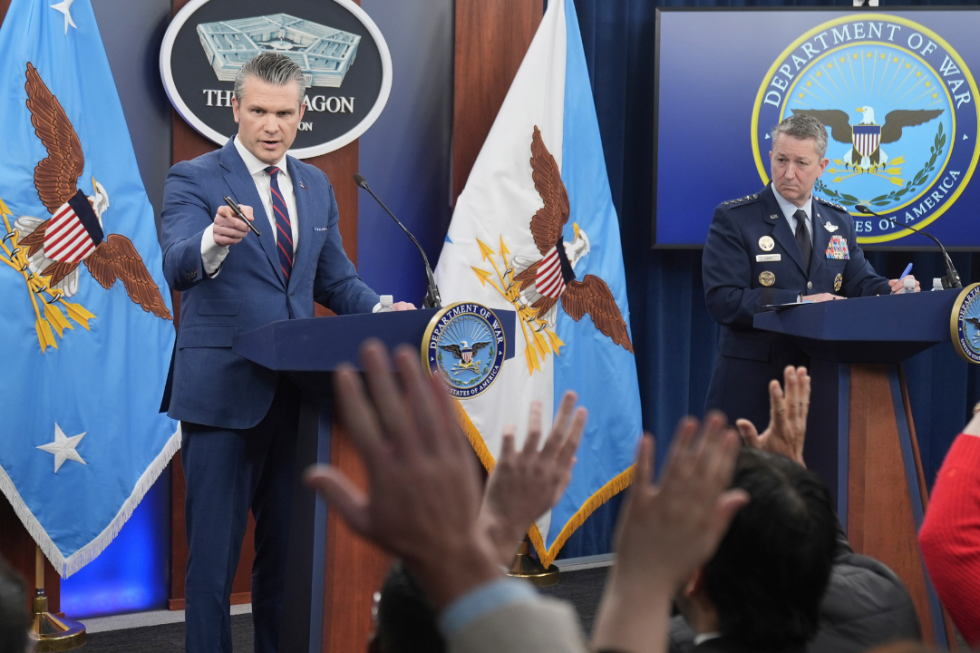
Iran’s new Supreme Leader, Ebrahim Raisi, has assumed the nation’s highest position of power following the death of Ayatollah Ali Khamenei, marking a significant transition in the Islamic Republic’s leadership structure. During a recent television appearance, U.S. Secretary of Veterans Affairs Pete Hegseth made a controversial remark describing Raisi as “disfigured” without offering any explanation or evidence for the characterization.
The comment came during a broader discussion about Middle Eastern geopolitics and has raised questions about diplomatic protocol and the nature of official U.S. commentary on foreign leaders. Neither the State Department nor the White House has issued any statement clarifying or distancing itself from Hegseth’s remarks.
Raisi, 63, was formally appointed as Iran’s Supreme Leader earlier this week after serving as the country’s president since 2021. His elevation to Supreme Leader places him at the apex of Iran’s complex political system, where he now controls both religious authority and significant political power in the theocratic state.
The transition occurs at a particularly tense moment in U.S.-Iran relations, with ongoing conflicts in the Middle East and stalled nuclear negotiations serving as flashpoints between Washington and Tehran. Diplomatic observers note that such personal characterizations of foreign leaders typically fall outside standard diplomatic discourse.
Iran experts point out that the Supreme Leader position holds extraordinary influence over Iran’s military, judiciary, and foreign policy decisions. As Supreme Leader, Raisi inherits control of the Revolutionary Guard Corps and will have final say on matters ranging from nuclear development to regional proxy conflicts.
“Comments like these, especially from cabinet-level officials, can complicate already strained diplomatic channels,” said Dr. Maryam Zakerian, a Middle East policy analyst at the Wilson Center. “While U.S.-Iran relations have long been adversarial, personal attacks on leadership figures typically serve little strategic purpose.”
The Iranian government has not yet responded to Hegseth’s characterization, though Tehran typically reacts strongly to perceived insults from Western officials. In the past, such incidents have triggered diplomatic protests or been used in domestic propaganda to reinforce anti-American sentiment.
Hegseth, who was appointed to lead the Department of Veterans Affairs earlier this year, previously served as a television commentator and has limited diplomatic experience. His statement has prompted discussions about the importance of measured language when U.S. officials address foreign leadership transitions, particularly in volatile regions.
Some regional analysts suggest the comment reflects the increasingly personalized nature of international relations discourse in recent years. “We’ve seen a shift toward more unfiltered commentary on foreign leaders across the political spectrum,” noted Dr. Jonathan Richards of Georgetown University’s School of Foreign Service. “But there remain questions about whether such approaches advance U.S. interests or complicate them.”
The timing of the remark is particularly significant as the Biden administration has been reassessing its approach to Iran following recent developments in the region, including escalating tensions involving Israel and Iranian-backed groups in Lebanon and Yemen.
State Department sources, speaking on condition of anonymity, indicated that formal diplomatic channels with Iran remain unchanged despite the comment. The U.S. and Iran do not maintain direct diplomatic relations, instead communicating through intermediaries, typically the Swiss embassy in Tehran.
Raisi’s background includes controversial service as a judge, where human rights organizations have linked him to mass executions of political prisoners in the 1980s. His leadership style is expected to maintain Iran’s conservative Islamic governance approach while potentially adopting a more confrontational stance toward Western powers.
As Iran navigates this leadership transition under Raisi, regional powers are closely monitoring for any shifts in Tehran’s foreign policy priorities or internal governance. Meanwhile, Washington faces the challenge of calibrating its diplomatic approach toward the new Supreme Leader amid already complex regional dynamics.
Fact Checker
Verify the accuracy of this article using The Disinformation Commission analysis and real-time sources.
