


Listen to the article
Democrats Pivot to Health Care as Central Campaign Issue Amid GOP Cuts
President Donald Trump’s second term has catalyzed Democrats to refocus their midterm election strategy on health care, an issue that has evolved from a political liability into a cornerstone of the party’s platform. Despite numerous potential attack angles against the administration, Democrats believe health care resonates most strongly with voters facing rising costs and reduced coverage.
Republicans last year slashed approximately $1 trillion over a decade from Medicaid and allowed COVID-era subsidies for Affordable Care Act (ACA) plans to expire, decisions that Democrats say have had immediate consequences for millions of Americans.
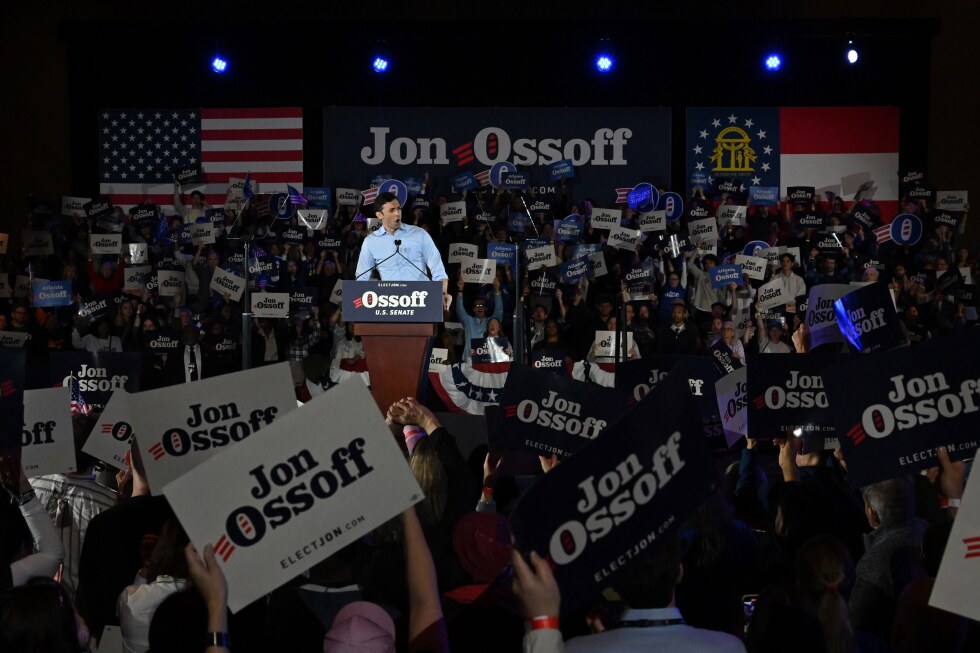
“While prices are going up and jobs are getting harder to find, they decided to let health insurance premiums double for more than 20 million Americans, including more than a million Georgians,” said U.S. Senator Jon Ossoff at a rally in an Atlanta suburb. Ossoff, who faces a challenging reelection bid as the only Democratic senator running in a state Trump won in 2024, emphasized that about 200,000 Georgians had lost their health coverage entirely.
The health care focus marks a strategic shift for Democrats, who are filming campaign advertisements outside struggling hospitals and highlighting personal stories of Americans facing skyrocketing insurance premiums. Brad Woodhouse, executive director of advocacy group Protect Our Care, described health care as “a banger of an issue for Democrats” that will feature prominently “in every single campaign, up and down the ballot.”
Republicans have defended their spending cuts as necessary to control ballooning health care costs and eliminate waste. Trump recently launched a website to help patients purchase discounted prescription drugs, and RNC Chairman Joe Gruters insisted Republicans are “working every single day to make sure that we bring affordability to the people.”
However, despite controlling both chambers of Congress, Republicans have been unable to pass comprehensive legislation addressing rising health care costs. Republican strategist Ron Bonjean acknowledged that health care remains his party’s “Achilles’ heel” until GOP leaders can develop realistic proposals capable of becoming law.
Health care’s transformation into a Democratic strength represents a remarkable political evolution. In 2010, Democrats lost their House majority after passing the ACA without Republican support, and in 2014, they surrendered the Senate following the troubled rollout of Healthcare.gov.
The issue’s political dynamics shifted during Trump’s first term when he supported unsuccessful efforts to repeal the ACA, potentially jeopardizing coverage for millions and threatening protections for those with pre-existing conditions. Last year, Republicans passed legislation reducing spending on federal health programs partly by imposing work requirements on benefit recipients and shifting costs to states.
Democratic groups have capitalized on these actions. Unrig Our Economy, a progressive organization, has invested more than $12 million in advertisements criticizing Republicans on health care since early 2025. When enhanced ACA tax credits approached expiration last year, Democrats forced a government shutdown over the issue. Though funding wasn’t restored, the party believes it gained political leverage heading into this year’s campaigns.
“Republicans own it now,” said Eric Stern, a Democratic media strategist. “You better believe Democrats are going to be talking about that.”
Recent polling supports the strategy’s potential effectiveness. A survey from health care research nonprofit KFF found that about one-third of Americans are “very worried” about health care costs, exceeding concerns about groceries, housing, or utilities.
Democratic candidates nationwide are incorporating health care into their campaigns. Iowa state Senator Zach Wahls, running for U.S. Senate, has visited vulnerable hospitals and toured pharmacies. Wisconsin House candidate Rebecca Cooke has met with hospital leaders and shared stories about her father’s expensive cancer medications and her own ACA premium increases.
At Ossoff’s Georgia rally, supporter Teresa Acosta described how her ACA policy, which covers herself and two teenagers including a son with Type 1 diabetes, now costs $520 monthly—seven times more than before expanded subsidies expired. “Ultimately, Trump and congressional Republicans refused to act,” Acosta said. “They refused to stand up for the care that me and over 1 million Georgians rely on.”
Georgia, one of ten states that didn’t expand Medicaid, has seen approximately 14% fewer residents sign up for ACA plans in 2026 compared to last year, although final enrollment numbers are pending.
Republican Representatives Mike Collins and Buddy Carter, potential challengers to Ossoff, both voted against a temporary ACA tax-credit extension in January. Carter, a former pharmacist, argued the extension would merely throw “more money at a broken system” without addressing fundamental cost issues.
Some Republicans, however, recognize the political vulnerability. Wisconsin Representative Derrick Van Orden, one of 17 Republicans who supported the temporary extension, criticized his party’s historical reluctance to engage with health care policy. “For the last 15 years, when you said health care, they’d dive out the window and barrel roll into a bush and hide,” Van Orden said. “We’re the party of good policy, and so we should be writing policy, and we need to embrace this.”
Fact Checker
Verify the accuracy of this article using The Disinformation Commission analysis and real-time sources.

14 Comments
Interesting to see health care emerge as a key issue in the upcoming elections. Rising costs and reduced coverage are certainly concerning for many voters. It will be crucial for candidates to offer concrete solutions to address these challenges.
The decision to let ACA subsidies expire seems particularly problematic, given the strain it has placed on many families. I hope the candidates can find ways to make health care more accessible and affordable.
The impact of rising health care costs on Georgia voters is concerning. I’m glad to see Senator Ossoff highlighting this issue and its real-world consequences for his constituents.
Absolutely. Health care affordability is a critical issue for many voters, and I hope the candidates can offer concrete proposals to address it.
While health care is a complex and often divisive issue, I believe it’s crucial for candidates to engage with voters’ concerns in a thoughtful, nuanced way. Simplistic partisan rhetoric won’t be enough to address these challenges.
It will be interesting to see how the health care debate plays out in the upcoming elections. Voters are clearly concerned about this issue, and candidates would be wise to offer clear, pragmatic proposals.
The impact of rising health care costs on Georgia voters is troubling. I’m glad to see Senator Ossoff highlighting this issue and its real-world consequences for his constituents.
Kudos to the Democrats for making health care a central part of their campaign platform. It’s an issue that affects all Americans, and I hope the candidates can work together to find bipartisan solutions.
Kudos to the Democrats for making health care a central part of their campaign platform. It’s a critical issue that deserves serious attention from all political parties.
I’m curious to see how the Republican candidates respond to the Democrats’ focus on health care. They’ll need to offer robust proposals to address voters’ concerns.
While the health care debate is often polarized, I hope the candidates can move beyond partisan rhetoric and focus on practical solutions that improve outcomes and affordability for all Americans.
While the health care debate can be polarizing, I believe it’s important for all candidates to engage with this issue in a thoughtful, nuanced way. Voters deserve clear, actionable proposals, not just partisan rhetoric.
The decision to cut Medicaid funding and let ACA subsidies expire seems short-sighted, given the impact on millions of Americans. Voters will likely be looking for leaders who prioritize accessible and affordable health care.
Agreed. Protecting and expanding health care coverage should be a top priority for policymakers. The costs of inaction are simply too high for many families.