


Listen to the article
Trump Seeks Saudi-Israel Normalization as Crown Prince Visits Washington
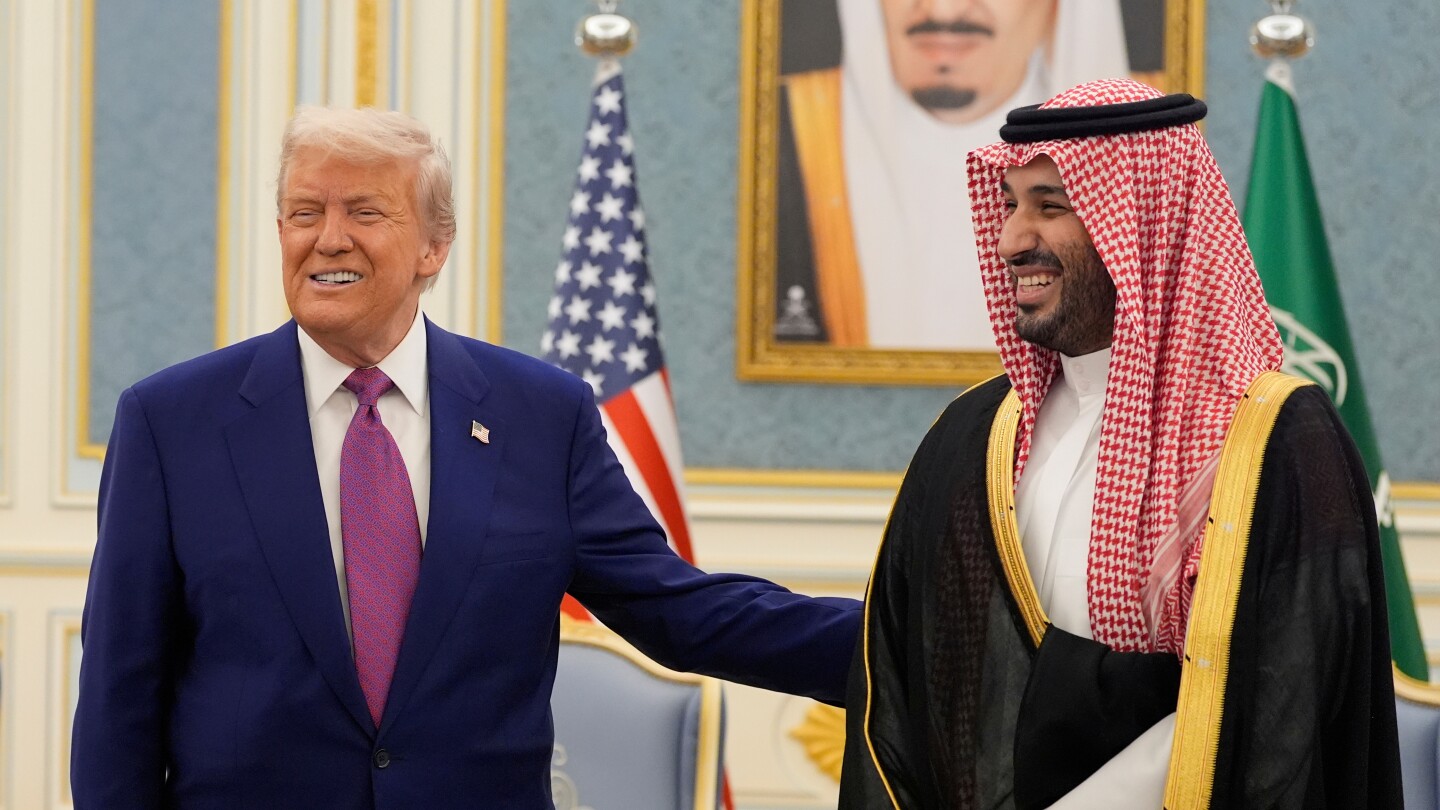
President Donald Trump has made it clear that expanding the Abraham Accords to include Saudi Arabia remains a top priority for his administration. As Saudi Crown Prince Mohammed bin Salman arrives in Washington for a high-profile White House visit Tuesday, the prospect of Saudi-Israeli normalization will be at the forefront of discussions.
“I hope that Saudi Arabia will be going into the Abraham Accords very shortly,” Trump told reporters aboard Air Force One last Friday, expressing optimism about bringing the kingdom into the diplomatic framework that formalized ties between Israel and three Arab nations during his first term.
Behind closed doors, however, administration officials harbor more measured expectations. While they remain doubtful that Saudi Arabia will join the accords in the immediate future, there is cautious optimism that an agreement could be reached before the end of Trump’s second term, according to three officials who spoke on condition of anonymity.
The push for Saudi normalization with Israel has spanned both the Trump and Biden administrations but has faced significant obstacles. During Trump’s first term, King Salman’s opposition prevented progress. Following Hamas’s October 2023 attacks and the subsequent Gaza war, Crown Prince Mohammed bin Salman, commonly known as MBS, also withdrew from negotiations.
The fundamental sticking point remains Saudi Arabia’s insistence on a guaranteed path to Palestinian statehood—a condition that Israel staunchly opposes. Trump may attempt to persuade the crown prince that his recently unveiled 20-point Gaza peace plan offers such a path, though this approach risks alienating Israel.
Administration officials suggest a realistic outcome from this week’s talks would be for Saudi Arabia to acknowledge Trump’s plan as a starting point for eventual Palestinian statehood while expressing openness to joining the Abraham Accords in principle.
Trump has repeatedly predicted that Saudi participation would trigger a domino effect across the Arab world. “We have a lot of people joining now the Abraham Accords, and hopefully we’re going to get Saudi Arabia very soon,” Trump said at a recent business gathering attended by Saudi Ambassador Princess Reema Bandar Al Saud.
The president believes regional dynamics have shifted in favor of normalization. Iran—a mutual adversary of both Saudi Arabia and Israel—has seen its proxies in Gaza, Lebanon, and Yemen weakened after two years of regional conflict. Additionally, Tehran’s nuclear program suffered setbacks following U.S. strikes in June, potentially creating more favorable conditions for Saudi-Israeli rapprochement.
Despite these factors, significant challenges remain. The devastating impact of the Israel-Hamas war continues to resonate throughout the region. While a fragile ceasefire holds, critical decisions about disarming Hamas, establishing international security forces, and creating new governance structures for Gaza loom on the horizon.
“As long as the scenes on Saudi television continue to be scenes of devastation and misery in Gaza, I think it’s going to be very hard for MBS to move in this direction,” noted Jonathan Schanzer, executive director at the Foundation for Defense of Democracies. Ongoing Israeli settler violence in the West Bank has further complicated regional perceptions of Israel.
The crown prince arrives with his own agenda, seeking formal assurances defining the scope of U.S. military protection for the kingdom and hoping to secure an agreement to purchase advanced F-35 fighter jets. However, administration officials indicate that approval for the fighter jet sale appears unlikely during this visit.
The administration remains concerned about maintaining Israel’s “qualitative military advantage” in the region, particularly while counting on Israeli support for Trump’s Gaza peace plan. There are also persistent worries about F-35 technology potentially reaching China through Saudi Arabia, which maintains close ties with Beijing.
John Hannah, who served as national security adviser to Vice President Dick Cheney, suggests that Trump showing openness to Palestinian statehood “could go a long way in his hopes of inching MBS toward normalization.” However, Hannah also cautioned against giving up leverage prematurely, arguing that integration of advanced U.S. military equipment should be tied to normalization and “a more fundamental and permanent transformation in Saudi-Israel relations.”
As the White House prepares for the crown prince’s visit, both sides understand that while immediate breakthroughs may be elusive, the discussions could lay important groundwork for future regional stability.
Fact Checker
Verify the accuracy of this article using The Disinformation Commission analysis and real-time sources.

19 Comments
This is a complex geopolitical issue with high stakes. Normalizing ties between Saudi Arabia and Israel could reshape regional dynamics, but the obstacles are substantial. It will require skilled diplomacy to overcome them.
Agreed. The Saudi leadership will have to carefully balance the potential benefits against the domestic and regional pressures they face.
Interesting developments in the push for Saudi-Israel normalization. Bridging the divide between the two countries will require careful diplomacy and addressing longstanding concerns on both sides.
Agreed. The UAE, Bahrain and Israel sets a precedent, but Saudi Arabia’s position is more complex given its historical ties to the Palestinian cause.
This is a complex geopolitical issue with high stakes. Normalizing ties between Saudi Arabia and Israel could reshape the regional balance of power, but it will require careful maneuvering and concessions on both sides.
The Abraham Accords have been a significant diplomatic breakthrough, but getting Saudi Arabia on board will be a major challenge for the Trump administration. Domestic politics and regional rivalries pose significant obstacles.
You’re right. The Saudi leadership will need to weigh the potential benefits against the backlash they could face from the Arab street and other influential regional actors.
This is a complex issue with high stakes for regional geopolitics. Normalizing ties between Saudi Arabia and Israel could have far-reaching consequences, but the obstacles are substantial. It will require deft diplomacy to overcome.
Agreed. The Saudi leadership will have to carefully balance the potential benefits against the risks of backlash from their own people and other Arab states.
Bringing Saudi Arabia into the Abraham Accords would be a major diplomatic coup for Trump, but the challenges are substantial. Overcoming the Kingdom’s longstanding support for the Palestinian cause will require deft diplomacy.
Bringing Saudi Arabia into the Abraham Accords would be a major diplomatic achievement for the Trump administration, but the challenges are significant. Overcoming the Kingdom’s longstanding support for the Palestinian cause will be no easy task.
The prospect of Saudi Arabia joining the Abraham Accords is an intriguing one, but the domestic and regional dynamics make it a tall order. Trump will need to navigate some tricky political waters to make it happen.
Agreed. The Saudi leadership will have to weigh the potential benefits against the risks of backlash from their own population and other Arab states.
Expanding the Abraham Accords to include Saudi Arabia would be a significant diplomatic breakthrough, but the Trump administration faces an uphill battle. The Kingdom’s long-standing support for the Palestinian cause is a major stumbling block.
This is a high-stakes geopolitical gambit by the Trump administration. Normalizing ties between Saudi Arabia and Israel could reshape the regional balance of power, but the obstacles are formidable.
You’re right, the domestic and regional pressures facing the Saudi leadership make this a risky proposition. They’ll need to weigh the potential benefits carefully.
Expanding the Abraham Accords to include Saudi Arabia would be a significant achievement, but the Trump administration faces an uphill battle. The Kingdom’s long-standing support for the Palestinian cause is a major sticking point.
This is a high-stakes gambit by the Trump administration. Normalizing ties between Saudi Arabia and Israel could reshape the regional balance of power, but the domestic and geopolitical obstacles are formidable.
You’re absolutely right. The Saudi leadership will have to weigh the potential benefits against the risks of backlash from their own population and other Arab states.