


Listen to the article
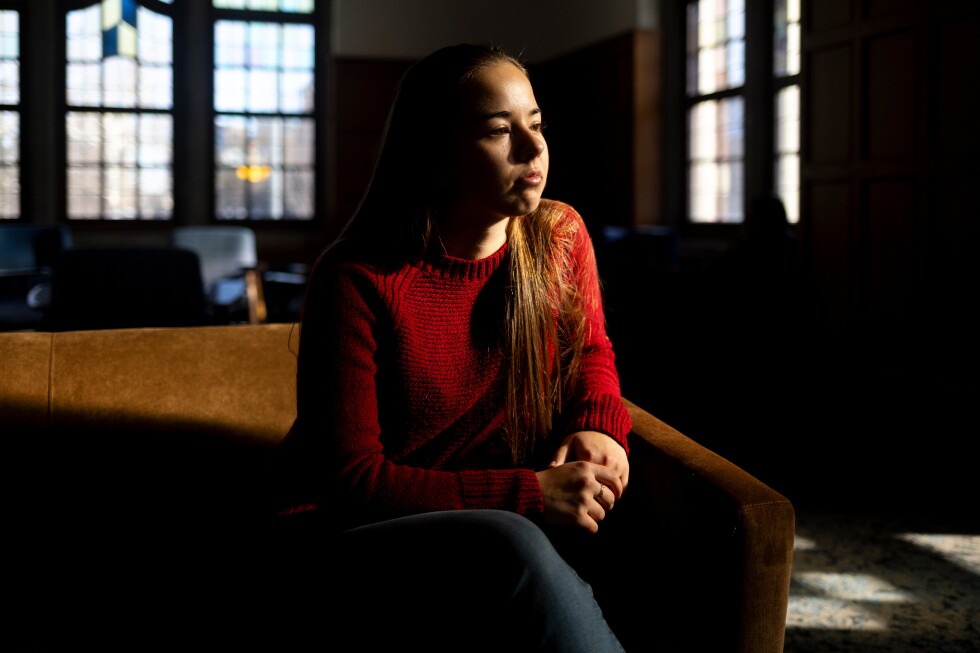
The first time Patrick Thaw saw his University of Michigan friends together since sophomore year ended was bittersweet. They were starting a new semester in Ann Arbor, while he was FaceTiming in from Singapore, stranded half a world away.
One day last June he was interviewing to renew his U.S. student visa, and the next his world was turned upside down by President Donald Trump’s travel ban on people from 12 countries, including Thaw’s native Myanmar.
“If I knew it was going to go down this badly, I wouldn’t have left the United States,” he said of his decision to leave Michigan for a summer internship in Singapore.
The ban represents one of several ways the Trump administration has complicated life for international students during his return to the White House. Alongside a pause in visa appointments and additional vetting procedures, these policies have contributed to declining foreign enrollment among first-time students. While new applicants can pursue alternatives, students like Thaw who were well into their academic careers face particularly disruptive challenges.
Universities have responded by developing flexible solutions, according to Sarah Spreitzer, assistant vice president of government relations at the American Council on Education. These include reviving pandemic-era remote learning arrangements and offering admission to partner international campuses.
For Thaw, university administrators suggested studying abroad as a potential workaround. With the travel ban in effect, a program in Australia initially seemed viable. Meanwhile, his life in Singapore entered a holding pattern after his internship ended. He made some friends, but they had their own commitments with school and jobs.
“Mentally, I’m back in Ann Arbor,” the 21-year-old said. “But physically, I’m trapped in Singapore.”
Thaw’s American college experience had been everything he hoped for before his unexpected exile. After arriving at Michigan in 2023, he quickly integrated into campus life, connecting with his roommate’s friend group and joining a biology fraternity and an Alzheimer’s research lab.
His academic curiosity led him to diverse courses, including Jewish studies. Professor Cara Rock-Singer noted his eagerness to participate stemmed from reading Philip Roth’s works. “Patrick did not need nudging. He was always there to think and take risks,” she said.
When Thaw secured his clinical research internship at a Singapore medical school, it seemed like a natural step forward in his promising academic journey. Though he’d heard speculation about potential Trump administration travel restrictions, the possibility barely registered—something he even joked about with friends before departing.
The travel ban announcement changed everything.
For Thaw, studying in America represented more than just education—it was an escape. Growing up in Myanmar, his college aspirations gained urgency as civil war erupted and higher education opportunities vanished locally.
The conflict touched his family directly. Thaw recalled a time when he and his mother took shifts watching for potential arson attacks on the bamboo in their front yard. Once, he arrived late to an algebra exam because a bomb exploded in front of his house.
His acceptance to the University of Michigan after applying to colleges “around the clock” marked a turning point. “The moment I landed in the United States, like, set foot, I was like, this is it,” Thaw said. “This is where I begin my new life.”
His background brought valuable perspective to campus. Allison Voto, one of his friends, said their conversations about life in Myanmar made her “more understanding of the world.”
The stakes extend beyond Thaw’s individual situation. During the 2024-25 academic year, U.S. institutions hosted nearly 1.2 million international students. As of summer 2024, more than 1,400 people from Myanmar held American student visas, placing it among the top-represented countries affected by the travel ban.
A Michigan official stated the university recognizes the challenges facing international students and remains committed to providing support and options. However, the school declined to comment specifically on Thaw’s circumstances.
While the Australian study abroad program offered temporary hope, uncertainty surrounding the travel ban’s duration and additional visa obstacles ultimately led Thaw to look elsewhere. He had left Myanmar to complete his education and decided he couldn’t wait indefinitely for policy changes.
“I cannot just wait for the travel ban to just end and get lifted and go back, because that’s going to be an indefinite amount of time,” he explained.
Thaw has received acceptance letters from universities in Australia and Canada. He’s particularly hopeful about attending the University of Toronto, which would place him just a four-hour drive from his friends in Ann Arbor.
“If he comes anywhere near me, basically on the continent of North America, I’m going to go see him,” said Voto, whose friendship with Thaw is now characterized by day-long gaps in text conversations. “I mean, he’s Patrick, you know? That’s absolutely worth it.”
Fact Checker
Verify the accuracy of this article using The Disinformation Commission analysis and real-time sources.

11 Comments
Internship opportunities abroad can be invaluable for students, but this case highlights the risks. Policymakers need to carefully balance national security concerns with the benefits of international academic exchange.
Absolutely. There must be a way to uphold legitimate security needs while preserving valuable educational and cultural exchange programs. Flexible solutions are needed to avoid unintended consequences.
This is a concerning situation for international students. The travel ban has created significant disruptions and uncertainty. Universities should work to develop more flexible policies to support these students during these challenging times.
I agree, maintaining open and accessible education for international students should be a priority. Policies that create barriers to study abroad opportunities are detrimental to both students and institutions.
The travel ban has created a chilling effect on international academic exchange. While national security is important, these disruptions to student mobility could have long-term consequences for American universities and the economy.
This is a concerning example of the unintended consequences of the travel ban. Policymakers should carefully consider the impacts on international students and work to find solutions that uphold security while preserving academic exchange.
It’s unfortunate that this student had such a disruptive experience during his internship. The travel ban has created significant challenges for international students and universities need to find ways to better support them.
Restrictive visa policies and travel bans undermine the ability of U.S. universities to attract top international talent. This could put American higher education at a disadvantage compared to more welcoming countries.
Absolutely. The U.S. risks losing its competitive edge in attracting the best and brightest international students if it continues down this path. A balanced approach is needed to address security concerns without stifling academic mobility.
This case illustrates the real-world impacts of the Trump administration’s policies on international students. Declining foreign enrollment is concerning and universities must advocate for more sensible approaches.
Agreed. Maintaining a vibrant international student population is crucial for the diversity and excellence of U.S. higher education. Policymakers should seek to address legitimate security needs without unduly restricting academic mobility.