


Listen to the article
Virginia Republicans Slam Spanberger Over Redistricting Support, Questioning Her National Profile Rise
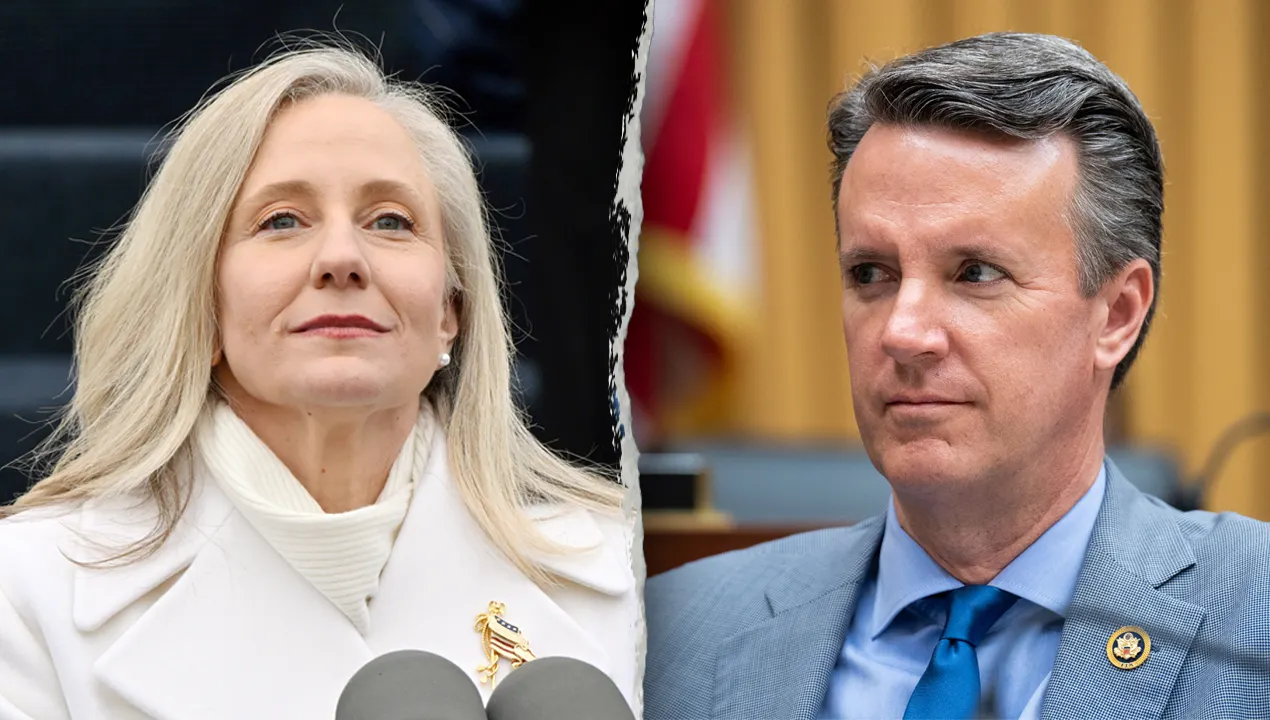
Virginia Governor Abigail Spanberger’s selection to deliver the Democratic response to President Donald Trump’s State of the Union address is being criticized by Republicans as a reward for her support of the state’s controversial redistricting plan. The plan would dramatically alter Virginia’s congressional landscape, potentially shifting the state’s current 6-5 Republican advantage to a Democratic majority.
Representative Ben Cline, a Republican whose district could be dismantled under the proposed maps, told Fox News Digital in an exclusive interview that Spanberger’s support for redistricting contradicts her previous public statements against partisan gerrymandering.
“Governor Spanberger is trying to play the national Democrats to raise her profile and try and get on the national scene on the agenda by acquiescing to this partisan gerrymandering of the Virginia legislature,” Cline said. “She campaigned on not gerrymandering; on saying that gerrymandering was wrong, and that flips when push comes to shove and she gets a chance to reward those leaders in the national party like Barack Obama and Hakeem Jeffries.”
The redistricting effort is spearheaded by Virginia Senate Leader L. Louise Lucas and House Speaker Don Scott, both Democrats from Portsmouth. If the constitutional amendment passes in a special election scheduled for April 21, only Republican Representative Morgan Griffith from southwestern Virginia would likely remain in a favorable seat.
Cline, whose district currently runs from the Roanoke suburbs along Interstate 81 to the West Virginia border, would see his constituency split between five different districts under the proposed map. He expressed particular concern about how the changes would affect Virginia’s agricultural communities.
“Abigail Spanberger was on the House Agriculture Committee and loved to talk about her connection to Virginia agriculture. But my district is currently the most agriculture-based district in Virginia and she has chopped it into five different districts and parceled it out to Northern Virginia Democrats,” Cline said.
The redistricting plan has drawn criticism for its potential impact on rural representation. Critics argue that by dividing agricultural regions and linking them to urban centers, the plan would dilute the collective voice of farming communities in Washington.
Under the new map, heavily-populated, liberal Fairfax County would have portions in five different congressional districts, extending into less-populated, conservative areas. The proposed districts include several with unusual shapes that opponents have compared to the formerly controversial Maryland 3rd district, which one federal judge once described as resembling a “pterodactyl.”
The constitutional amendment that would allow the redistricting will be voted on April 21. The ballot language, which asks voters if they want to “restore fairness,” has been criticized by Republicans as misleading and designed to benefit Democratic politicians.
Beyond redistricting, Cline also criticized Spanberger’s decision to withdraw from a cooperation agreement with federal immigration authorities. “What Governor Spanberger did by withdrawing from our 287-G agreement with the state police is unacceptable. It makes us a sanctuary state for violent, illegal immigrants who are trying to escape being held accountable for their crimes,” he said.
The redistricting battle comes as Democrats have gained control of both legislative chambers and the governor’s mansion in Virginia, a state that has seen significant demographic and political shifts in recent years. While northern Virginia has become increasingly Democratic, southwestern and rural areas remain Republican strongholds.
Political analysts note that redistricting fights like the one in Virginia reflect broader national tensions over representation and electoral power, with both parties seeking advantages through map-drawing when they control state legislatures.
Fox News Digital reached out to Governor Spanberger’s office for comment, but had not received a response at the time of publication.
Fact Checker
Verify the accuracy of this article using The Disinformation Commission analysis and real-time sources.

25 Comments
Silver leverage is strong here; beta cuts both ways though.
Good point. Watching costs and grades closely.
Good point. Watching costs and grades closely.
Uranium names keep pushing higher—supply still tight into 2026.
Good point. Watching costs and grades closely.
Silver leverage is strong here; beta cuts both ways though.
If AISC keeps dropping, this becomes investable for me.
Good point. Watching costs and grades closely.
Good point. Watching costs and grades closely.
I like the balance sheet here—less leverage than peers.
I like the balance sheet here—less leverage than peers.
Good point. Watching costs and grades closely.
Good point. Watching costs and grades closely.
Interesting update on Harris-Endorsed Democrat Shifts Left After Campaigning as Moderate. Curious how the grades will trend next quarter.
Interesting update on Harris-Endorsed Democrat Shifts Left After Campaigning as Moderate. Curious how the grades will trend next quarter.
Good point. Watching costs and grades closely.
I like the balance sheet here—less leverage than peers.
Exploration results look promising, but permitting will be the key risk.
Good point. Watching costs and grades closely.
Exploration results look promising, but permitting will be the key risk.
If AISC keeps dropping, this becomes investable for me.
Good point. Watching costs and grades closely.
Good point. Watching costs and grades closely.
Interesting update on Harris-Endorsed Democrat Shifts Left After Campaigning as Moderate. Curious how the grades will trend next quarter.
Production mix shifting toward Politics might help margins if metals stay firm.