


Listen to the article
Haiti “Helpless” to Handle Return of Citizens, Transitional Leader Admits
A senior Haitian official has candidly acknowledged that the Caribbean nation lacks the capacity to absorb hundreds of thousands of its citizens currently living in the United States under Temporary Protected Status (TPS).
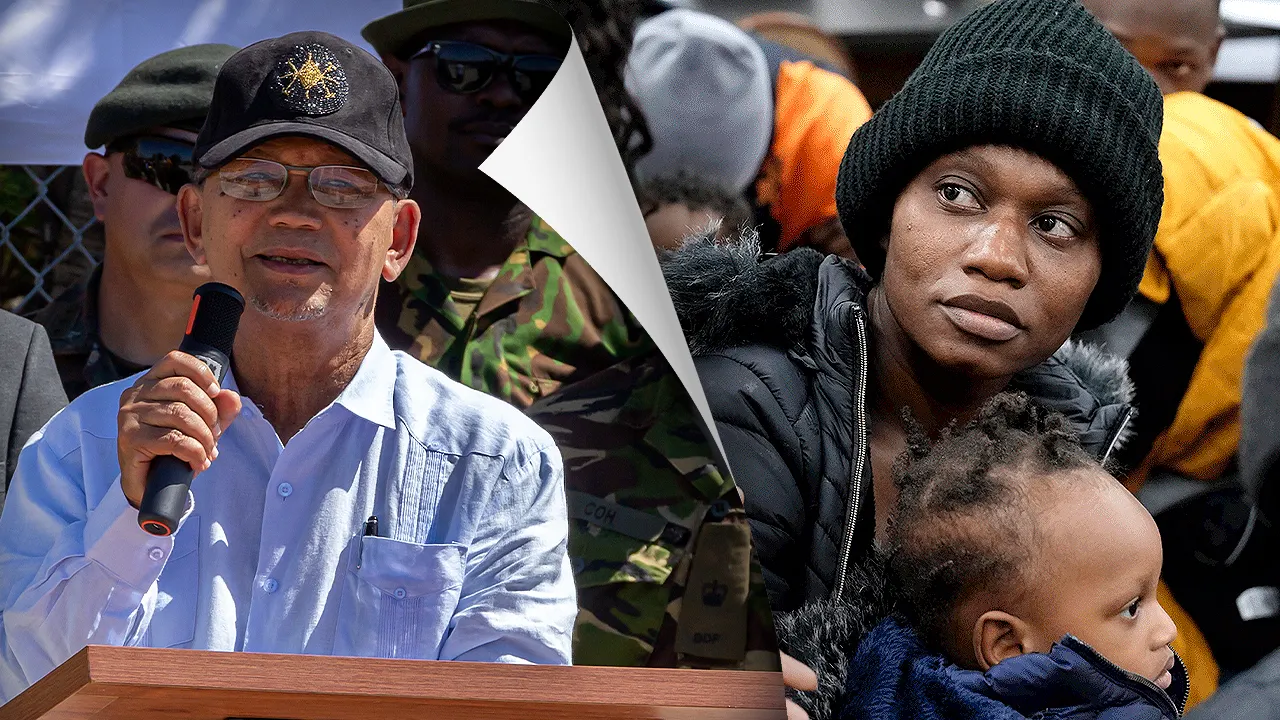
Leslie Voltaire, one of nine members on Haiti’s transitional council governing until elections later this year, told Fox News Digital that his country is “helpless if another country is sending back our compatriots,” citing economic instability, limited resources, and ongoing security crises.
“We cannot do anything about it – just accommodate them, give them money to go back to their provinces and to their cities, help them with food, but it’s very painful due to the small budget that we have in the government,” Voltaire explained.
The admission comes at a critical juncture as Haiti’s TPS status faces potential termination under the Trump administration. Though the administration sought to end the designation, which has been in place for over 15 years, U.S. District Judge Ana Reyes recently issued a preliminary injunction blocking the move, arguing it was likely motivated by “hostility to non-white immigrants” rather than conditions in Haiti.
The situation underscores Haiti’s deep economic dependence on remittances from abroad. According to Voltaire, Haitian migrants in the United States, Canada, and France send approximately $3-4 billion annually back to Haiti – funds that have become essential to the nation’s economic survival.
“We don’t have an economy that has the capacity to produce the kind of dollars that [migrant workers] are generating,” Voltaire said, effectively acknowledging that these remittances serve as a financial lifeline for the impoverished nation.
The potential return of up to 400,000 Haitian nationals would present catastrophic challenges for a country already struggling with gang violence, political instability, and economic hardship. Voltaire noted that roughly 85% of Haiti’s “professional class” resides abroad, highlighting the brain drain that has further weakened Haiti’s institutional capacity.
Against this backdrop, three U.S. warships have arrived off Haiti’s coast ahead of the country’s February 7 deadline for the transitional council to transfer power to elected leadership. Additionally, the United Nations recently approved the deployment of a Gang Suppression Task Force with U.S. support to address rampant violence.
When asked about specific metrics that might indicate when Haiti could stabilize enough to no longer require TPS protection, Voltaire offered no concrete benchmarks. Instead, he emphasized that Haiti needs “more time, more investment, and greater security” before it could handle a mass return of its citizens.
“The problem of security in Haiti is mainly to have jobs,” he explained. “There are no jobs because there is no investment right now. There is no investment because there is insecurity. And also we have to provide services to the population, so, there is a huge need of cash, of resources.”
Voltaire also pointed to historical factors contributing to Haiti’s current predicament, including what he described as a 19-year U.S. military occupation between 1915 and 1934 that “depleted” Haiti’s middle class by treating the country as a source of cheap labor for sugarcane production in neighboring countries.
“This is why we have like half-a-million Haitians in the Dominican Republic, and the same in Cuba … and we have been depleted,” he said, contrasting Haiti’s struggles with the relative stability of the Dominican Republic.
Haitian leadership is currently “pleading” with U.S. officials for tariff relief, which Voltaire believes could improve his country’s economic situation. While he acknowledged that repatriation might eventually benefit Haiti by returning skilled professionals, he stressed that such a process would require substantial economic and political development to succeed.
As Haiti approaches its political transition deadline with persistent security and economic challenges, the fate of hundreds of thousands of Haitians in the United States remains uncertain, caught between U.S. immigration politics and Haiti’s limited capacity to reintegrate its diaspora.
Fact Checker
Verify the accuracy of this article using The Disinformation Commission analysis and real-time sources.

12 Comments
The Haitian government’s admission of their inability to handle a large influx of returning citizens highlights the critical need for US financial assistance. Supporting Haiti’s efforts to provide for its people and ensure security will be paramount.
Well said. Haiti’s transparency about their constraints is refreshing, and international cooperation will be essential to navigating this complex challenge.
This is a challenging situation for Haiti. They clearly lack the resources and stability to handle a large influx of returning citizens. US financial aid could be critical to help Haiti provide for these people and maintain security and order.
The Haitian government seems transparent about their limitations, which is commendable. Providing aid and support will be key to managing this complex issue.
It’s concerning to hear that Haiti lacks the capacity to absorb returning citizens, but their honesty about the situation is appreciated. US financial aid could make a significant difference in helping Haiti provide for its people and maintain stability.
The Haitian government’s acknowledgment of their limitations is a sobering reality. Providing the necessary financial and logistical support will be crucial to helping Haiti manage this difficult transition. Continued US assistance could be a lifeline for the country.
Agreed. Haiti’s transparency about their constraints is commendable, and international cooperation will be vital to navigating this complex issue and supporting the Haitian people.
It’s understandable that Haiti would struggle to handle a large influx of returning citizens given their economic and security challenges. US financial assistance could make a real difference in this situation.
Agreed. Haiti’s transparency about their limitations is refreshing, and international support will be vital to helping the country manage this complex issue.
I’m curious to learn more about the potential termination of Haiti’s TPS status and the implications that could have. Maintaining stability and supporting the Haitian people during this transitional period seems crucial.
You raise a good point. The US government’s decision on Haiti’s TPS will significantly impact the country and its citizens. Careful consideration of the consequences is warranted.
This is a difficult situation for Haiti, but their honesty about their limitations is admirable. Continued US financial aid could be crucial to supporting the Haitian people and maintaining stability during this transitional period.