


Listen to the article
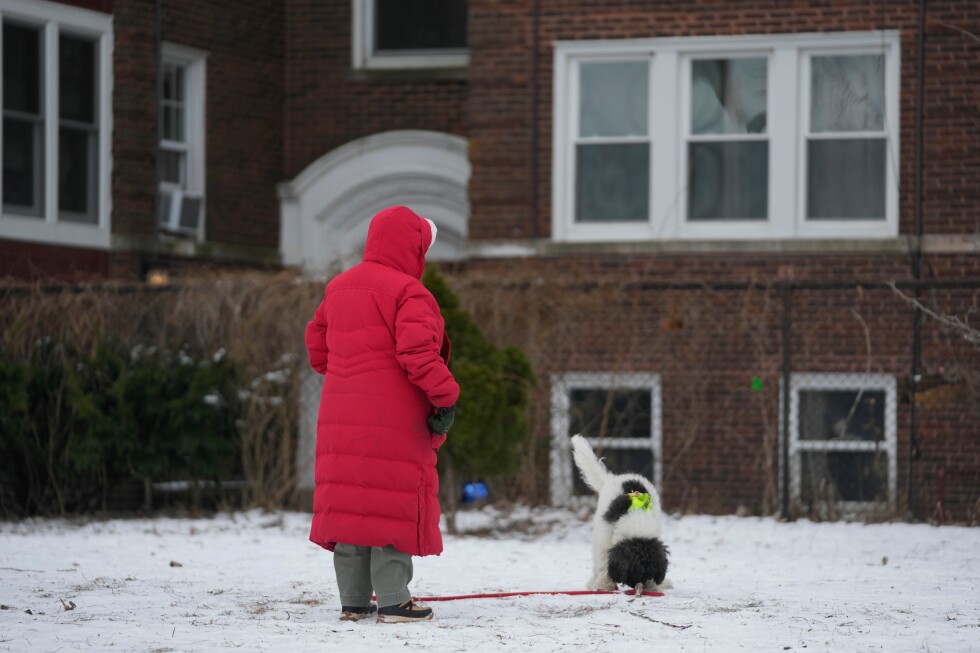
Millions of North Americans rang in 2026 confronting unusually harsh winter conditions, with many reporting the most severe cold they’ve experienced in years, according to a new nationwide survey.
“Pipes that never froze on me for 15 years froze,” said Chris Ferro, a 58-year-old Brooklyn property owner who manages several residential buildings in Albany. Ferro noted that persistent sub-freezing temperatures hampered his ability to complete repairs and renovations. The cold snap reminded him of winters from his youth, contrasting sharply with the milder winters that had become common in recent years.
According to a newly released poll from The Associated Press-NORC Center for Public Affairs Research, approximately six in ten American adults report being personally affected by severe winter weather or extreme cold within the past five years. This represents a significant increase from a similar AP-NORC poll conducted in February 2025, which found only about half of U.S. adults reported such experiences.
The findings highlight a growing perception of cold weather impacts following a massive winter storm that brought freezing temperatures to the East Coast and triggered widespread power outages across the South earlier this year.
Climate scientists emphasize that these reactions are occurring against a backdrop of global warming. Research confirms that the first quarter of the 21st century has been historically warm, primarily due to human-induced climate change, with abnormally cold winters becoming less frequent in North America. Experts suggest this reduced frequency actually intensifies people’s reactions to cold snaps, with prolonged cold periods becoming increasingly unfamiliar, particularly to younger generations of Americans.
For comparison, an AP-NORC poll from summer 2024 found about seven in ten Americans had experienced extremely hot weather or heat waves in the previous five years, indicating that Americans are confronting weather extremes at both ends of the temperature spectrum.
The economic impacts of the recent cold have been substantial. Approximately 70% of Americans report higher-than-usual electricity or gas bills due to winter storms or extreme cold in the past year alone. Around 40% experienced work or school cancellations, while one-third faced power outages. Nearly 30% dealt with travel disruptions.
Annie Braswell, 66, from Greenville, North Carolina, described January and February as feeling like “it hadn’t been that cold in 40 years,” noting her utility bills doubled compared to normal. She contrasted this with the previous summer when temperatures frequently reached or exceeded 100°F (38°C). “I just take life one day at a time, and I realize these are things that I can’t change,” Braswell said about coping with temperature extremes.
The financial strain is significant, as both heat waves and extreme cold require more energy for heating and cooling. With electricity prices rising across the U.S., an AP-NORC poll from October 2025 found that nearly 40% of Americans consider electricity costs a “major source” of stress. Bill McKibben, a prominent climate activist, told The Associated Press he anticipates rising electricity prices will have significant political ramifications.
Regional differences in weather impacts were notable. About 60% of Midwesterners, 50% of Southerners, and 40% of Northeasterners reported work or school cancellations due to winter weather, compared to just 15% of those living in the West.
The poll revealed complex perceptions regarding climate change’s role in extreme weather events. Among Americans who experienced severe weather in recent years—including extreme heat, cold, drought, hurricanes, flooding, wildfires, or tornadoes—about two-thirds believe climate change was a contributing factor.
Joseph Bird, a 21-year-old college student from Provo, Utah, who identifies as politically independent, expressed a nuanced view: “I think climate change is a natural thing that happens… to some extent it’s sped up by some things,” citing pollutants from factories and shipping. “I think it increases the frequency of extreme weather is how I’d see it.”
Political divisions remain stark, with Democrats and independents who experienced severe weather events much more likely than Republicans to attribute them to climate change. Only about 30% of conservative Republicans who experienced extreme weather events connected them to climate change, compared to the vast majority of liberal Democrats.
Climate scientists explain that while global warming is raising average atmospheric temperatures, extreme cold outbreaks across North America remain a feature of climate change. The Arctic polar vortex—a swirling area of low pressure and cold air typically confined to the North Pole—can occasionally stretch southward. Research indicates such polar vortex disruptions are occurring more frequently due to rapidly warming Arctic temperatures and diminishing sea ice.
Overall, an overwhelming 80% of American adults report experiencing some type of severe weather event in the past five years. While political affiliation doesn’t significantly affect Americans’ likelihood of experiencing extreme weather, it strongly influences their interpretation of these events—about 80% of Democrats who experienced extreme weather attributed it to climate change, compared to only 40% of Republicans.
The AP-NORC poll surveyed 1,156 adults between February 5-8 using NORC’s probability-based AmeriSpeak Panel, with a margin of sampling error of plus or minus 3.9 percentage points for adults overall.
Fact Checker
Verify the accuracy of this article using The Disinformation Commission analysis and real-time sources.

14 Comments
This is a concerning trend, but not surprising given the climate changes we’re observing. Preparing for more extreme winter weather events should be a priority for policymakers and emergency planners.
Interesting to see the growing awareness of extreme cold weather events in the US. As the climate continues to change, we may see more unpredictable winter conditions impacting communities. Proper preparation and resilience will be key.
Agreed. Adapting infrastructure and emergency response plans to handle more severe cold snaps will be crucial. Proactive steps can help mitigate the impacts on vulnerable populations.
It will be interesting to see how this growing awareness of cold weather impacts shapes public discourse and policy agendas around climate change adaptation and resilience. Practical solutions are clearly needed.
The poll results highlight an important shift in public perception. Extreme cold used to be less common, but now more Americans are directly experiencing the effects. This is likely a sign of broader climate changes underway.
Absolutely. As the climate continues to evolve, we may need to rethink how we approach winter preparedness and resilience across the country. Staying informed and adapting will be critical.
Curious to see how the energy and utilities sectors respond to growing cold weather impacts. Ensuring reliable power and heating infrastructure will be vital, especially for vulnerable communities. Innovative solutions may be required.
Good point. The energy industry will need to invest in upgrading and winterizing systems to handle more extreme conditions. Diversifying energy sources could also improve resilience during severe cold snaps.
The findings underscore the importance of climate adaptation efforts at the local and regional level. Community-based solutions tailored to specific cold weather risks will likely be most effective in protecting residents.
Absolutely. Place-based approaches that consider local vulnerabilities and resources will be key. Engaging with impacted communities to co-create resilience plans is a smart strategy.
The increased prevalence of harsh winter conditions highlights the need for robust disaster response capabilities. Ensuring access to emergency shelters, heating assistance, and other critical services will be crucial.
Agreed. Proactive coordination between government, nonprofits, and the private sector will be essential to safeguard vulnerable populations during extreme cold events.
The poll results underscore the need for continued investment in climate science and weather forecasting. Accurate, timely information is vital for communities to prepare for and respond to extreme cold events.
Absolutely. Improving our predictive capabilities can help save lives and minimize disruptions. Integrating this data into emergency planning is also crucial.