


Listen to the article
Kentucky Attorney General Challenges Governor’s Call to Withdraw ICE from Communities
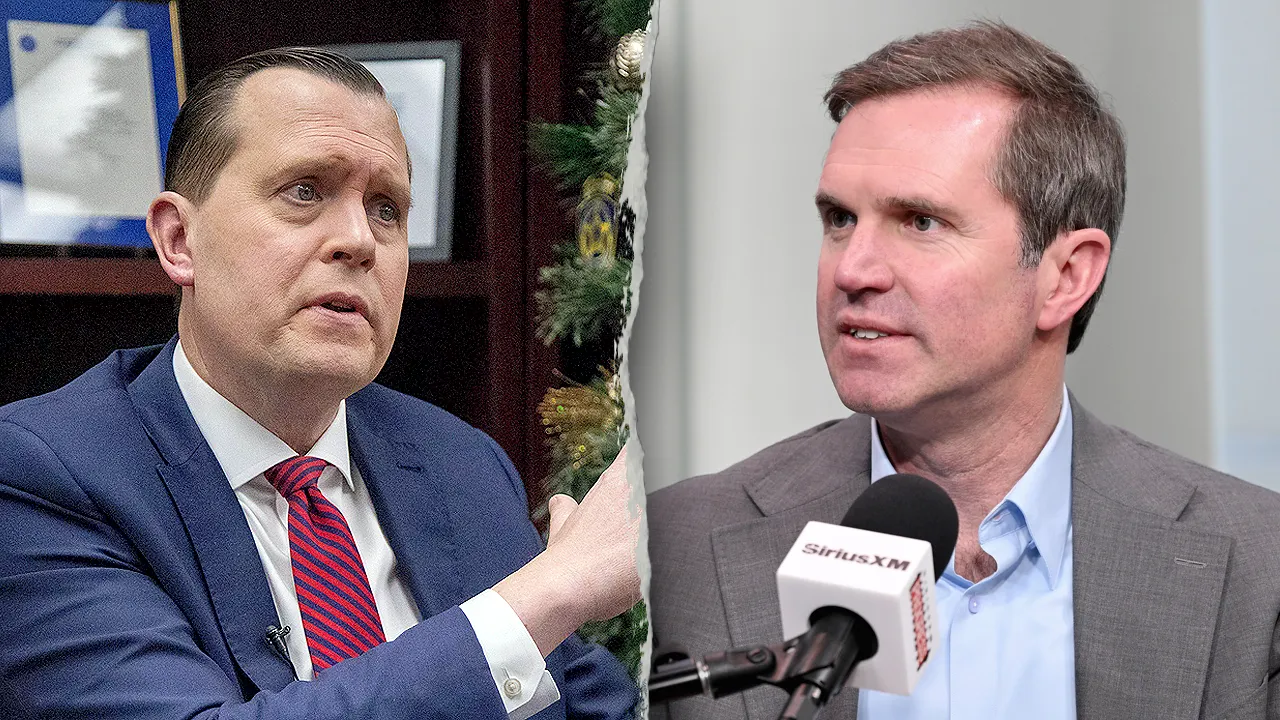
Kentucky Attorney General Russell Coleman has strongly criticized Governor Andy Beshear’s recent comments calling for the withdrawal of Immigration and Customs Enforcement (ICE) officers from communities across the country, potentially setting the stage for a significant intergovernmental conflict over cooperation with federal immigration authorities.
During an appearance on ABC’s “The View,” Governor Beshear made the controversial statement: “Every ICE agent should be withdrawn from every city and every community that they’re in. This organization has to be reformed from the top-down.” The Democratic governor added that Homeland Security Secretary Noem should be fired and “every agent needs to be retrained,” citing what he called a “body-count of American citizens” as justification.
Coleman, speaking to Fox News Digital from the Daviess County Sheriff’s Office, pushed back forcefully. “My view as the chief law enforcement officer of this commonwealth, someone that’s carried a badge and a gun, someone that has been a federal prosecutor, is that statement that the governor made was absurd,” Coleman said.
The attorney general emphasized that his position was “not a political one” and noted that local sheriffs in the meeting supported continued cooperation with ICE. Coleman pointed to the legal reality that while Kentucky State Police fall under Beshear’s authority, his office works with 120 county sheriffs’ departments, many of which maintain cooperative relationships with the Department of Homeland Security.
This dispute highlights the complex interplay between state and federal authority in immigration enforcement. Former Florida federal prosecutor Zack Smith explained that both governors and attorneys general are elected constitutional officers with distinct authorities. While Coleman can issue legal opinions, his ability to compel other constitutional officers to comply with state law is limited in many cases.
“I think this from a practical and policy perspective is a very foolish and very dangerous statement by the governor of Kentucky,” Smith said, referencing recent unrest in Minnesota that some attribute to similar opposition to ICE operations.
The situation in Kentucky mirrors developments in neighboring Virginia, where officials under new Democratic leadership are moving to end state-federal immigration enforcement cooperation established during former Republican Governor Glenn Youngkin’s administration. The Virginia legislature is advancing bills to restrict collaboration with DHS.
Coleman expressed concern about Virginia’s direction but maintained that Kentucky is unlikely to follow suit. He highlighted recent successes from federal-local collaboration, including the arrest of 650 undocumented immigrants in a cross-border operation with West Virginia.
The attorney general also cited specific local benefits of ICE cooperation, including the removal of a violent child-sex predator from Daviess County and the arrest of an undocumented immigrant who had been financially extorting seniors in Owensboro.
DHS Assistant Secretary Tricia McLaughlin responded directly to Beshear’s position, stating that federal law enforcement “will continue arresting criminal illegal aliens across the state of Kentucky while sanctuary politicians like Governor Beshear continue to demonize our law enforcement and side with criminal illegal aliens over American citizens.”
McLaughlin emphasized the importance of state and local law enforcement engagement, noting that such cooperation reduces the need for federal agents on the streets. She referenced several recent arrests in Kentucky, including that of Roman Sanchez, described as an undocumented immigrant convicted of homicide and other serious crimes.
Governor Beshear’s office did not respond to requests for comment on the developing situation.
The dispute underscores broader national tensions over immigration enforcement policy as states and localities grapple with their roles in federal immigration operations, balancing public safety concerns with questions about civil liberties and community trust.
Fact Checker
Verify the accuracy of this article using The Disinformation Commission analysis and real-time sources.

7 Comments
Interesting debate on immigration enforcement. While I understand the governor’s concerns, withdrawing ICE entirely seems like an extreme measure. Perhaps a more balanced approach focusing on reform and oversight could be more constructive.
I agree, a complete withdrawal of ICE may not be the best solution. There needs to be a careful balance between effective enforcement and protecting civil liberties.
As someone who follows immigration policy, I’m concerned about the potential impact of withdrawing ICE, even if the intent is to drive reform. Could this create a public safety vacuum that criminal elements could exploit? I hope both sides can find common ground.
This is a highly charged political issue. While I respect the governor’s views, the attorney general also raises valid concerns about public safety. Hopefully they can find a middle ground that balances immigration enforcement with civil liberties protections.
This is a complex issue without easy answers. I’m curious to hear more details on the governor’s rationale and the attorney general’s counterarguments. What specific reforms do they think are needed to improve ICE operations?
Good point. More specifics from both sides would help inform this debate. Reasonable people can disagree, but the public deserves a clear articulation of the key issues and proposals.
I appreciate the governor’s desire to address perceived issues with ICE, but a wholesale withdrawal seems drastic. Targeted reforms focused on oversight, training and accountability may be a more prudent approach. What specific changes does he have in mind?