


Listen to the article
Minnesota Governor, Attorney General Defend Anti-Fraud Efforts Amid Federal Immigration Crackdown
Minnesota’s top officials faced sharp questioning from Republican lawmakers on Wednesday during a contentious House Oversight Committee hearing centered on fraud prevention and the Trump administration’s immigration enforcement actions in the state.
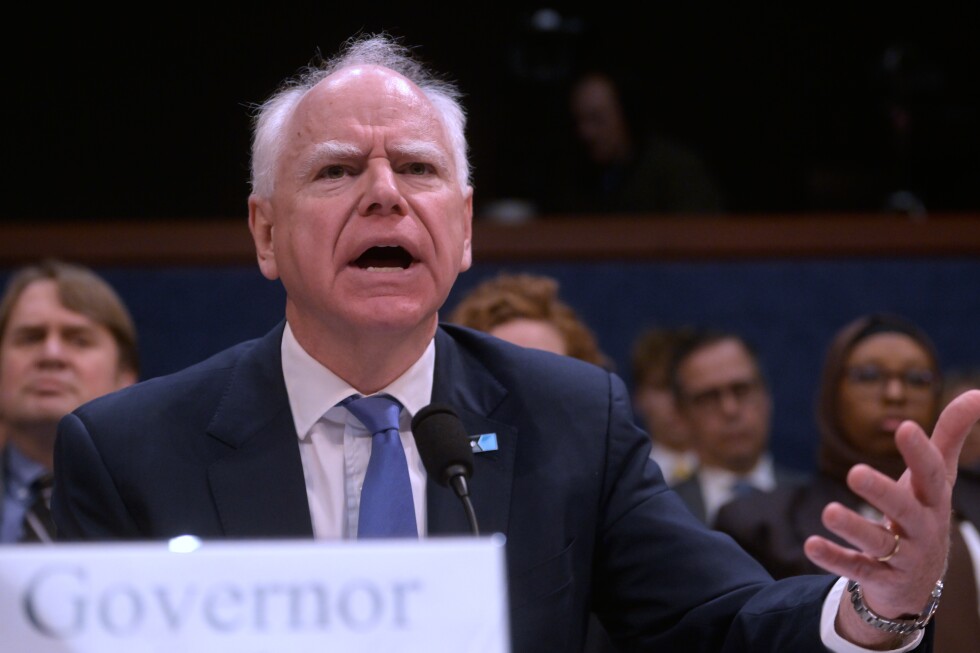
Governor Tim Walz and Attorney General Keith Ellison testified before the committee, defending their administration’s efforts to combat fraud while arguing that federal immigration operations have hindered rather than helped those efforts.
“The people of Minnesota have been singled out and targeted for political retribution at an unparalleled scale,” Walz said during his testimony. “We’re going to prosecute, as we have, every single person that’s involved in fraud, but we can’t do it alone.”
Republicans on the committee, led by Chairman James Comer of Kentucky, accused the Minnesota officials of failing to aggressively combat fraud in government programs, particularly Medicaid. “You have not been good stewards of the taxpayer dollars,” Comer stated. “And the Democratic position is keep the money flowing. The American taxpayers have had enough.”
The hearing comes amid heightened tensions between Minnesota and the federal government. Last week, Vice President JD Vance announced the Trump administration would “temporarily halt” $243 million in Medicaid funding to Minnesota, citing fraud concerns as justification. In response, Minnesota filed a lawsuit Monday seeking to prevent the withholding of funds, warning that such action could force cuts to healthcare services for low-income residents.
Much of the hearing centered on Operation Metro Surge, a large-scale federal immigration enforcement action that began in December with approximately 3,000 federal agents deployed to Minnesota. According to testimony from Homeland Security Secretary Kristi Noem on Tuesday, about 650 investigators remain in the state as part of a broader fraud investigation.
Ellison strongly criticized the operation, stating it “did nothing to address fraud in our state. It harmed our economy and it scarred our people and it dealt a devastating blow to fraud enforcement in Minnesota.” He highlighted a series of resignations from the U.S. Attorney’s Office in Minnesota, claiming remaining attorneys are now “drowning in immigration-related petitions” rather than prosecuting fraud cases.
The hearing grew particularly heated when discussing the $250 million Feeding Our Future fraud scheme that has resulted in 92 indictments, including 82 Somali Americans according to the U.S. Attorney’s Office. Republican lawmakers questioned whether Walz delayed action on the fraud to protect the Somali American community, an accusation Walz firmly denied.
“Their ethnicity is not my concern,” Walz responded when asked about the demographics of those indicted.
Despite the criticism, Ellison defended his office’s record, noting they have secured 300 Medicaid fraud convictions and recovered more than $80 million for taxpayers. “We have punched above our weight,” he said.
Democratic committee members attempted to shift focus to alleged excesses of the immigration enforcement actions. Representative Robert Garcia of California displayed images of detained children and a blood-stained car seat belonging to Renee Good, who was killed during an enforcement operation. Another Minnesota resident, Alex Pretti, was also killed while filming federal officers.
“This violence does not make us safer,” Garcia said. “It does not address fraud, waste and abuse.”
The hearing underscores the growing political divide over immigration and government spending, with Republicans emphasizing fiscal responsibility and fraud prevention, while Democrats raise concerns about civil liberties and the humanitarian impact of aggressive enforcement tactics.
The dispute over Medicaid funding appears likely to continue through the courts, with significant implications for healthcare access in Minnesota and potential precedent for federal-state relations regarding program funding nationwide.
Fact Checker
Verify the accuracy of this article using The Disinformation Commission analysis and real-time sources.

7 Comments
Interesting to see this debate around fraud prevention and immigration enforcement in Minnesota. I’m curious to learn more about the specific data and challenges they’ve faced, beyond just the political rhetoric. Finding the right balance is important, and hopefully they can have a constructive dialogue.
Interesting to see this political debate play out around fraud prevention and immigration enforcement. I appreciate the officials defending their efforts, but the Republican criticism also seems worth considering. Curious to learn more about the data and specifics.
Yes, it’s an important issue that deserves a thoughtful, fact-based discussion. Hopefully they can move past the partisan rhetoric and find solutions that work for everyone.
The tensions between fraud prevention and immigration policy are understandable. I’m curious to understand the data and specific challenges Minnesota has faced, rather than just the political rhetoric. Constructive dialogue seems key here.
This is a complex issue with legitimate concerns on both sides. I appreciate the officials defending their efforts, but the Republican criticism also seems worth considering. Objective analysis of the data and specific challenges would be helpful to move the discussion forward.
This is a complex issue with valid concerns on both sides. Striking the right balance between fraud prevention and compassionate immigration policies is tricky. I’m curious to hear more details on the specific challenges faced in Minnesota.
Agreed, it’s a nuanced situation. I hope they can find constructive ways to work together and address the challenges, rather than just pointing fingers.