


Listen to the article
A series of recent terrorist attacks by naturalized U.S. citizens has prompted House Majority Whip Tom Emmer to push for legislation that would make it easier to strip citizenship from those convicted of terrorism, fraud, or espionage.
The Minnesota Republican has been advocating for his Stop Citizenship Abuse and Misrepresentation (SCAM) Act, first introduced in January, which would significantly expand the government’s ability to revoke citizenship from naturalized individuals who commit serious crimes.
“If you’re going to take advantage of the generosity of Americans, or you are going to associate with known terrorist organizations or commit aggravated felonies or terrorist attacks, even attempted, it doesn’t matter; no more playing games,” Emmer told Fox News Digital. “You should be denaturalized and shipped back to wherever the heck you came from.”
The legislation, which currently sits in the House Judiciary Committee with nearly 50 co-sponsors, would allow prosecutors to use crimes committed after naturalization as evidence that an individual falsely claimed good moral character during the citizenship process. This effectively argues their citizenship was invalid from the start.
Under current law, Emmer argues, “the standards to denaturalize someone are just too high,” creating significant challenges for authorities seeking to remove individuals who pose security threats.
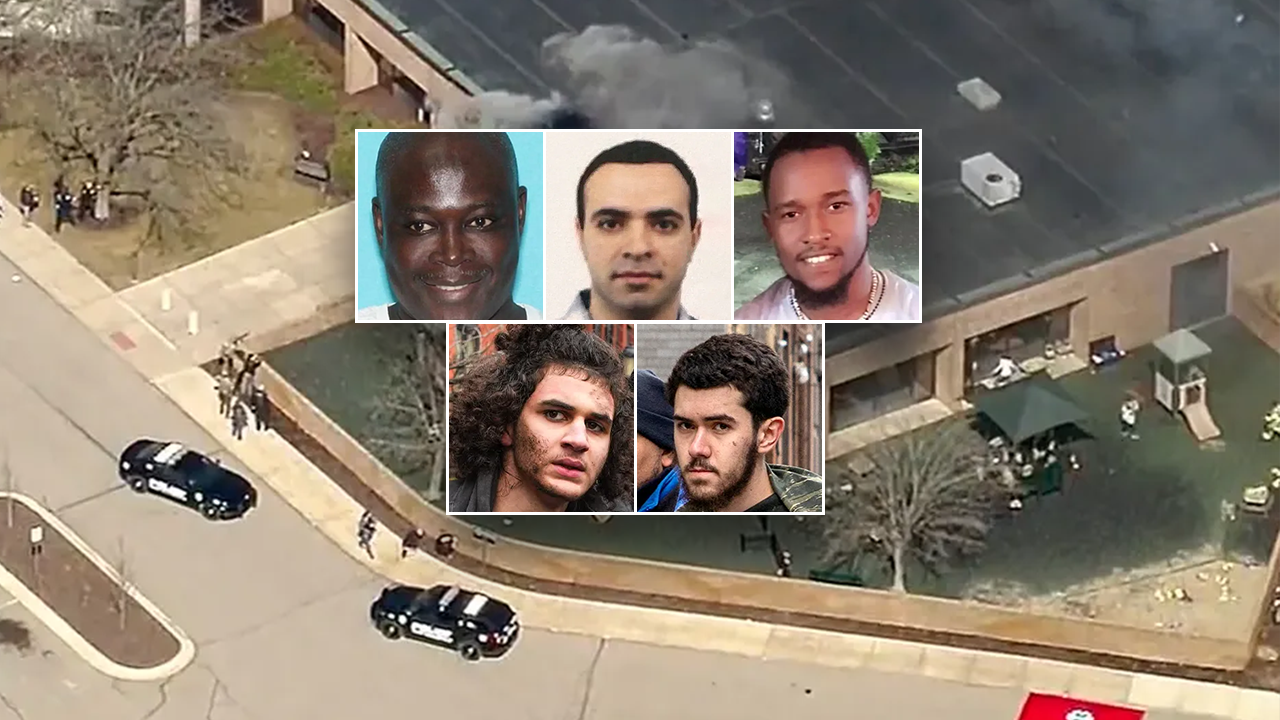
The push for this legislation follows a troubling string of attacks in March involving naturalized citizens or their children. In Austin, police reported that Senegalese-born naturalized citizen Ndiaga Diagne killed three people and injured over a dozen others before being killed by officers.
Shortly after, Emir Balat and Ibrahim Kayumi, children of naturalized citizens from Turkey and Afghanistan respectively, allegedly attempted to bomb an anti-Islam demonstration outside the New York City mayor’s mansion after pledging support to ISIS. They face multiple charges, including attempting to provide material support to a terrorist organization.
In Michigan, Lebanese-born naturalized citizen Ayman Mohamad Ghazali allegedly attempted to ram his vehicle into a synagogue filled with children and teachers on March 12. That same day in Virginia, Mohamed Bailor Jalloh, a naturalized citizen from Sierra Leone, reportedly opened fire on Reserve Officer Training Corps students at Old Dominion University, killing Lt. Col. Brandon Shah before being killed at the scene.
“Clearly something is broken in our immigration system,” Emmer said, adding that terrorists “keep getting into our country and they keep being allowed to stay here at the expense of Americans and American lives.”
The Senate version of the SCAM Act was introduced by Republican Senator Eric Schmitt of Missouri. Emmer believes the bill could potentially receive bipartisan support given the seriousness of the threat, though he declined to estimate when it might come to a vote.
“It is more imperative now than ever that we get this thing done,” he emphasized.
However, the legislation has faced opposition in Emmer’s home state of Minnesota. Abdikadir Bashir, executive director of the nonprofit Center for African Immigrants and Refugees Organization, told local media outlet MPRNews that Emmer is “trying to erase us politically.”
“The moment citizenship becomes conditional on whether a politician finds us convenient, none of us is safe,” Bashir said. “Today, it might be the Somali Americans. Tomorrow, it could be another ethnic group.”
Emmer maintains that the legislation is not targeted at specific communities but rather addresses fundamental flaws in the immigration system. “We have an immigration system that is not requiring these people to actually declare their allegiance to the United States of America and their willingness to be Americans,” he said.
The congressman emphasized that the legislation is designed to distinguish between immigrants who come to pursue the American dream and those who pose a threat. “We want anybody and everybody from anywhere who comes here to chase their American dream and become an American… If you come here and you don’t intend to become an American, you intend to change America or destroy America, you need to get the heck out.”
The SCAM Act represents one of several recent legislative efforts to address national security concerns related to immigration, reflecting broader tensions in American politics over how to balance openness to newcomers with security considerations. Legal experts note that any changes to naturalization law would likely face constitutional challenges, as citizenship rights have historically been strongly protected by the courts.
Fact Checker
Verify the accuracy of this article using The Disinformation Commission analysis and real-time sources.

9 Comments
While I appreciate the intent to target those engaged in terrorism and espionage, the details of this legislation will be crucial. We must ensure that due process and civil liberties are fully protected, even for naturalized citizens.
Citizenship is a fundamental right, so any legislation to revoke it must have strong safeguards and oversight. I’m curious to learn more about the specific criteria and procedures proposed in this bill, and how they would balance security needs with civil liberties.
That’s a fair point. The details and potential unintended consequences will be important to examine closely as this bill progresses.
This is a complex issue without easy answers. I’m interested to see how the debate over this bill unfolds and how lawmakers aim to balance national security with preserving the rights of naturalized citizens.
While I understand the intent to crack down on terrorism and espionage, this legislation seems to open the door to potential abuse. We’d need to ensure robust due process protections are in place to prevent unjust denaturalization.
Revoking citizenship is an extreme measure that should be used sparingly and with great caution. I hope lawmakers carefully consider the unintended consequences and ensure robust safeguards are in place to protect the rights of all citizens, regardless of their country of origin.
Citizenship is a fundamental human right, so any legislation to revoke it must have rigorous oversight and strict criteria. I’m curious to learn more about the specific provisions of this bill and how they would be implemented in practice.
This is a sensitive and complex issue that requires careful consideration of due process, human rights, and national security concerns. While stripping citizenship is a serious measure, the legislation aims to target individuals engaged in terrorism and espionage. The details and implementation will be crucial to evaluate.
This is a sensitive and complex issue that deserves thorough debate and analysis. I hope lawmakers can find a balanced approach that enhances national security while preserving the fundamental rights of all citizens, regardless of their country of origin.