


Listen to the article
In a heated Wisconsin congressional race, environmental endorsement sparks debate over farming costs and energy policies
A high-stakes political battle is unfolding in Wisconsin’s 3rd Congressional District, where Democratic challenger Rebecca Cooke’s recent endorsement by the Natural Resources Defense Council (NRDC) Action Fund has ignited controversy over energy policies and their potential impact on the state’s agricultural community.
Republican incumbent Rep. Derrick Van Orden has sharply criticized the endorsement, framing it as evidence that Cooke is disconnected from the needs of Wisconsin’s rural communities and farmers.
“Rebecca Cooke is completely out of touch with Wisconsin, touting an endorsement from the radical NRDC,” Van Orden told Fox News Digital. “It’s a clear sign of how quickly she’ll sell out Wisconsin farm families to please Washington Democrats.”
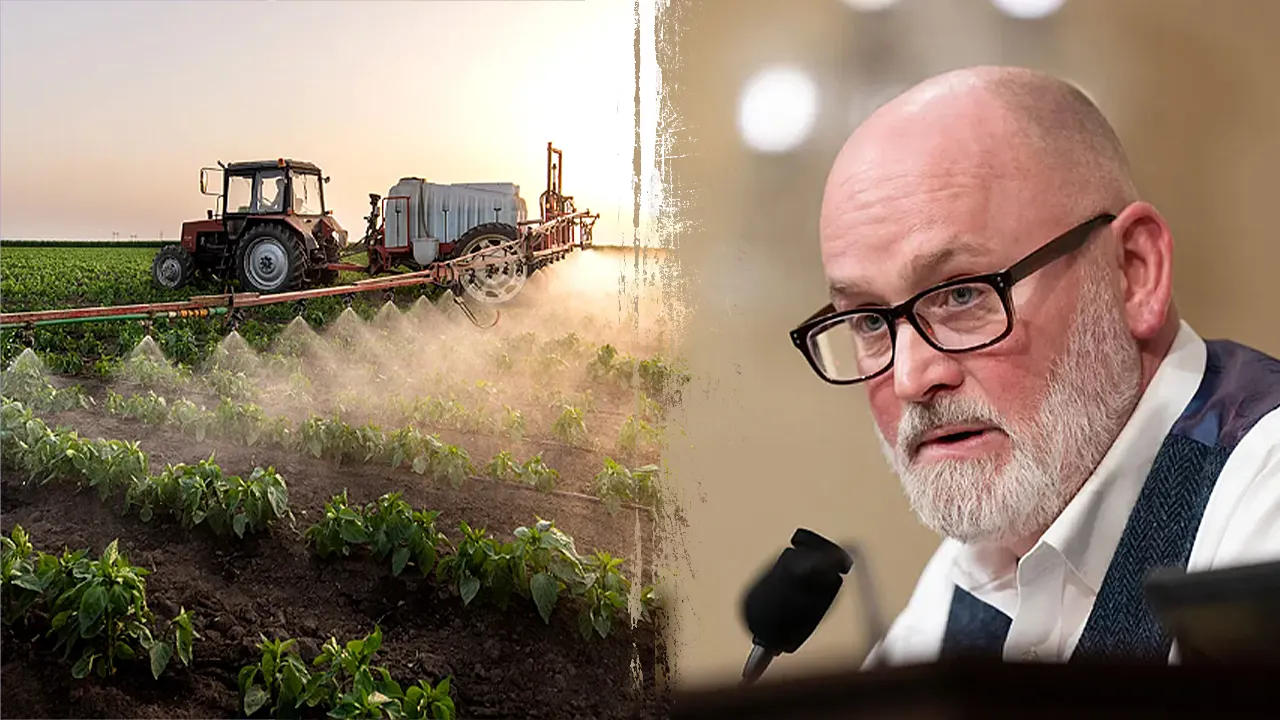
Van Orden further argued that farmers and businesses throughout Wisconsin have consistently opposed environmental policies like the Green New Deal because such initiatives could lead to higher prices for essential agricultural inputs like fertilizer and diesel fuel. He also expressed concern about the expansion of solar energy facilities, describing them as “solar wastelands” that would cover productive farmland.
Cooke, who grew up on a dairy farm, has defended the endorsement by emphasizing her commitment to environmental stewardship and clean energy as a pathway to economic opportunity.
“Growing up on a dairy farm I know how important it is to be steward to the land,” Cooke stated. “Investing in clean energy will create good-paying local jobs and help lower costs for working families. I’ll work with anyone to strengthen our economy and help strengthen our community.”
In response to Van Orden’s criticism, Cooke accused the incumbent of failed leadership on energy issues. “Energy prices are out of control in western Wisconsin because of Derrick Van Orden’s failed leadership. He voted to increase electricity costs while handing out tax breaks to the ultra-rich,” Cooke said in a statement. She also blamed Van Orden for supporting policies that she claims have hurt farmers, including tariffs and military actions that have affected fuel prices.
The clash highlights how energy policy has become a central issue in this battleground district, with each candidate offering starkly different visions of what would best serve Wisconsin’s agricultural economy.
The NRDC Action Fund, which endorsed Cooke, is the political arm of an environmental advocacy organization that has supported restrictions on fossil fuel production, including hydraulic fracturing limitations and the Biden administration’s pause on new liquefied natural gas export approvals.
While Wisconsin does not have significant fracking operations, the state is a major producer of silica sand used in the fracking process nationwide, creating economic connections to the broader energy industry. Additionally, the NRDC has opposed regional energy infrastructure projects like the Enbridge Line 5 pipeline, which transports oil and natural gas liquids through the Great Lakes region.
For Wisconsin’s agricultural sector, energy costs represent a significant concern. Diesel fuel powers most farm equipment, while natural gas is a key component in fertilizer production. Any policies affecting energy prices can have direct implications for farm operating costs and profitability.
Democrats like Cooke argue that transitioning to cleaner energy sources will ultimately benefit rural communities through job creation and more stable energy costs over time. Republicans counter that restricting traditional energy production raises immediate costs for farmers already operating on tight margins.
The Natural Resources Defense Council Action Fund expressed strong support for Cooke’s candidacy, with Managing Director Jed Ober stating that she “will be a champion for working families who are worried about rising energy costs.”
Cooke has also garnered endorsements from prominent Democratic figures, including Senator Bernie Sanders and former Transportation Secretary Pete Buttigieg, strengthening her position in this closely watched race.
Political analysts view Wisconsin’s 3rd District as a critical battleground that could help determine control of the House of Representatives in the upcoming election. With such high stakes, the debate over energy policy, environmental protection, and agricultural economics is likely to remain at the forefront of this competitive contest.
Fact Checker
Verify the accuracy of this article using The Disinformation Commission analysis and real-time sources.

24 Comments
I’m curious to learn more about the NRDC’s rationale for endorsing the Democratic challenger. What specific policies are they promoting, and how do they believe those would impact the region’s agriculture and energy sectors? Objective analysis is key in an issue like this.
It’s important to understand how environmental policies could affect the agricultural sector, a critical part of Wisconsin’s economy. I’m curious to hear more details from both candidates on their specific proposals and analyses.
Agreed. This is an issue that deserves a thoughtful, data-driven dialogue, not partisan posturing. Voters will need to weigh the trade-offs carefully.
This is an interesting debate over the potential impact of environmental policies on the energy and agricultural sectors. Both sides make valid points that deserve thoughtful consideration. I’d encourage voters to look at the full policy platforms and evidence before deciding.
Agreed, it’s a complex issue without easy answers. Voters should weigh the tradeoffs carefully to determine the best path forward for the district.
This race highlights the ongoing debate around environmental regulations and their economic impacts. I’m curious to hear more from both candidates on their specific policy proposals and how they would balance these competing priorities.
Agreed. These are not simple issues, and I hope the candidates can provide nuanced, data-driven analysis to help voters understand the potential trade-offs and make informed decisions.
This is a timely and important debate, given the need to balance environmental protection with economic realities. I hope the candidates can provide clear, evidence-based arguments that help voters make an informed decision.
Agreed. Transparency and objective analysis will be crucial in this race.
The potential impact on farming and the energy sector is a significant concern that deserves careful consideration. I look forward to seeing how the candidates address these complex trade-offs in their campaigns.
Absolutely. These are not easy issues, but I hope the candidates can move beyond partisan rhetoric and have a substantive, fact-based discussion to help inform voters.
As someone with an interest in the mining and energy sectors, I’ll be following this race closely. The potential impact on things like fertilizer and fuel costs for farmers is a significant concern that deserves rigorous analysis from both sides.
As a voter, I’d want to understand more about the specific environmental policies being proposed and their projected costs and benefits for farmers and the energy industry. It’s important to find the right balance between environmental protection and economic realities.
Good point. The details matter a lot here. Hopefully the candidates can provide clear, evidence-based analysis of the potential impacts.
The debate over the NRDC endorsement highlights the complexities around environmental regulations and their effects on rural communities. Voters will need to carefully evaluate the candidates’ policy proposals and their potential real-world impacts.
Absolutely. This is a complex issue without easy answers, and I hope the candidates engage in a substantive, nuanced discussion to help inform voters.
This race highlights the ongoing tensions between environmental protection and economic concerns. I hope the candidates can find common ground and propose solutions that balance these important priorities.
Well said. Balancing environmental and economic interests is always challenging, but it’s crucial that our leaders engage in nuanced, evidence-based policymaking on these issues.
This sounds like a contentious race with some important economic considerations around energy and agriculture policies. It will be interesting to see how voters in Wisconsin weigh the candidates’ positions on these issues.
Agreed. Environmental policies can have significant impacts on industries like farming, so I hope the candidates provide clear, fact-based analysis of the potential trade-offs.
This seems like a classic case of the tension between environmental protection and economic concerns. Both are important priorities, so it will be crucial for voters to carefully weigh the tradeoffs and choose the candidate they feel will best balance those interests.
Well said. It’s a complex issue without easy answers, so voters will need to dig into the details to make an informed decision.
The potential impact on Wisconsin’s agricultural community is a valid concern that should be thoroughly examined. I hope the candidates can engage in a constructive dialogue to explore solutions that protect the environment while supporting the state’s vital farming industry.
Well said. These are complex, interconnected issues that require careful consideration of multiple stakeholders and perspectives. I look forward to seeing how the candidates navigate this delicate balance.