


Listen to the article
Senate Debates SAVE America Act Despite Uncertain Future
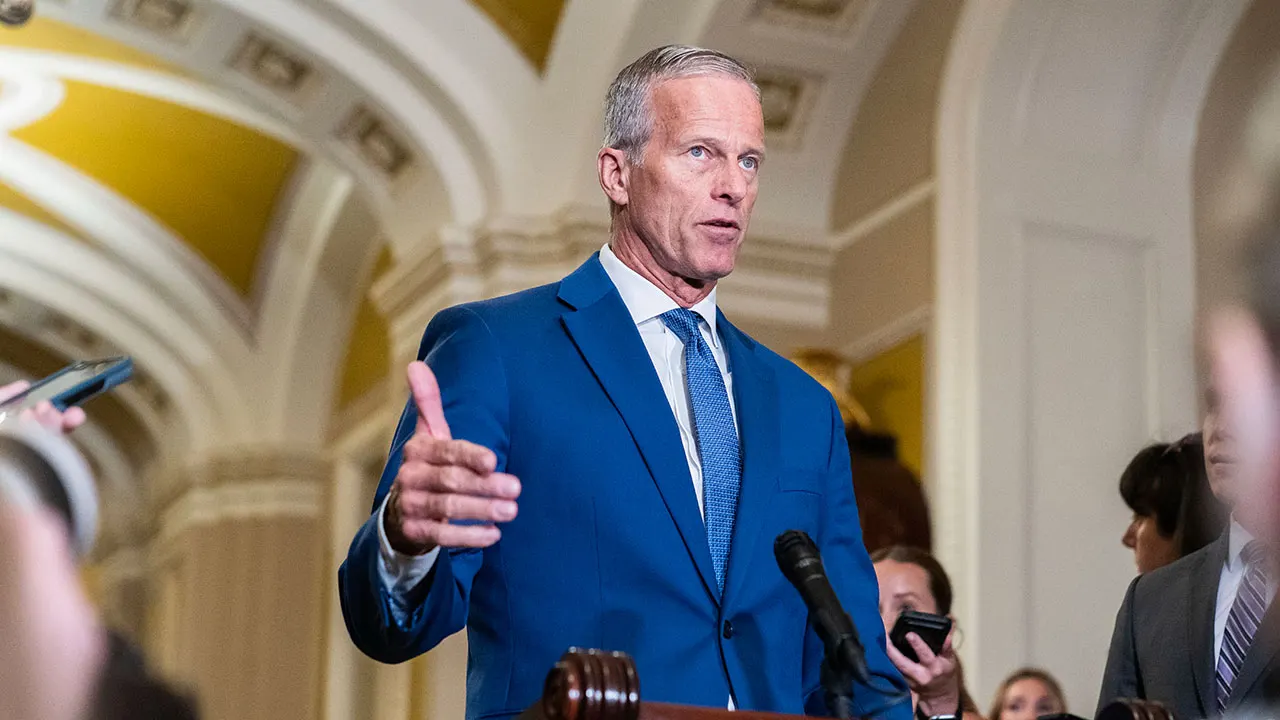
Senate Majority Leader John Thune defended the chamber’s extended debate on the SAVE America Act Tuesday, calling it a “unique moment in time” to address “fundamental” election security issues. The debate continues despite growing doubts about whether the bill can secure enough votes for passage.
The Senate has now spent four days debating the legislation, which would require voters to provide proof of citizenship, such as a passport or birth certificate, at polling places. President Donald Trump has declared the bill one of the “most important and consequential” in Congressional history and threatened to withhold endorsements from any Republican who opposes it.
“Floor time is the coin of the realm,” noted longtime Congressional agriculture reporter Matt Kaye, questioning why the Senate was dedicating valuable floor hours to legislation that appeared destined to fail rather than addressing issues like the farm bill or supplemental spending for the war in Iran.
The political calculus behind the extended debate appears straightforward: Republicans believe staying on President Trump’s good side outweighs concerns about efficient use of floor time. Trump’s recent statement on Truth Social elevating the bill’s importance has made supporting the measure a litmus test for Republican lawmakers seeking his approval.
The legislation has generated significant concerns, even among potential voters. Michael Suggs, a Bronx resident approaching 60, expressed reluctance about carrying sensitive documents to polling places. “I don’t want to walk around with my birth certificate and my Social Security card. I’m a registered voter. I’ve been voting since I was 18 years old,” Suggs told Fox’s Chelsea Torres.
Republicans face challenges within their own ranks. Senator Cynthia Lummis (R-WY) acknowledged, “Republicans by themselves don’t have the votes to get it passed,” citing internal party disagreements over mail-in voting provisions. These divisions make reaching the 60-vote threshold needed to overcome a Democratic filibuster virtually impossible.
When pressed by reporters about the apparent futility of the debate, Thune pushed back: “We don’t know that we don’t have 60 votes yet. You’re making an assumption.” However, he did not directly address reports that the bill lacks even the 51 Republican votes needed for a simple majority.
Republicans have further complicated matters by attaching amendments that would block men from women’s sports, ban transgender surgeries for children, and restrict mail-in voting. Critics argue these provisions are unrelated to election security and function as poison pills that make passage even less likely.
Senator John Fetterman (D-PA), often willing to break with his party on certain issues, dismissed the legislation: “They’ve turned it into an unserious kind of a Christmas tree and attaching all these other things to it. And now bashing mail-in voting. Absolutely, it’s secure. Florida loves it and uses it. Ohio does too.”
Even Republican Senator Lisa Murkowski of Alaska expressed concerns about the bill’s requirements, noting the logistical challenges for Alaskans in remote communities. “If I happen to live here in Kotzebue, I’ve got to fly here to Nome to present my documentation… This is going to be costly on Alaskans. And again, these are people who are eligible to vote.”
Despite the legislative roadblocks, Republicans see political advantages in prolonging the debate. The issue allows them to highlight immigration concerns and election security—themes that resonate with their base heading into the midterm elections.
The Senate will temporarily pivot on Sunday to vote on the nomination of Senator Markwayne Mullin (R-OK) as Homeland Security Secretary before returning to the SAVE America Act. Thune indicated he might continue the debate until there’s a resolution to the Department of Homeland Security shutdown, noting: “It needs to get resolved by the end of next week. I can’t see us taking a break if the government is still shut down.”
For Senate leadership, this extended debate serves dual purposes: demonstrating commitment to the president’s priorities while potentially creating leverage in negotiations over government funding—proving that in Washington, floor time can be spent not just to pass legislation but also to build political capital with party loyalists and the president.
Fact Checker
Verify the accuracy of this article using The Disinformation Commission analysis and real-time sources.

9 Comments
The Senate’s decision to devote floor time to this legislation, despite its uncertain future, speaks to the political dynamics at play. It will be important to follow how this debate unfolds and what implications it may have for future elections.
This bill seems to be a reflection of the continued partisan divide over election security issues. While the goal of secure elections is important, the specific proposals warrant careful evaluation to ensure they don’t disenfranchise legitimate voters.
This debate highlights the ongoing political tensions around election security and Trump’s influence. It will be interesting to see if the bill gains traction or if it ultimately fails despite the extended floor time.
The bill’s potential to impact voter access is certainly a concern that deserves close scrutiny. Balancing security and accessibility is an ongoing challenge for election systems.
Interesting to see the GOP advancing this election security bill, even with slim prospects for passage. I wonder what specific security measures it proposes and how they would impact the voting process. Curious to hear more details on the debate.
The requirement for voters to provide proof of citizenship seems quite controversial. I can understand concerns about election integrity, but that could create barriers to voting for some citizens.
The influence of President Trump on this legislation is noteworthy. It will be interesting to see if Republican senators are willing to risk his wrath by opposing the bill, or if they feel compelled to support it despite concerns.
The political calculus behind the extended debate is an intriguing aspect of this story. It suggests the GOP may be prioritizing aligning with Trump over the efficiency of the legislative process.
This debate highlights the ongoing tensions around election security and the challenges of balancing integrity and accessibility. It will be important to closely follow the progress of this bill and its potential implications for the voting process.