


Listen to the article
Georgia’s child welfare system has plunged into a financial crisis as the Georgia Division of Family and Children Services grapples with an unprecedented $85.7 million budget shortfall, severely hampering services for vulnerable children and families across the state.
The funding gap has forced Candice Broce, commissioner of the Department of Human Services and director of the child welfare agency, to implement drastic cost-cutting measures since November. These cuts have resulted in fewer family reunification visits, reduced support for foster parents caring for children with complex needs, and postponed juvenile court dates due to transportation limitations.
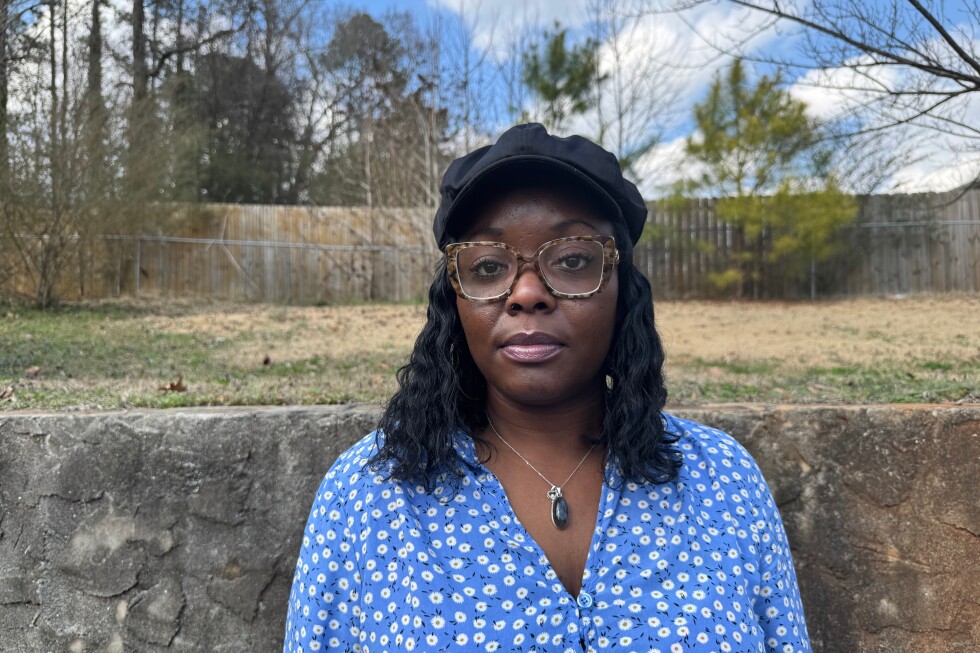
“I’m just stuck. I’m stressed out. Emotionally, I’m exhausted,” said Pamela Bruce, a foster parent who fears her foster son “can’t grow in survival mode” as services dwindle. Bruce now worries she may have to surrender him back to the state.
While state lawmakers have approved emergency funds to address the deficit, the damage has already affected countless families who have lost months of crucial services. The backlog created by these interruptions may continue for some time, prompting several lawmakers to call for a comprehensive audit to determine the root causes of the financial collapse.
Georgia’s situation, though extreme in its magnitude, reflects broader challenges facing child welfare systems nationwide. A key factor straining Georgia’s resources is the increasing number of children entering the system with acute behavioral and mental health needs – a trend affecting agencies across the country. Broce has received praise for reducing the practice of housing high-needs children in hotels, though finding appropriate placements for these children comes with significant costs.
In response to the deficit, Broce, a longtime ally of Republican Governor Brian Kemp, terminated contracts with underperforming service providers and implemented a new approval process for contracted services in November. These actions have dramatically slowed the system, according to providers, families, lawyers, and placement agencies statewide.
“Every day that a family or kid is not receiving the kinds of support that they need, the situation only compounds,” warned Ann Flagg, former director of the Office of Family Assistance for the Administration for Children and Families.
Broce maintains that service requests “are approved within hours unless we ask for more information.” However, stakeholders report a drastically different reality on the ground. Brittney Kleuger, CEO of Family Menders, testified that her agency’s weekly referrals plummeted from 80-100 to fewer than 10 after the November changes.
The Division of Family and Children Services, with approximately 7,500 staff members, is tasked with protecting children in crisis, healing families when possible, and working toward reunification. It operates within the larger Department of Human Services, which has an annual state budget of $1.06 billion.
During legislative hearings, Broce acknowledged the agency lacks sufficient resources to address the “magnitude” of behavioral and mental health services needed by children in state care. She described being “forced to make decisions that nobody wants to make,” attempting to eliminate only services deemed duplicative, unnecessary, or eligible for Medicaid coverage. Despite these efforts, the projected deficit still stands at nearly $49 million.
The service interruptions have created significant barriers to family reunification. “How in the world are we supposed to reunify the families if we don’t have services in place?” asked family attorney Jessica Hall. Bruce’s foster son, who lost access to his behavior aide in the fall, wrote that missing school and family visits due to transportation issues took a “toll on my mind.”
Multiple factors appear to have contributed to the financial crisis. The division has lost more than 800 placement beds since 2019, while facing a shortage of psychiatric facility spots. Expensive services like transportation and behavior aides, combined with challenges in appropriately billing Medicaid, have strained resources further.
Broce has also pointed to longstanding conflicts with judges, claiming they often order unnecessary services or removals that increase costs. Judge Nhan-Ai Simms disagrees: “The idea that courts are ordering above and beyond what DFCS has recommended, I think those cases are very few and far between.”
Changes to federal law have also made it harder for Georgia to access federal child welfare funds. Melissa Carter, executive director of the Barton Child Law and Policy Center at Emory University, suggests the crisis signals “insufficient long-term fiscal strategy” and recommends greater state investment in family preservation services to leverage federal funding.
Many lawmakers remain skeptical of the explanations provided. “I’ve been in the budget world a long time, and I’ve never seen a deficit like this,” said Democratic state Rep. Mary Margaret Oliver. “I don’t think we can blame the providers for that. I think that’s a management issue.”
However, Juanita Stedman, former juvenile court judge and executive director of Together Georgia, sees the issue differently: “Historically, we have not paid for the complexity of the kids.”
As Georgia works to stabilize its child welfare system, families like Bruce’s remain caught in the crossfire, worried about both immediate needs and the potential for future crises. Her foster son perhaps best captures the human cost: “My visits are very important to me because I really love my family.”
Fact Checker
Verify the accuracy of this article using The Disinformation Commission analysis and real-time sources.

27 Comments
Exploration results look promising, but permitting will be the key risk.
Good point. Watching costs and grades closely.
Uranium names keep pushing higher—supply still tight into 2026.
Good point. Watching costs and grades closely.
Good point. Watching costs and grades closely.
The cost guidance is better than expected. If they deliver, the stock could rerate.
Good point. Watching costs and grades closely.
Exploration results look promising, but permitting will be the key risk.
Uranium names keep pushing higher—supply still tight into 2026.
Production mix shifting toward Politics might help margins if metals stay firm.
Good point. Watching costs and grades closely.
Exploration results look promising, but permitting will be the key risk.
Good point. Watching costs and grades closely.
Good point. Watching costs and grades closely.
Exploration results look promising, but permitting will be the key risk.
Good point. Watching costs and grades closely.
The cost guidance is better than expected. If they deliver, the stock could rerate.
I like the balance sheet here—less leverage than peers.
Good point. Watching costs and grades closely.
Exploration results look promising, but permitting will be the key risk.
Good point. Watching costs and grades closely.
Good point. Watching costs and grades closely.
If AISC keeps dropping, this becomes investable for me.
Good point. Watching costs and grades closely.
Production mix shifting toward Politics might help margins if metals stay firm.
Good point. Watching costs and grades closely.
Uranium names keep pushing higher—supply still tight into 2026.