


Listen to the article
Georgia’s Political Landscape Heats Up as Qualifying Period Ends for Key Races
A flurry of political activity marked the close of Georgia’s candidate qualifying period Friday, officially launching a two-month sprint to the May 19 primary elections for crucial governor and U.S. Senate races in this pivotal swing state.
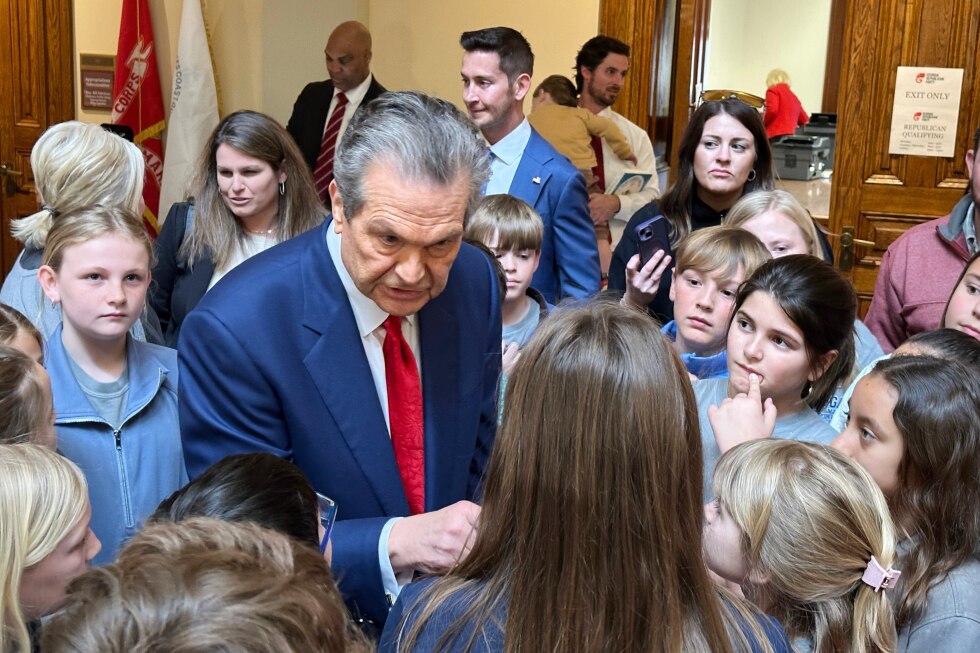
The weeklong qualification process at the state Capitol transformed into a showcase of political messaging as candidates for top offices outlined their platforms and tested campaign rhetoric that will shape Georgia’s political landscape in the coming months.
In the closely watched U.S. Senate race, incumbent Democratic Senator Jon Ossoff will face a field of Republican challengers eager to reclaim the seat in November. His opponents include U.S. Representatives Mike Collins and Buddy Carter, as well as former University of Tennessee football coach Derek Dooley, all of whom have aligned themselves firmly with former President Donald Trump.
Ossoff, rallying with supporters earlier this week, framed the election as a referendum on Trump’s potential return to the White House. “They recognize this president has gone too far, that the chaos and the corruption and the cruelty are wrong for Georgia and wrong for the country,” Ossoff said of voters. He warned that his Republican opponents would serve as Trump’s “puppets” rather than independent voices for Georgia.
Collins dismissed Ossoff as “California’s third senator” while touting recent endorsements, including Wednesday’s backing from the influential conservative advocacy group The Club for Growth. “We need to be spending every minute that we got making sure that this country is safe, making sure it’s productive, and making sure that it is affordable to people here,” Collins stated.
Dooley positioned himself as uniquely capable of attracting crossover voters due to his background as a coach, while Carter’s qualifying message was singularly focused: “We’ve got to get rid of Jon Ossoff.”
The governor’s race has drawn significant attention with term-limited Republican Governor Brian Kemp unable to seek reelection. Healthcare executive Rick Jackson became the last major candidate to qualify Friday, joining a crowded Republican field of eight contenders. Despite significant ad spending, Jackson acknowledged, “there is no way to buy an election. You’ve got to earn it.”
Lieutenant Governor Burt Jones, who secured Trump’s endorsement, expressed confidence despite Jackson’s late entry. “The newness is going to wear off, and they’re going to look to the person who’s been most consistent throughout the years,” Jones said.
Secretary of State Brad Raffensperger qualified without incident Wednesday despite lingering hostility from some Republican activists following his refusal to assist Trump’s efforts to overturn Georgia’s 2020 election results. Raffensperger has pivoted his campaign message toward economic issues, stating “the most important thing right now is how do you kind of deal with this affordability crisis and you create good paying jobs.”
Attorney General Chris Carr, another Republican gubernatorial hopeful, has emphasized job creation and public safety while suggesting voters are less concerned with divisive social issues that have dominated exchanges between Jackson and Jones regarding transgender policies.
On the Democratic side, former Atlanta Mayor Keisha Lance Bottoms has emerged as a frontrunner among eight candidates. She highlighted her platform of affordability measures, free technical college, and income tax cuts for teachers as issues that could appeal beyond traditional Democratic voters in a state that hasn’t elected a Democratic governor in 24 years.
“I’m speaking my truth on what I feel a leader and governor in this state needs to offer to people, so I don’t have to worry about changing my message for a general election audience,” Bottoms said.
Former Republican Lieutenant Governor Geoff Duncan, now running as a Democrat, emphasized his potential crossover appeal while focusing on “the affordability crisis, the health care crisis, and unfortunately still the Donald Trump crisis.”
The qualifying period’s conclusion sets the stage for what political analysts expect to be highly competitive primaries followed by general election contests that could help determine control of the Senate and highlight Georgia’s continuing evolution as a battleground state where economic concerns, healthcare access, and Trump’s influence remain central themes.
Fact Checker
Verify the accuracy of this article using The Disinformation Commission analysis and real-time sources.

12 Comments
The Georgia primaries will be an important test for both parties as they jockey for advantage ahead of the midterm elections. I’ll be watching closely to see how the candidates’ messaging resonates with voters.
Agreed, these races will provide valuable insights into the political landscape as we approach the midterms. The outcomes could set the tone for the national campaign season.
The U.S. Senate race in Georgia is sure to be a heated contest. It will be intriguing to see how the Republican candidates try to appeal to Trump’s base while also broadening their appeal to independent and moderate voters.
Agreed. Striking the right balance will be key for the GOP hopefuls. They’ll need to energize the Trump wing without alienating the center.
I’m curious to see how the candidates address issues like the supply chain challenges and inflationary pressures impacting the mining and energy sectors. Their proposed solutions could sway voters concerned about the economy.
Absolutely, those economic issues will be front and center. Voters will be looking for credible plans to address the headwinds facing industries like mining and energy.
As an investor, I’ll be following these Georgia races closely, as the outcome could impact policy decisions around issues like mining, energy, and commodities. The candidates’ positions on these sectors will be important.
That’s a good point. The Senate and governor races could certainly influence the regulatory and investment climate for natural resource industries in the state.
It will be interesting to see if the candidates address the role of mining, energy, and commodity industries in Georgia’s economy. Their positions on issues like permitting, regulations, and incentives could sway voters in these sectors.
That’s a good point. The candidates’ stances on natural resource industries could be a critical factor, especially in a state like Georgia with a sizable mining and energy presence.
Interesting to see the Georgia Senate and governor races heating up. It will be a closely watched battleground given the state’s swing status. I’m curious to see how the candidates position themselves on key issues like the economy, energy, and foreign policy.
Absolutely, Georgia is a critical state for both parties. The outcome of these races could have significant national implications.